
As an Amazon Associate I earn from qualifying purchases. Details
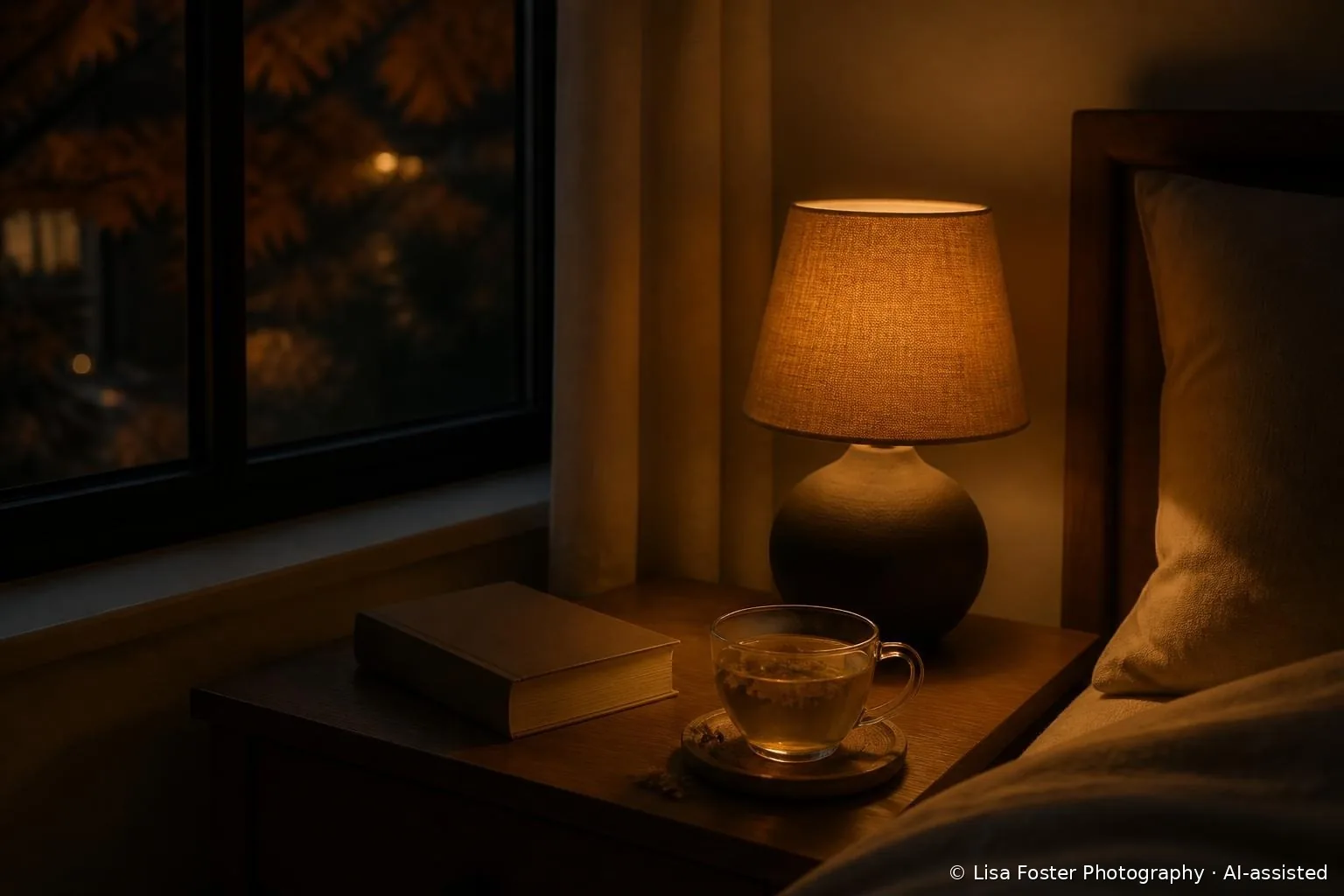
October evenings get dark early, and that is a gift if you use it. When the light goes, the house can go quiet with it. This is the 20-minute wind-down I lean on in the fall: five small steps, no special gear, and it works for a six-year-old and a tired grown-up at the same time.
Key takeaway. Dim the lights, park the phones, read one short thing out loud, name three good things, and take three slow breaths. Same order every night. The order is what makes it calm.
Not medical advice. If sleep is a real struggle for you or your child, talk with your doctor or pediatrician.
Quick answers
| Question | Short answer |
|---|---|
| How long does it take? | About 20 minutes, start to lights out |
| What do I need? | A lamp, a basket, a book, a jar and some paper |
| What age is it for? | Roughly 4 and up, and the adults in the room |
| Does it need to be perfect? | No. Doing three of the five steps still counts |
| When do I start? | About 30 minutes before the bedtime you are aiming for |
Why a routine helps more than willpower
A busy brain does not switch off because someone says "time for bed." It settles when it recognizes the pattern. When the same few things happen in the same order, the body starts to expect what comes next, and the arguing about bedtime gets shorter.
The American Academy of Pediatrics' parenting site has a clear chart of how much sleep children need at each age, and the Sleep Foundation's guide to children and sleep talks about consistent bedtime routines too. I use those as a starting point and then build the routine around our actual evening, not an ideal one.
A routine also helps people whose brains like to know what is coming. Fewer decisions at the end of the day means fewer chances to get stuck. If your household includes someone who finds transitions hard, the predictability is the point.
Step 1: Dim the lights (minutes 0 to 3)
Turn off the overhead lights and switch to one or two lamps. Warm bulbs help the room feel like evening. Close the curtains if the street is bright.
This is the signal step. Kids notice it immediately. You can make it a small job: one child is the "lamp keeper" who turns on the reading lamp and turns off the big light.
Try this: pick the same lamp every night so it becomes "the bedtime lamp."
Step 2: Park the phones (minutes 3 to 5)
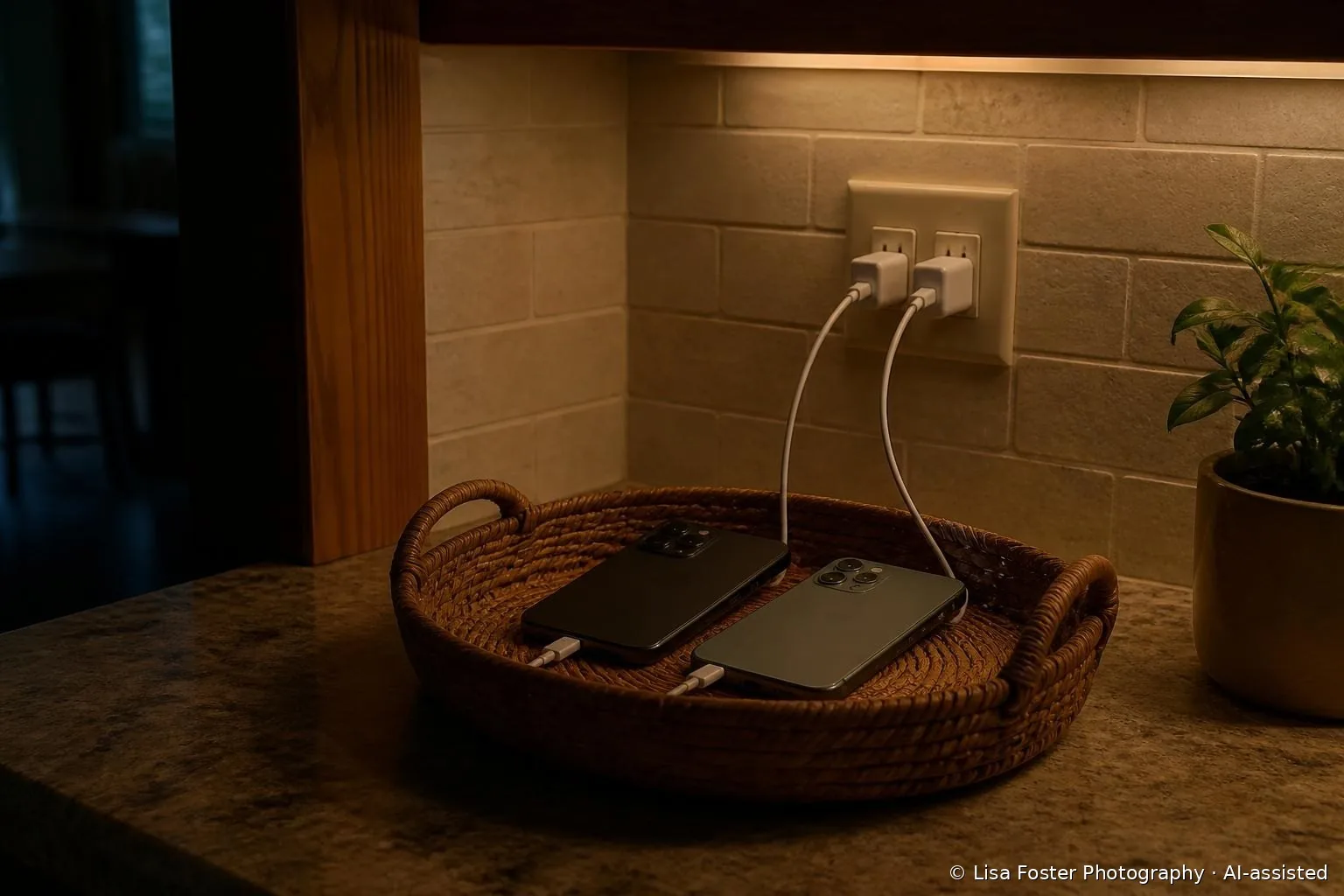
Put a basket somewhere outside the bedrooms, plug in a charger, and every phone and tablet goes in face-down. Grown-ups included. Kids notice very quickly if the rule is only for them.
If you use your phone as an alarm, a simple alarm clock is a cheap fix. If you need your phone nearby for a family reason, put it on Do Not Disturb with only those contacts allowed, face-down and out of reach.
Why it matters: the last thing we look at tends to be the thing we keep thinking about. A short story is a better last thing than a feed.
Step 3: Read one short thing out loud (minutes 5 to 13)
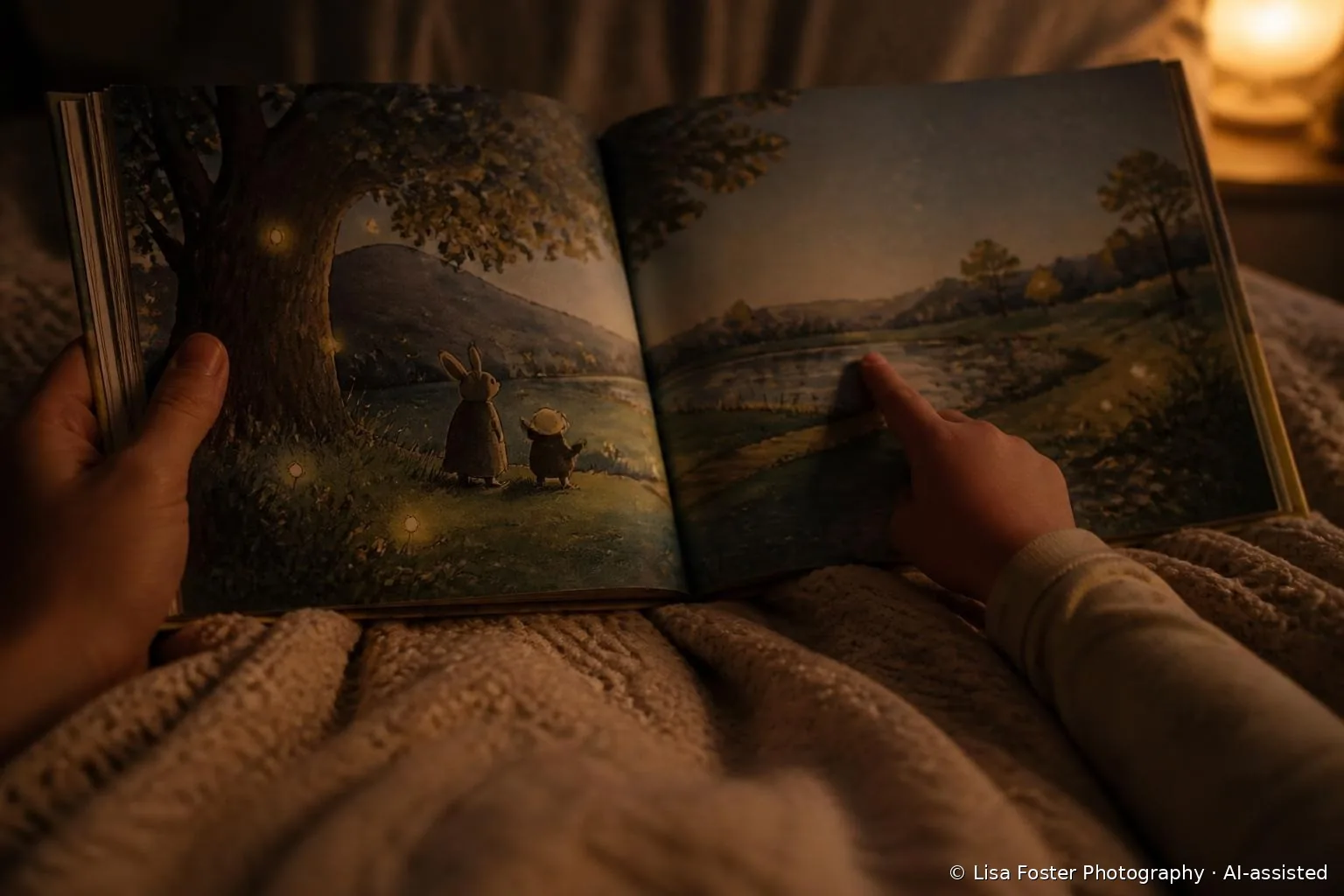
Pick something short enough to finish. A picture book, one chapter, or a poem. Finishing matters, because a cliffhanger keeps a busy mind going.
A few classics that work well as the last thing before sleep:
- Goodnight Moon by Margaret Wise Brown, for the youngest listeners. It is basically a wind-down in book form.
- Owl Moon by Jane Yolen, a quiet winter-night walk that fits the season and the slow pace.
- The Going to Bed Book by Sandra Boynton, silly enough to get a smile and short enough to end on time.
For older kids, a chapter of whatever they are into is fine. For grown-ups, this is a good time to read a few pages of something slow. I like to keep one "calm book" on the nightstand. Right now that is the kind of book that talks about attention and presence. Eckhart Tolle's The Power of Now and Jay Shetty's Think Like a Monk both come back to one simple idea from their own perspectives: notice where your attention is, and gently bring it back to this moment. You do not have to agree with every page to borrow that one habit at bedtime.
Tip: let kids pick the book on Mondays and you pick on Thursdays. Choice helps, and so does a limit.
Step 4: Three good things (minutes 13 to 17)

Everyone names three good things from the day. They can be tiny: "the dog sat on my feet," "I found a red leaf," "pasta." Write one on a slip of paper and fold it into a jar.
This does two things. It gives the day a soft ending instead of a list of what went wrong. And by the end of the month you have a jar full of small good moments to read together on the last night of October.
For kids who freeze up: offer three categories instead of an open question. Something you saw, something you ate, someone who was kind.
For grown-ups: it is fine to write yours privately. The point is noticing, not performing.
Step 5: Three slow breaths and lights out (minutes 17 to 20)
Sit or lie down. Breathe in through your nose while you count to four, hold for a moment, and breathe out slowly through your mouth while you count to six. Do it three times together.
For little ones, make it a picture: smell the pumpkin pie, blow out the candle. For older kids, they can count for you.
Then the lamp goes off. If someone wants to talk, keep your voice low and short. The routine has done its job.
A printable checklist for the fridge
| Step | What happens | Minutes |
|---|---|---|
| 1 | Lamps on, big lights off | 3 |
| 2 | Phones in the basket | 2 |
| 3 | One short read-aloud | 8 |
| 4 | Three good things in the jar | 4 |
| 5 | Three slow breaths, lights out | 3 |
Copy this onto a card, or draw it with pictures for kids who are not reading yet: a lamp, a basket, a book, a jar, a cloud for breathing. A picture checklist works better than reminders, and it keeps the grown-up from having to be the one who nags.
Small extras that help on hard nights
- A sleep mask for the grown-ups. I use a contoured MZOO sleep mask when the room is not fully dark. It is comfortable, and that is the only claim I am making about it.
- A worry page. Keep a notepad by the bed. If a thought keeps coming back, write it down and tell it you will look at it in the morning.
- Same time, most nights. Weekends can drift a little. Try not to let them drift a lot.
- A quiet sound. A fan or soft rain sound can cover house noise. Keep the volume low and the sound boring.
- Skip the routine sometimes. A late night with family or a fall festival is worth it. Pick the routine back up the next evening without guilt.
When the routine does not work
Some nights it falls apart. Someone is overtired, someone is wound up, someone had a hard day. That is normal. Shorten it to the two steps that matter most in your house. For us, that is lights and breathing.
If a child is regularly having trouble falling asleep or staying asleep, or snores loudly, that is worth a call to the pediatrician rather than a new routine. The same goes for adults.
Make it yours

The best routine is the one you will still be doing in November. Start with the five steps, keep what fits your family, and drop the rest. In a week it will stop feeling like a routine and start feeling like the way evenings go.
On the morning side, Foster the Imagination has a calm-start post coming next, so the day has soft edges on both ends. Foster the Imagination is where the morning and night posts live.
Your turn: what is the one thing that actually helps your house settle at night? Tell me, and I may add it to the list for next month.