
Waterfalls, rocky overlooks, and a little history along the Potomac River.
Some links in this post are affiliate or referral links. If you buy or sign up through them, I may earn a commission at no extra cost to you. As an Amazon Associate, I earn from qualifying purchases.
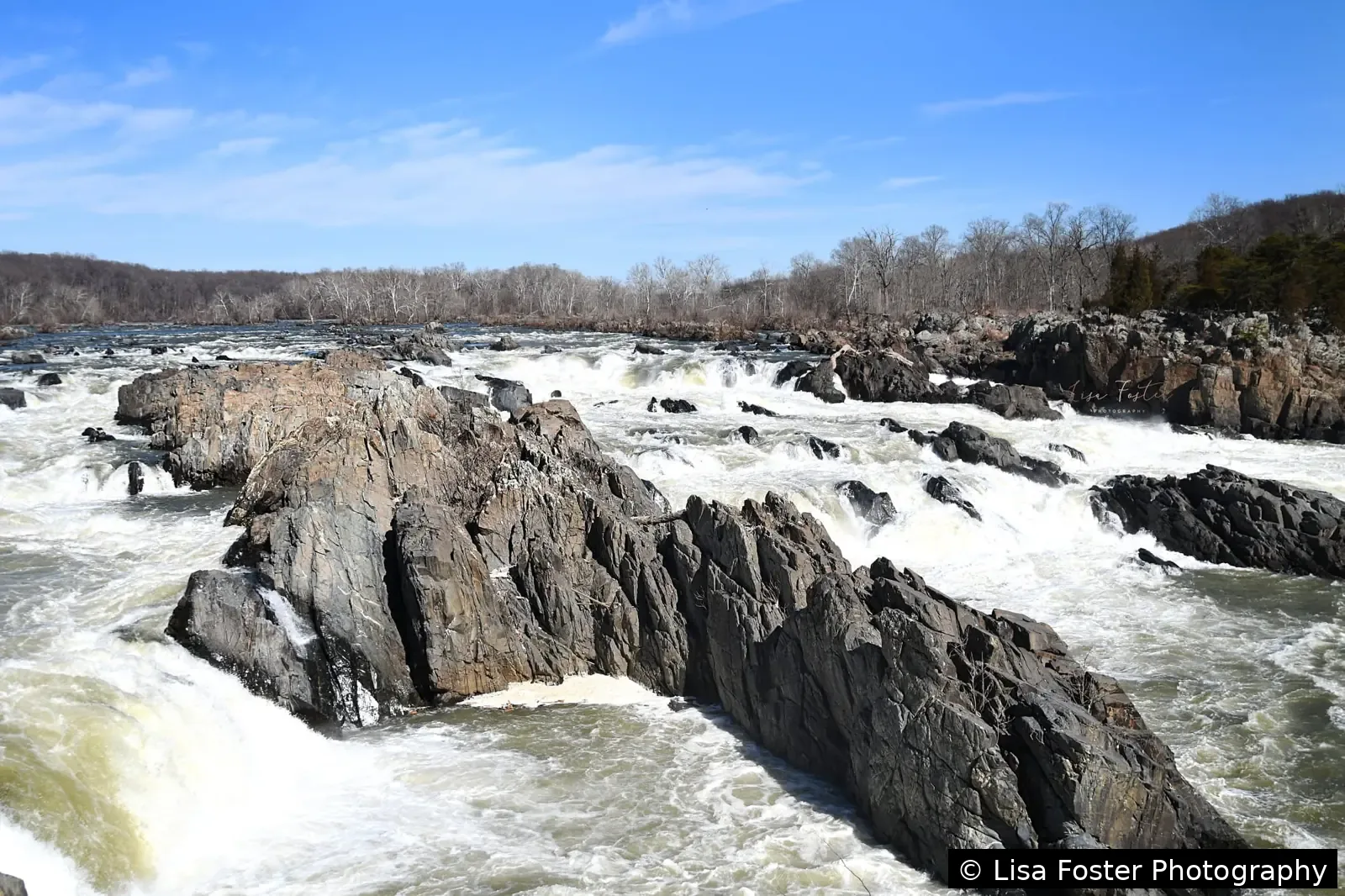
Great Falls Park is one of those places where the photographs give you a pretty good idea of what you're getting into, but there's still something different about seeing the falls in person.
I've visited the Virginia side and photographed the Potomac rushing over the rocks. It's an impressive stretch of river, especially considering how close it is to Washington, D.C.
You don't have to hike several miles to reach the main overlooks, either. There are three viewing areas near the visitor center, each offering a different perspective of the falls.
But there's more here than the waterfalls. Between the trails, the old canal ruins, and the history tied to George Washington, there's quite a bit to explore if you have the time.
Three overlooks, three different views
The river drops roughly 76 feet over a short distance here before squeezing into Mather Gorge, a narrow, steep-walled channel below the falls. The falls sit on the fall line, where the Piedmont meets the Atlantic Coastal Plain and resistant rock shapes the river's descent.
All three overlooks are a five- to ten-minute walk from the visitor center. Overlook 1 is the closest, but reaching it involves wooden steps and uneven, rocky ground. Overlooks 2 and 3 have ramps to the viewing platforms and flatter gravel approaches, so they're the better choice for strollers, wheelchairs, or anyone who'd rather skip the steps.
The falls don't look the same from one visit to the next. After heavy rain upstream, the water runs high, fast, and often muddy brown. In a dry stretch, it splits into separate channels and more of the rock shows through.
Photographing the falls
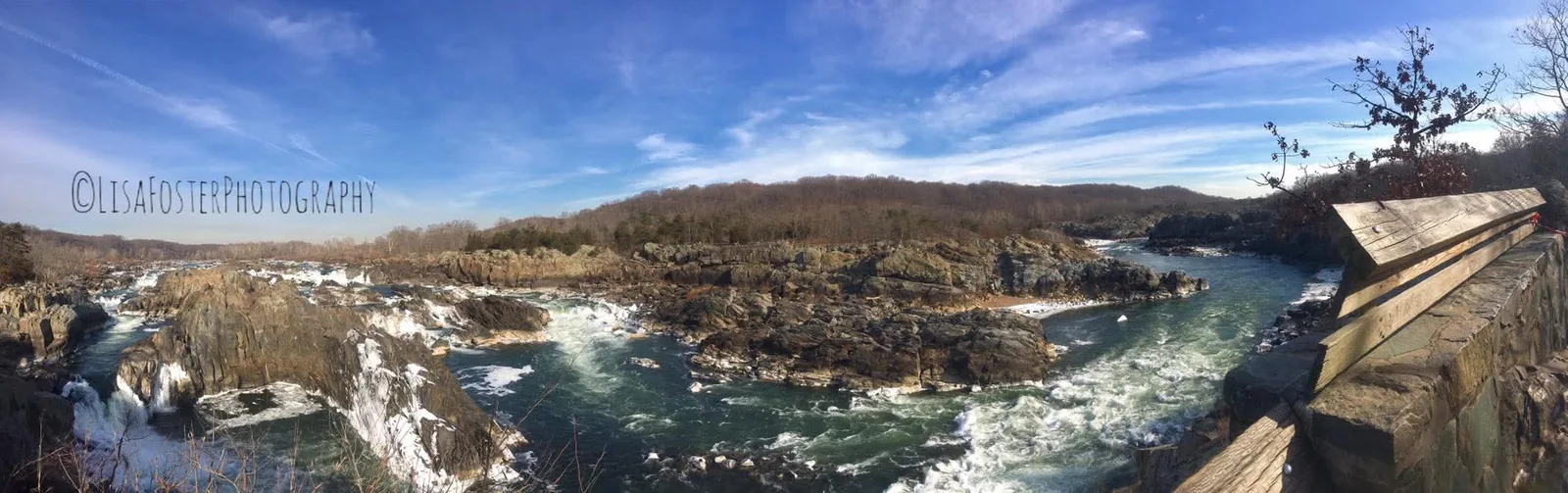
I shoot with a Nikon Z50, and Great Falls is a place that rewards two very different focal lengths. From Overlooks 2 and 3 the falls spread wide across the river, so a wide lens takes in the whole scene. A longer lens picks out single chutes, the rock textures, and the herons and cormorants below.
On a DX camera like the Z50, the NIKKOR Z DX 12-28mm f/3.5-5.6 PZ VR is the widest native Z-mount zoom, and it uses 67mm filters. For reach, the NIKKOR Z DX 50-250mm f/4.5-6.3 VR covers the equivalent of 75–375mm and takes 62mm filters. Both mount directly on the Z50 with no adapter, and both have built-in vibration reduction, which helps on handheld shots.
How the water looks comes down mostly to shutter speed. Fast speeds freeze the spray into individual droplets. Slow speeds of around half a second or longer blur it into the smooth, silky look that shows up in so many waterfall photos. Nikon recommends a tripod for anything slower than about 1/15 second.
A circular polarizer cuts the glare off wet rock and the water's surface and deepens the color of fall leaves. It also costs you a stop or two of light, which helps when you're after a slower shutter. Match the filter to the lens: a 67mm Hoya HD circular polarizer fits the 12-28mm, and a 62mm Hoya HD3 circular polarizer fits the 50-250mm. On a bright day, even at the lowest ISO and a small aperture, there can be too much light for a long exposure. A variable ND filter like the K&F Concept 67mm ND2-ND400 dims the scene enough to get there with the wide lens.
| Silky water | About 1/2 second to 2 seconds on a tripod. Faster-moving water needs less time than slow water. |
| Frozen motion | 1/500 second or faster to catch spray and individual droplets. |
| Aperture | f/8 to f/11 for front-to-back sharpness without softening the image. |
| ISO | Your camera's lowest native setting (ISO 100 on the Z50) for long exposures. Raise it for fast, frozen-motion shots in dim light. |
| Tripod | A compact travel tripod, such as the Manfrotto Element Traveller Small, packs small enough to carry to the overlooks. The platforms are narrow and fill up, so keep the legs tight and out of walkways. Use the 2-second timer to avoid shaking the camera. |
| Polarizer (CPL) | Rotate it while looking through the viewfinder until the glare on the water drops. |
| ND filter | For long exposures in bright light. A variable ND is the easiest to carry. Meter without it first, then add it. |
| Light and timing | Early morning and late afternoon bring softer light and fewer people. Midday sun on white water tends to blow out the highlights. |
| Overcast days | Often the best for waterfalls: even light, no harsh shadows, and slower shutter speeds come more easily. |
| Spray | Mist drifts onto the lens, especially after heavy rain. Check the front element between shots and carry a microfiber cloth. VSGO makes lens cleaning kits sized for a camera bag. |
| Crowded weekends | A tripod isn't always practical on a busy overlook. With VR on, a handheld exposure around 1/4 to 1/8 second at the wide end can give a softer look. Brace against the railing, shoot a short burst, and keep the sharpest frame. |
There's a little more history here than you'd expect
George Washington saw the falls as the biggest obstacle to turning the Potomac into a trade route to the west. In 1785 he helped found the Patowmack Company to make the river navigable, and he served as its first president.
At Great Falls, that meant building a canal and a series of locks around the falls, cut through solid rock. According to the National Park Service, most of the canal stonework that survives in the park today was built by enslaved laborers, whom the company rented from local enslavers after many of its indentured workers ran away.
The canal opened in 1802, a few years after Washington's death. It never made money reliably, and in 1828 the company went bankrupt and turned its charter over to the Chesapeake and Ohio Canal Company.
You can still see the lock walls along the Patowmack Canal Trail. Nearby are the stone foundations of Matildaville, the small town that served as the company's headquarters and housed its workers.
Want to explore a little farther?
The park has about 15 miles of trails. The River Trail follows the edge of Mather Gorge and gives you a good look down into it, but it's rocky and uneven in places, with steep drops close to the path. The Patowmack Canal Trail is easier and follows the old canal route past the locks. If you want something quieter, the wooded trails farther from the river see far fewer people. For more day hikes around the region, 60 Hikes Within 60 Miles: Washington, D.C. covers Great Falls along with trails on both sides of the Potomac.
Swimming and wading are prohibited anywhere in the park. The currents here are much stronger than they look from shore, so stay behind the railings and off wet rock near the water.
Fall is a good time to go
In autumn, the trees along the gorge turn color against the dark rock and white water. Spring usually brings the highest water. Winter strips the trees back and shows more of the rock itself.
Keep an eye out for great blue herons in the shallows, cormorants on the rocks below the falls, and bald eagles along the river. Most of them stay well out from the overlooks, so a pair of binoculars, such as the Celestron Nature DX 8x42, helps.
Planning your visit
| Address | 9200 Old Dominion Drive, McLean, VA |
| Hours | 7 a.m. until dark, daily |
| Vehicle entry | $20 |
| Motorcycle | $15 |
| Walk-in or bike | $10 per person (ages 16+) |
| Great Falls annual pass | $35 |
| Dogs | Allowed on a leash no longer than 6 feet |
| Best for avoiding crowds | Weekday mornings, or early on weekends |
| Payment | Cashless. If you buy online, download the QR code before you arrive, because cell service is limited. |
| Parking | First come, first served. Lines can form by late morning on nice weekends. |
| Official info | NPS: Plan Your Visit |
Great Falls Park in Virginia and the C&O Canal National Historical Park in Maryland face each other across the river, but they're separate parks with separate entrances. The Billy Goat Trail is on the Maryland side.
Is Great Falls worth visiting?
Yes, especially if you're anywhere near the D.C. area. The main overlooks take only a few minutes to reach, and the trails and canal ruins are there if you want to stay longer.
More trips are on Foster Your Journey, and prints are in the photography shop.
Sources: National Park Service, Great Falls Park: Basic Information, Fees & Passes, Accessibility, The Patowmack Canal, Who Built the Potomac Canal?, Chronology. Photography: Nikon USA, How to Use Long Exposures to Create Compelling Photos of Moving Water and Photographing the US National Parks; B&H Explora, Nail Long Exposures with Neutral Density Filters; Digital Camera World, Shoot great waterfall photos by using a slow shutter speed.