Parsley, thyme, basil, rosemary, and a few things worth knowing before moving your garden onto the kitchen windowsill.
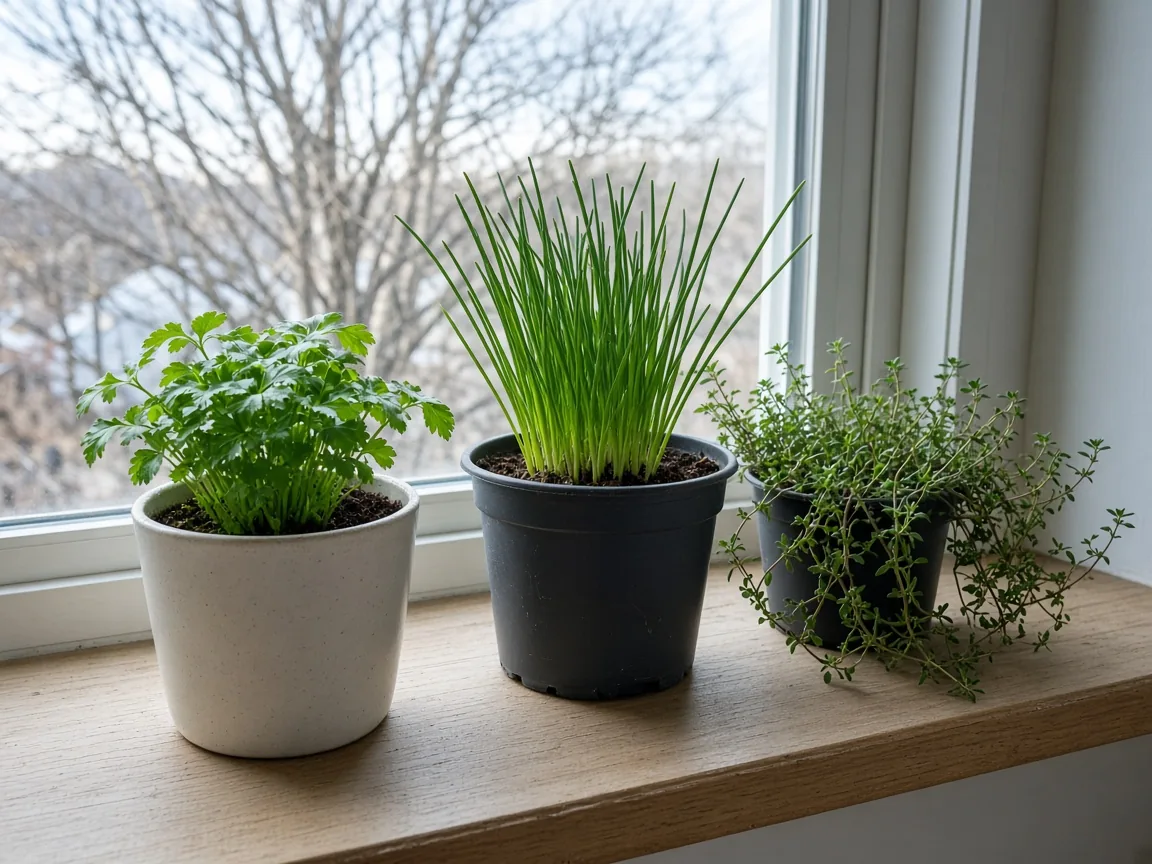
The bright window does the choosing. A few compact herbs will keep giving leaves there through the cold months. Rosemary asks for a second look before it moves. Basil can come in too, when the room is warm and the light is real.
Virginia Cooperative Extension publication 426-420, Herb Culture and Use, by Ashley Appling and Joyce Latimer, is the Virginia page for the windowsill list. Iowa State University Extension and Outreach, Growing Herbs Indoors, by Aaron Steil and last reviewed in November 2023, is the page for light, pots, and watering once the plants are inside.
The short version. Start with parsley, chives, thyme, oregano, dwarf sage, and a compact basil such as spicy globe. A six-inch pot fits many of them. A pot you already own is fine when water can leave through the bottom. Rosemary is marginally hardy in a protected site. Basil can live indoors through winter with enough warmth and light. If frost already blackened it, start fresh.
Not medical advice.
These statements have not been evaluated by the Food and Drug Administration. This is not intended to diagnose, treat, cure, or prevent any disease.
| Herb | Where it fits | What it asks for |
|---|---|---|
| Parsley, chives, thyme, oregano | Windowsill, with dwarf sage and spicy globe basil | A sunny window. A six-inch pot works. Use a pot you have, if it drains. |
| Rosemary | Protected site outdoors, or a container brought to a bright spot | Marginally hardy. Well-drained mix. Let it dry between waterings. Higher light than the short herbs. |
| Basil | Indoors through winter when warmth and light are there | Spicy globe is the compact windowsill form. Frost-blackened plants get a fresh start. |
| Mint | Its own pot | Runners spread. One container, not a shared pot. |
Start with the smaller herbs
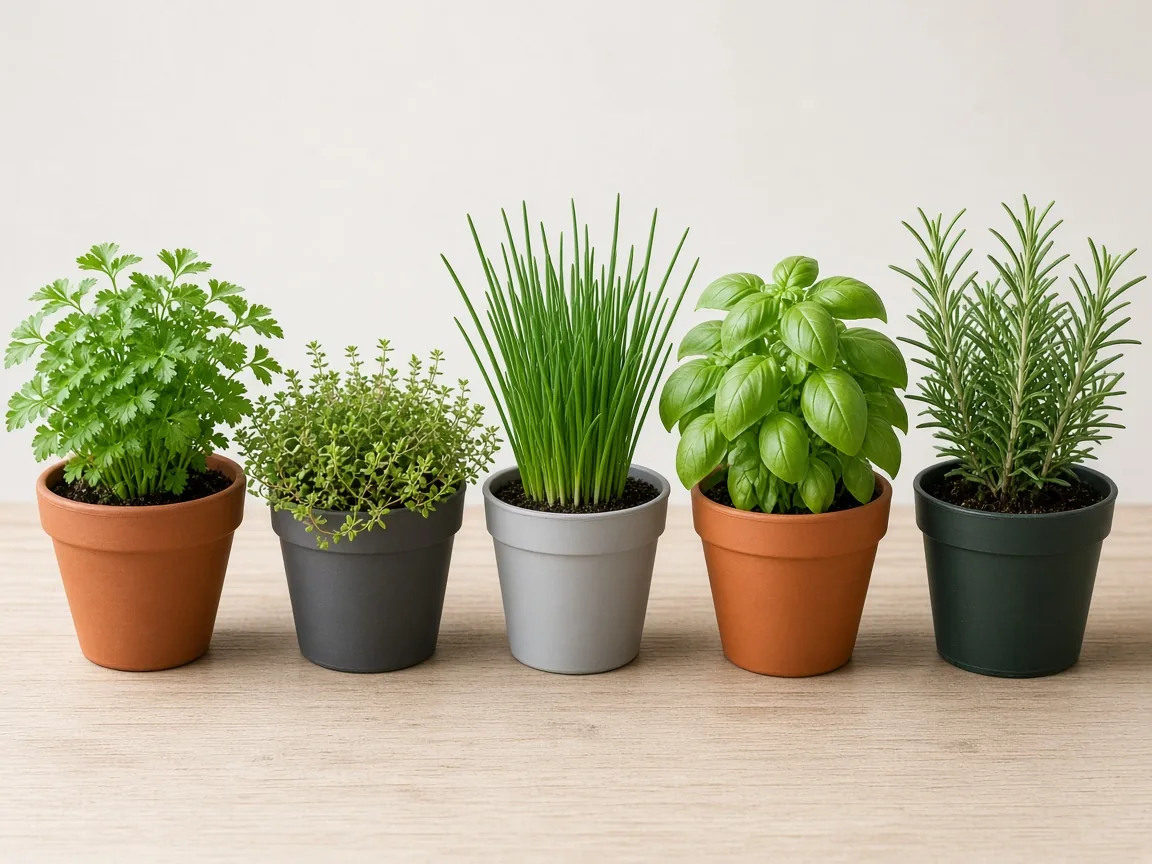
Publication 426-420 says most herbs with a mature height shorter than 12 inches may be grown in 6-inch pots as indoor plants. It names spicy globe basil, dwarf sage, winter savory, parsley, chives, and varieties of oregano and thyme as some of the best choices for windowsill culture. In a sunny window, with ordinary care, they can supply sprigs through the seasons. That 12-inch line is a recommendation for compact herbs.
A six-inch pot is the size that bulletin pairs with those short herbs. You can use the pots already on the shelf. The requirement is drainage, not a matching set. Iowa State says a container that is too large stays wet too long, and each herb does better in its own pot because the plants want different conditions.
Thyme in the 426-420 table is a low plant, about 8 to 12 inches, in light, well-drained soil. Chives are called a good indoor pot plant there. Parsley is on both the Virginia windowsill list and the Iowa State list of herbs that handle ordinary house light and cooler indoor air.
Rosemary needs a little more consideration
In the 426-420 table, rosemary is listed at 36 to 72 inches. The cultural note is short: marginally hardy; plant in a protected site. It wants sun and a well-drained, nonacid soil, and it is grown from cuttings. That protected site is the outdoor plan. An established plant in the ground can stay there when you can point to the spot that shelters it. Digging it up is a separate job, and it is not the automatic next step when the forecast turns cold.
A rosemary that is already in a container can come inside. Iowa State puts rosemary in the next group after the easier herbs. It can succeed indoors, and it has a higher light requirement than parsley or chives. A bright window is the spot. A cooler room is a fair place for that pot, as long as the light is still strong.
Water is the other half. Iowa State says to let the soil dry between waterings, because most herbs do not tolerate wet soil.
What about basil?
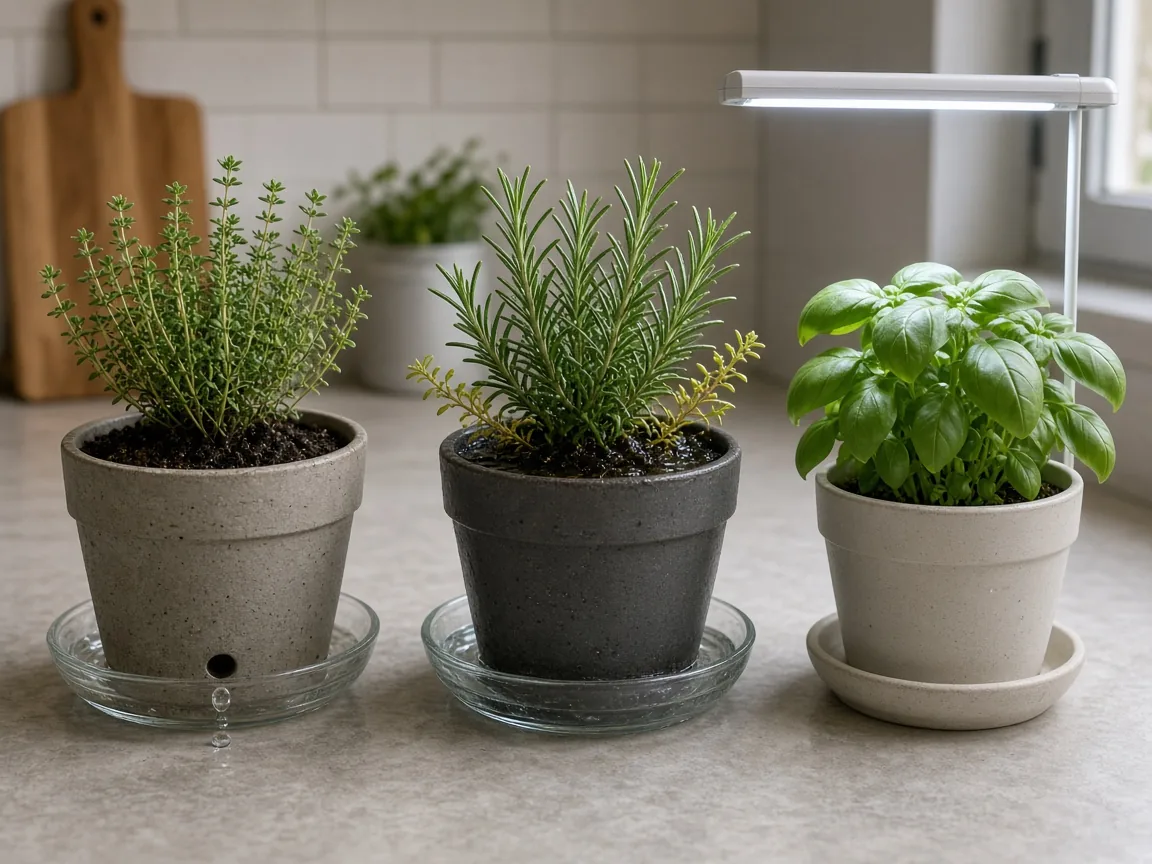
Basil can be grown indoors through winter when it has enough warmth and light. Iowa State lists basil with parsley, mint, chives, oregano, cilantro, and thyme as herbs that do well inside. Publication 426-420 names spicy globe basil for the windowsill, and the same bulletin’s table lists common basil as an annual, about 20 to 24 inches, grown from seed in sun. The compact form is the one that matches the short-herb recommendation. A larger basil can still live in a warm, bright room.
If a frost already blackened the plant, start fresh. Blackened leaves are finished. Iowa State says that after several harvests it is best to discard old annual herbs and start new plants from seed. A frost-hit basil belongs in that fresh start, from seed or a new plant, in warmth and light.
Iowa State also notes that many indoor herbs taste milder than the same plant outdoors, and that basil still tastes like basil either way.
Give mint its own space
Mint does not share well. Publication 426-420 says plants that spread by runners, such as the mints, need a large isolated area or a barrier about 10 to 12 inches deep, or they take over the bed. Iowa State says to grow each herb in its own container, because one pot cannot be ideal for every species.
Give mint its own pot. That pot still needs a drainage hole and a mix that does not stay soggy.
The biggest challenge indoors isn't the pot, it's the light
Iowa State says light is typically the most limiting factor indoors. Most herbs need around eight hours of direct light a day. Some will tolerate as little as six. A south-facing window is the strong candidate. A bright east or west window can work.
Stretched stems, with wider gaps between the leaves, are the plant showing that the light is low. When the window is not enough, Iowa State says herbs grow under supplemental light. Small setups are sold for this, and a person can also use a lamp they already own. The extension range runs from a compact fluorescent in a task light, for a few plants, to a plug-in LED shop light for a larger group. Look for a full-spectrum grow light in a high-output fixture. Set it within 6 to 12 inches of the leaves. A timer at 12 to 16 hours a day is the schedule that page gives for ideal growth.
The pot still matters, in a quieter way. Use a well-draining mix. Publication 426-020, Container and Raised-Bed Gardening, by Alex X. Niemiera, says a well-drained potting soil belongs in containers so they do not stay too wet, and that porous terra cotta dries faster than glazed or plastic. Iowa State likes clay or terra cotta for herbs for that same reason, and says containers should have good drainage.
A saucer can catch the drip. Pour it out. A pot left standing in a full saucer stays wet, which is the condition both pages warn against. Watering will differ by herb and by pot. Check each one. Let the woody herbs dry somewhat between drinks.
Iowa State uses a light feeding, at half or quarter strength, from early spring through summer, and skips fertilizer in winter.
Don't forget the pots left outside
Some containers stay out. Publication 426-020 has a rule of thumb for a plant that has to face the coldest nights: choose a species about two USDA hardiness zones hardier than the zone where you live. The bulletin’s example is a zone 7 garden choosing a zone 5 plant. The same page says you can also overwinter pots in a garage or another place that stays cold but not below freezing.
Terra cotta left in a freeze has a short life. The bulletin says porous containers exposed to freezing crack and shatter. Fiberglass, plastic, stone, or another nonporous pot is the one that can stay outside. Annuals and tender plants are a different case. That page says they need a sunny indoor spot if they are going to get through winter.
Overwintering plants
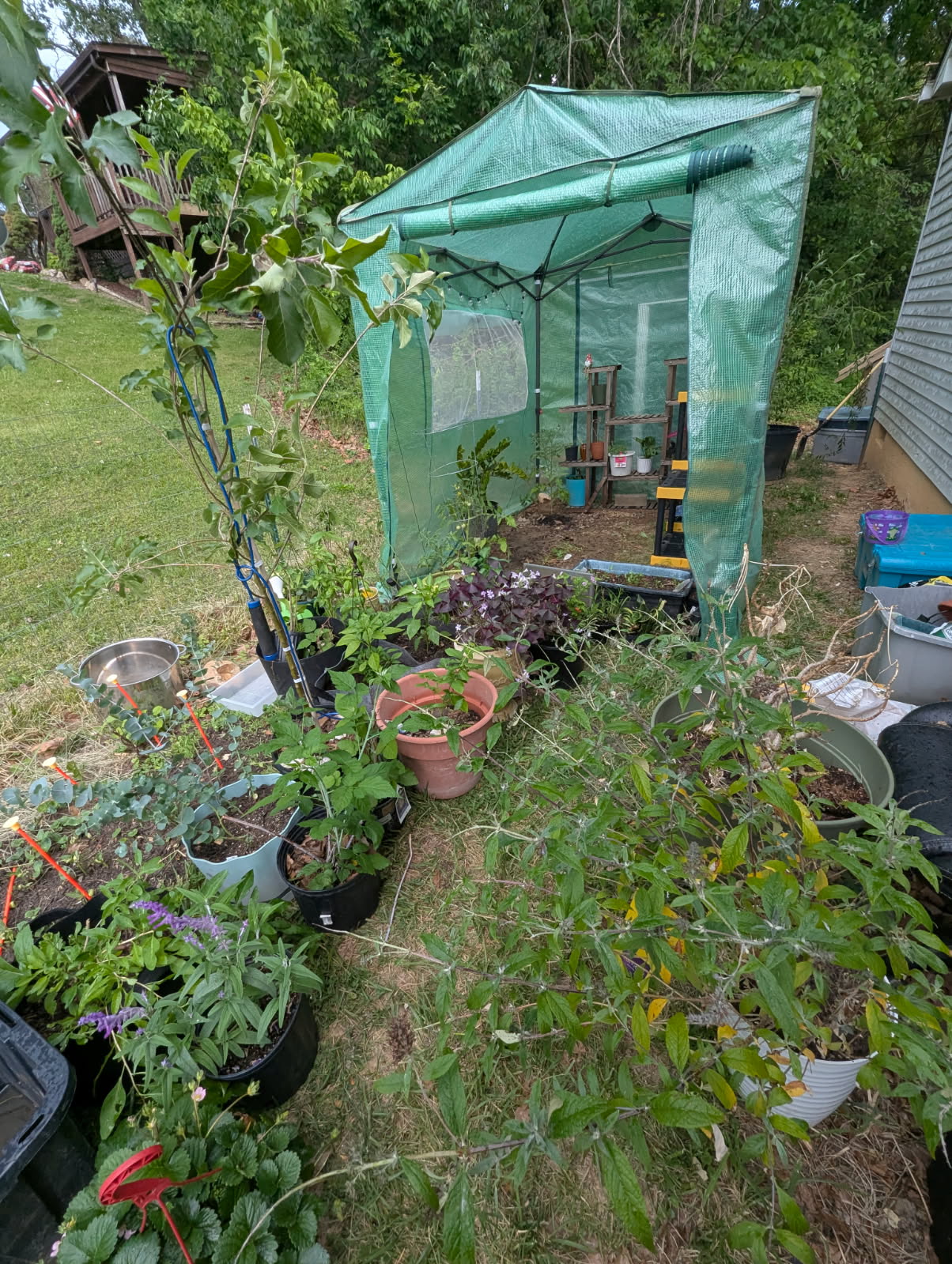
I also use a walk-in pop-up greenhouse to help overwinter plants. It is the EAGLE PEAK 8x6 Portable Walk-in Greenhouse (paid link).
You can still harvest a little
Publication 426-420 says to stop making large harvests of perennial herbs in late summer or fall. Small harvests can be made during most of the fall.
Indoors, Iowa State says to harvest as you would outside, with periodic snipping. Leafy annuals such as basil and parsley can be cut back harder. Cut just above a leaf or a pair of leaves, with a sharp knife or pruning shears, and leave about 4 to 6 inches. On perennials such as chives, mint, oregano, and thyme, take the top third. After several indoor harvests, start new annuals from seed rather than pushing an exhausted plant.
A few things that make indoor herbs easier
- A container with drainage. Iowa State wants a hole and a mix that drains, and a pot that is not so large it stays wet for days.
- A compact LED grow light for the weeks the window falls short. The Iowa State range includes a small lamp and an LED bar, set 6 to 12 inches above the leaves, on a timer for 12 to 16 hours.
- Small pruning snips, or a sharp knife. The same page says to cut just above a leaf.
- The plants and pots you already have. A matching set is optional. The light and the drainage hole are the part that changes the winter.
An AeroGarden for the winter counter
An AeroGarden is great for indoor gardening. I use it a lot over the winter. The plant light acts as a fake indoor summer light. It wakes up the plants, and it wakes me up too.
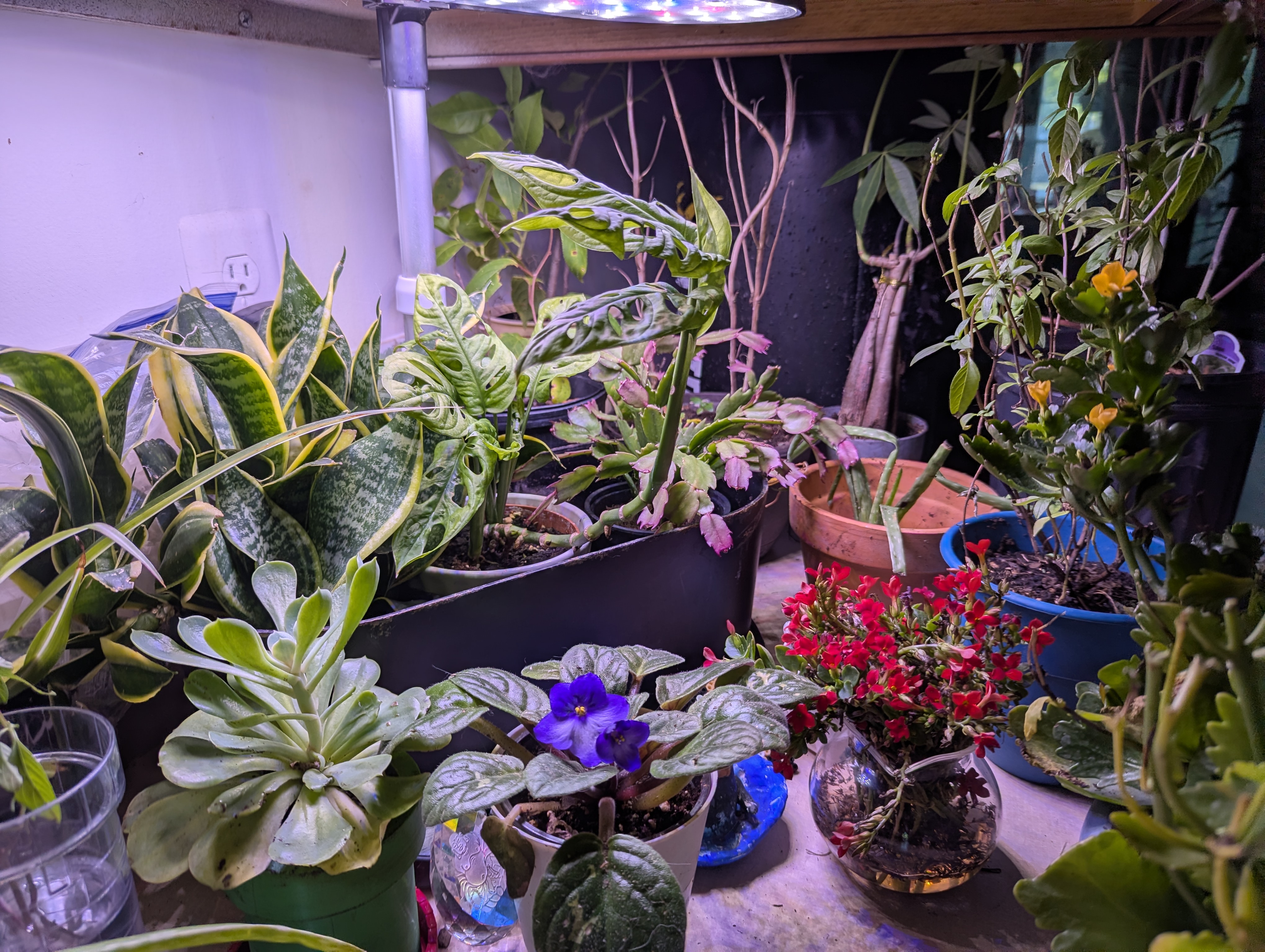
A six-pod countertop garden with its own light is the AeroGarden Harvest in black (paid link).
Seeds you already have can go in a Grow Anything seed pod kit, three pods (paid link). The kit has grow sponges, baskets, domes, and labels.
The Harvest light stays on the garden. A 20-watt AeroGarden LED grow bulb (paid link) fits an ordinary lamp socket.
The water in the garden takes plant food. AeroGarden liquid plant food, one liter (paid link) is the bottle made for these gardens.
Keep it simple this fall
Move the compact herbs to the brightest window. Let a potted rosemary have that bright, cooler spot, and let the mix dry between waterings. Leave an established rosemary in the ground when the site is protected. Give basil warmth and light, and start a new plant if frost already finished the old one. Put mint in its own pot. Pour out the saucer. Take a small harvest, and leave the heavy cutting for another season.
More of the garden notes live on Foster the Wild.
What is in your brightest window tonight?