
As an Amazon Associate I earn from qualifying purchases. Details
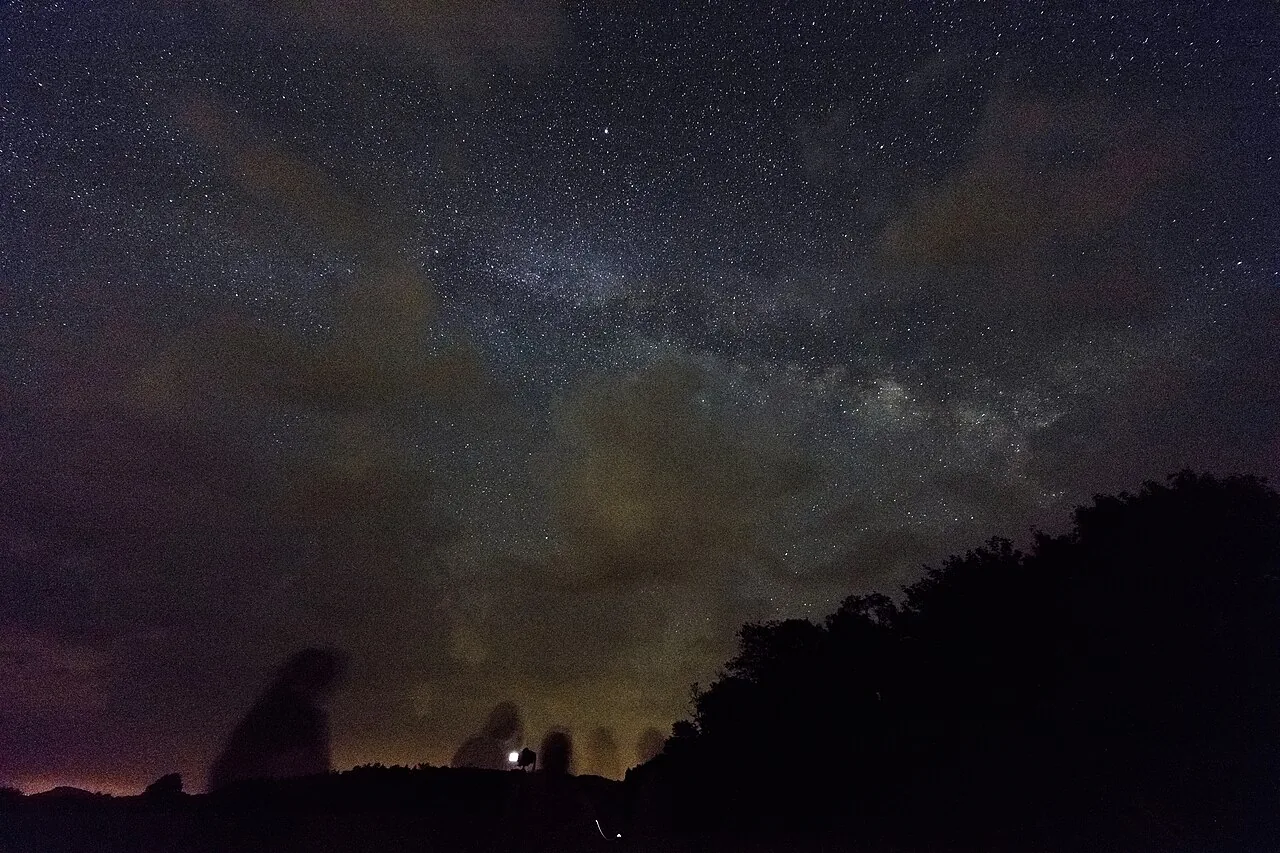
October is the friendliest stargazing month of the year. It gets dark early enough that kids can see real stars before bedtime, the bugs are mostly gone, and you only need a blanket and a jacket. This is the ten-minute ritual we use: step outside, let your eyes adjust, find three things, and come back in quiet.
Key takeaway. Go out about an hour after sunset, turn off porch lights, wait a few minutes while your eyes adjust, and look for three things: the Moon, one bright "star" that does not twinkle, and the Big Dipper or the "W" of Cassiopeia. Then go to bed. Keep it short so it stays special.
Quick answers
| Question | Short answer |
|---|---|
| When do we go out? | About an hour after sunset. In mid-October in Virginia, that is roughly 7:30 to 8 PM |
| How long? | 10 minutes is plenty for young kids |
| What do we need? | A blanket, warm layers, and a red light if you have one |
| Do we need a telescope? | No. Eyes first, then binoculars if you want more |
| Best nights this month? | This week, while the Moon is a thin crescent, and October 21–22 for meteors |
| What age? | Any age. Under 5s often love the Moon most |
Why the sky makes a good bedtime ritual
Looking up is a slow activity. There is nothing to scroll, nothing to win, and you cannot rush it, because your eyes need time to adjust. That built-in pause is the point. It turns "time for bed" into "let's go see the sky, then bed," and the walk back inside is calm because everyone is already whispering.
It also builds a bit of wonder into an ordinary Wednesday. As Carl Sagan put it in Cosmos, "We are made of star-stuff." Kids tend to love hearing that the iron in their blood was made inside stars long ago.
Step 1: Pick your spot and kill the lights (2 minutes)
Choose the darkest corner of your yard, porch, or a nearby field. Turn off porch lights and ask everyone to leave phones inside or tucked in pockets. Spread a blanket or pull out lawn chairs that lean back. Lying down is the most comfortable way to look up.
Step 2: Let your eyes adjust (5 minutes and counting)
Your eyes take a while to get used to the dark. The first few minutes make a big difference, and they keep improving for twenty to thirty minutes. Bright white light, including a phone screen, resets the clock.
Make the wait a game: count the stars you can see in one patch of sky right away, then count again after five minutes. Kids are always amazed that the number grows.
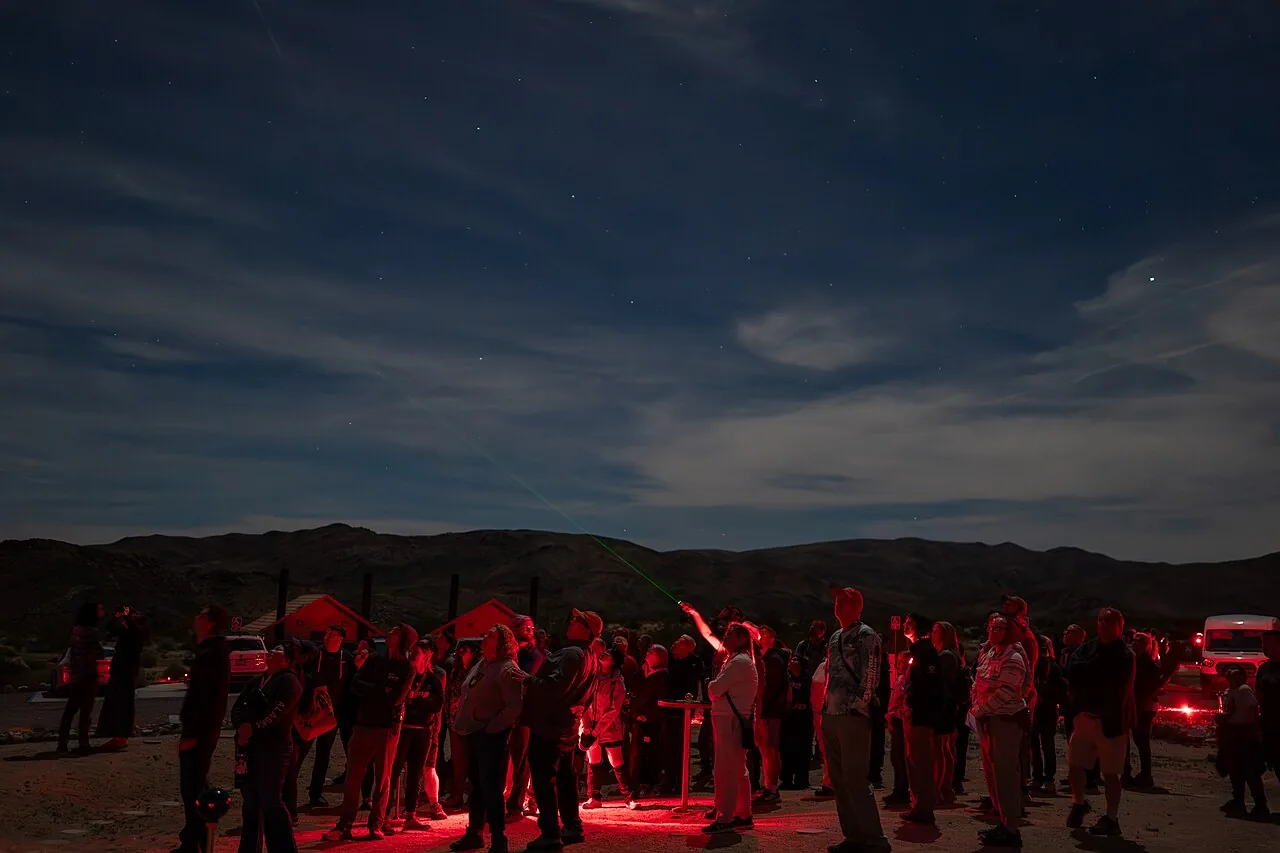
Red light trick: red light disturbs night vision much less than white light. Many headlamps have a red setting, or you can put a little red cellophane over a flashlight with a rubber band.
Step 3: Find three things
1. The Moon
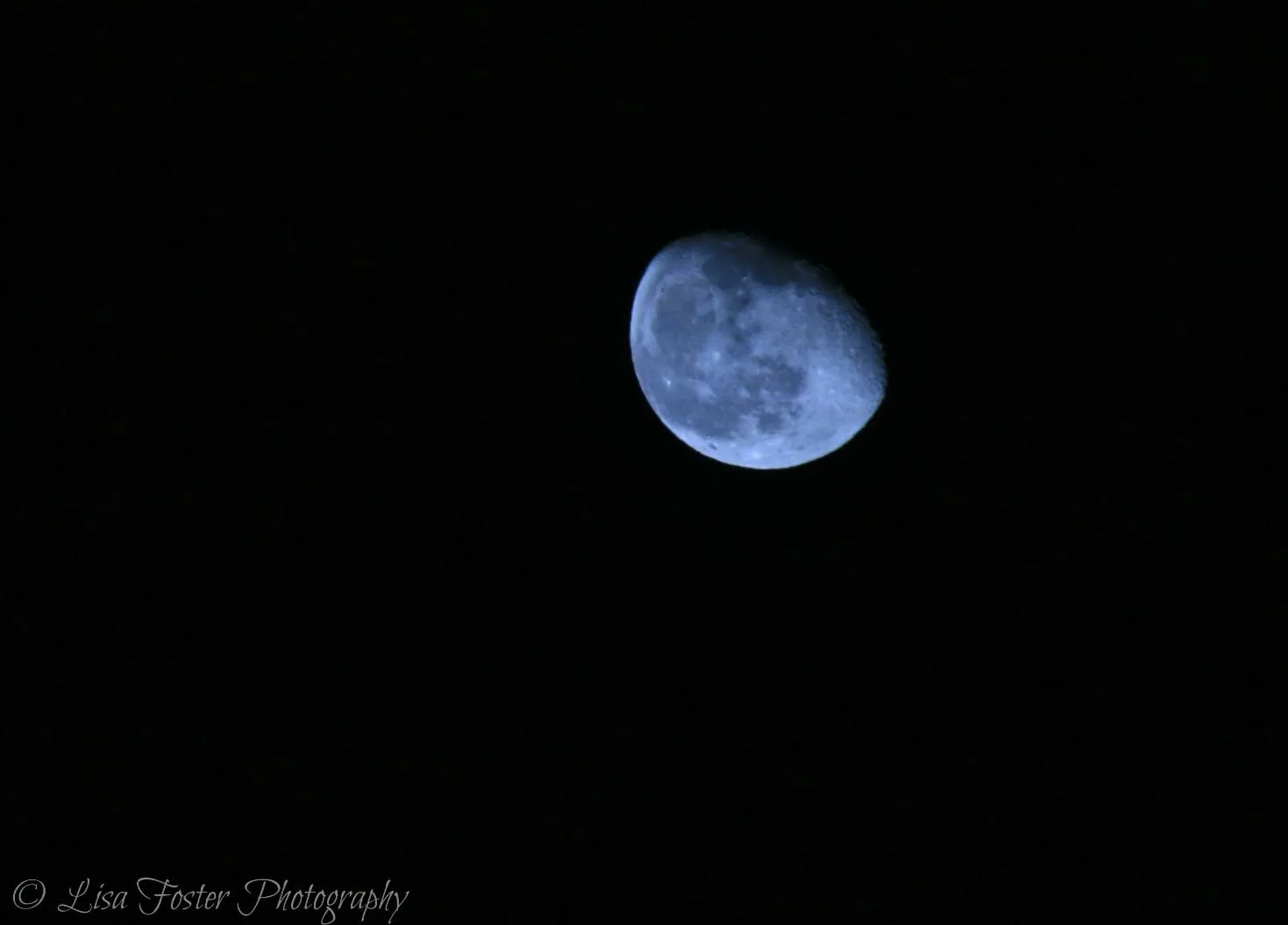
This week (around October 14), the Moon is a thin crescent in the west after sunset and sets fairly early in the evening, so look for it soon after dark. That early moonset is good news: once it goes down, the sky is darker and more stars come out. The Moon reaches first quarter (half lit) on October 18, and the full Hunter's Moon is on the night of October 25 into October 26. Watching it grow a little each night is a lovely two-week project for kids. Have them draw the shape on a calendar each evening.
2. A bright "star" that does not twinkle
Planets usually shine with a steady light, while stars twinkle more, especially low in the sky. Find the brightest dot that looks steady and you have probably found a planet. Saturn is up in the evening sky this fall, and the free sky chart in NASA's monthly What's Up skywatching guide shows where to look.
3. The Big Dipper or Cassiopeia's "W"
Face north. On October evenings, the Big Dipper sits low in the north-northwest, and Cassiopeia, a "W" or "M" of five stars, is higher in the northeast. They sit on opposite sides of the North Star, Polaris. Finding Polaris is a great "I did it!" moment for older kids: follow the two stars at the end of the Dipper's bowl upward.
The big night: Orionid meteors, October 21–22
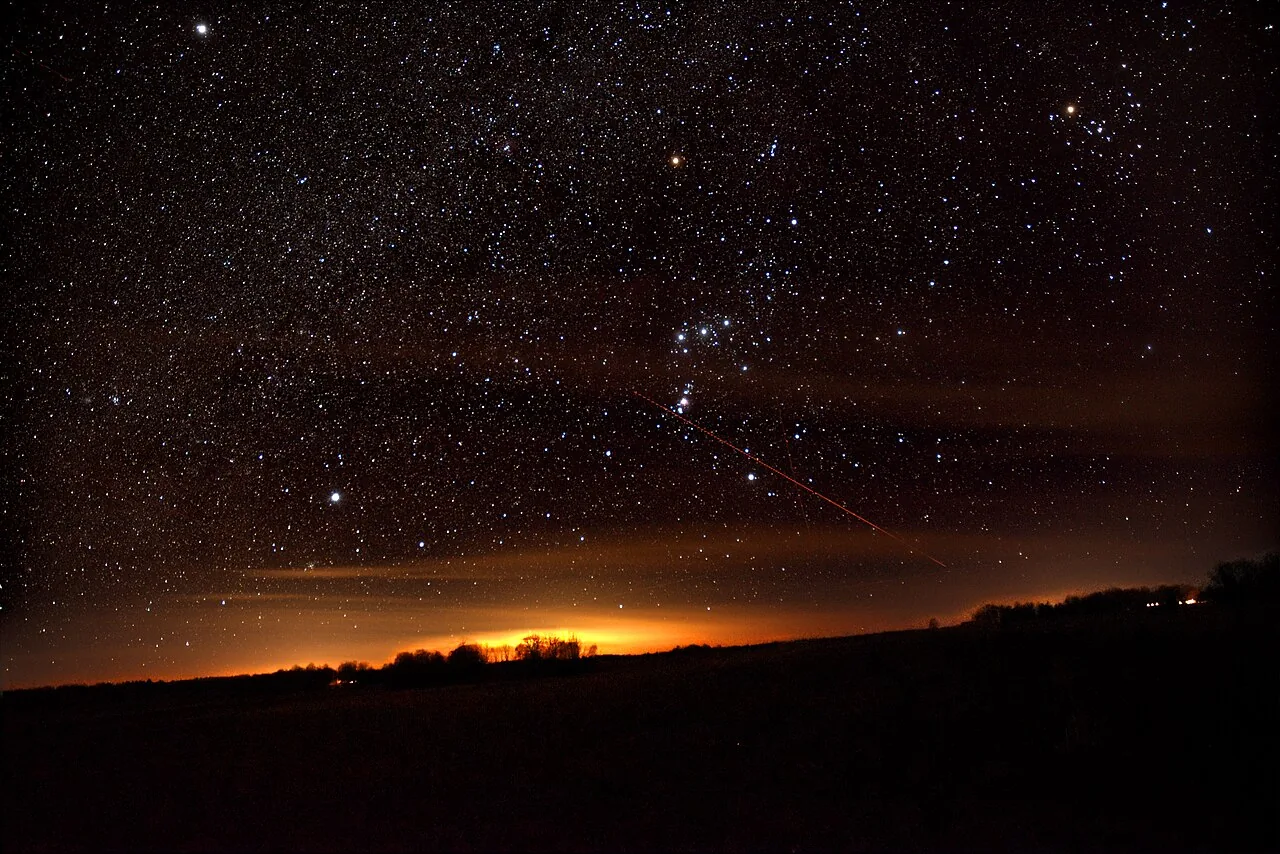
The Orionid meteor shower peaks on the night of October 21 into October 22 this year. Under a dark sky you might see up to about 20 meteors an hour, but the best viewing is after midnight, and the Moon will be fairly bright in the evening that week.
For kids, I would not plan a midnight wake-up. Instead:
- Tell the story at bedtime: the Orionids are tiny bits of dust left behind by Halley's Comet. Each "shooting star" is a speck burning up high in the air.
- Look for 10 minutes before bed on October 21. You may catch one or two early meteors, and one is enough to make a kid's whole month.
- Older kids and grown-ups who want more can set an alarm for the early morning hours, when Orion is high.
Make it calm, not a field trip
The goal is quiet, not a science lesson. A few ways to keep it gentle:
- Same time, same spot. Like any bedtime routine, it works best when it is predictable.
- Whisper rule. Stars are for whispering. Kids take this surprisingly seriously.
- One question each. "What do you notice?" or "If you could visit one star, which would it be?"
- Three slow breaths before you go in. Breathe in the cold air, breathe out a little cloud.
- End it on time. Ten minutes, then inside, pajamas, lights out.
If you want a little gear
You do not need anything to enjoy the October sky, but two things add a lot:
- A good kid-friendly star book. H.A. Rey, the author of Curious George, also wrote Find the Constellations, a classic that draws constellation lines so they actually look like their names. It is a great read-aloud on cloudy nights.
- Binoculars. Steady 10x50 binoculars show craters on the Moon and many more stars. The Celestron UpClose G2 10x50 is an affordable starter pair. They are heavy for little hands, so have kids rest their elbows on their knees or lean against a chair.
Where to go for darker skies
A backyard is plenty for the Moon, planets and bright stars. If you want the full Milky Way someday, Shenandoah National Park holds night sky programs, and the Big Meadows area is known for its dark skies. Check the park's calendar of events for upcoming astronomy programs.
Your 10-minute plan for tonight
- About an hour after sunset, turn off the outside lights (1 minute).
- Blanket down, everyone lies back (1 minute).
- Count stars now, and again in five minutes (5 minutes).
- Find the Moon if it is still up, a steady bright planet, and the Big Dipper or the "W" (2 minutes).
- Three slow breaths, then inside (1 minute).
Tomorrow night, go out at the same time and see what changed. That is how a sky habit starts.