
As an Amazon Associate I earn from qualifying purchases. Details
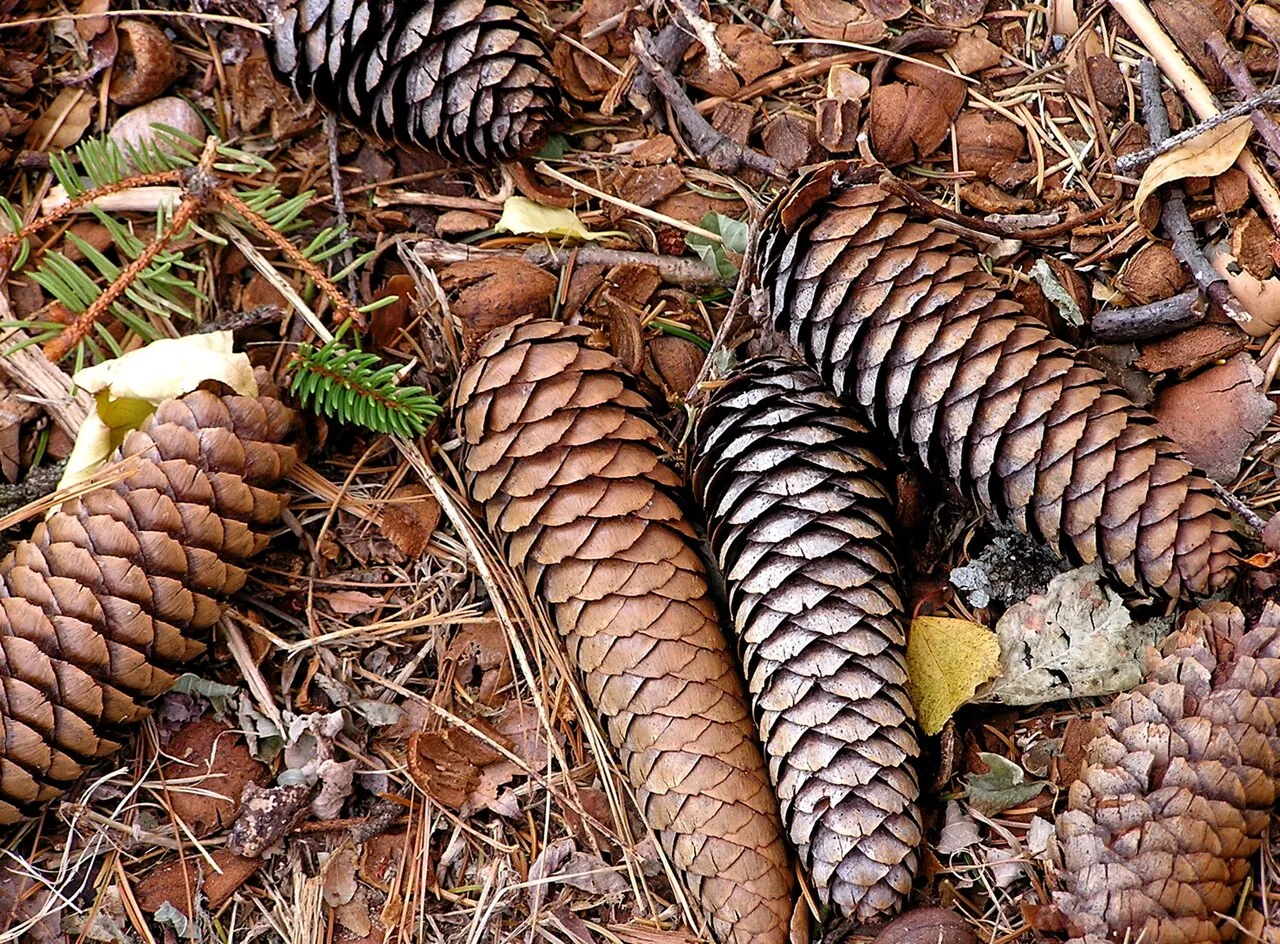
A pinecone feeder is one of those crafts that keeps paying off after the glue would have dried. You make it in twenty minutes, hang it outside a window, and then the real fun starts: who comes to eat? October is a great time to start, because the summer birds are thinning out and the winter regulars are settling in.
Key takeaway. Find an open pinecone, tie on a string, spread it with peanut butter or a peanut-free fat, roll it in birdseed, and hang it where you can see it from a window. Then keep a simple tally of every visitor for a week.
Quick answers
| Question | Short answer |
|---|---|
| How long does it take? | About 20 minutes, plus a cone-hunting walk |
| What age is it for? | About 3 and up with help; 6 and up can do most of it alone |
| Mess level | Medium. Do it on a tray or outside |
| What do I need? | Pinecones, string, a spread, birdseed, a butter knife, a tray |
| Peanut allergy at home? | Use vegetable shortening instead of peanut butter |
| How long does it last outside? | A few days to a week, depending on how busy your birds are |
What you need
- Pinecones. Open, dry ones hold the most seed. Ones that have been sitting inside for a day are easier to spread.
- String, yarn or twine. About 18 inches per cone.
- A spread. Smooth peanut butter, or plain vegetable shortening if anyone at home has a peanut allergy. Both stick well.
- Birdseed. A mixed seed with plenty of sunflower works well for most backyard birds. I would use Wagner's Eastern Regional Wild Bird Food, a blend with black oil sunflower, safflower and millet made for the songbirds we see in the East. A 20-pound bag lasts a long time, and you can refill a hanging feeder with the rest.
- A butter knife or craft stick for spreading.
- A rimmed baking sheet or shallow box to roll the cone in. This is what keeps the mess contained.
Step by step
- Tie the string first. Wrap it around the cone a few rows down from the top, between the scales, and knot it tightly. Leave a long tail for a loop. Tying it after the cone is sticky is much harder.
- Spread. Use the butter knife to push the spread into the gaps between the scales. A thin layer is enough. Little hands do best with a craft stick and a small scoop of spread in a cup.
- Roll. Pour the seed onto the tray and roll the cone until it is covered. Press with your palms to pack more seed into the gaps.
- Shake off the extra over the tray, and pour that seed back into the bag.
- Hang it. Tie a loop and hang it from a branch, a shepherd's hook, or a porch rail.
- Wash hands with soap and water, especially after handling seed.
Where to hang it
Placement matters more than the recipe.
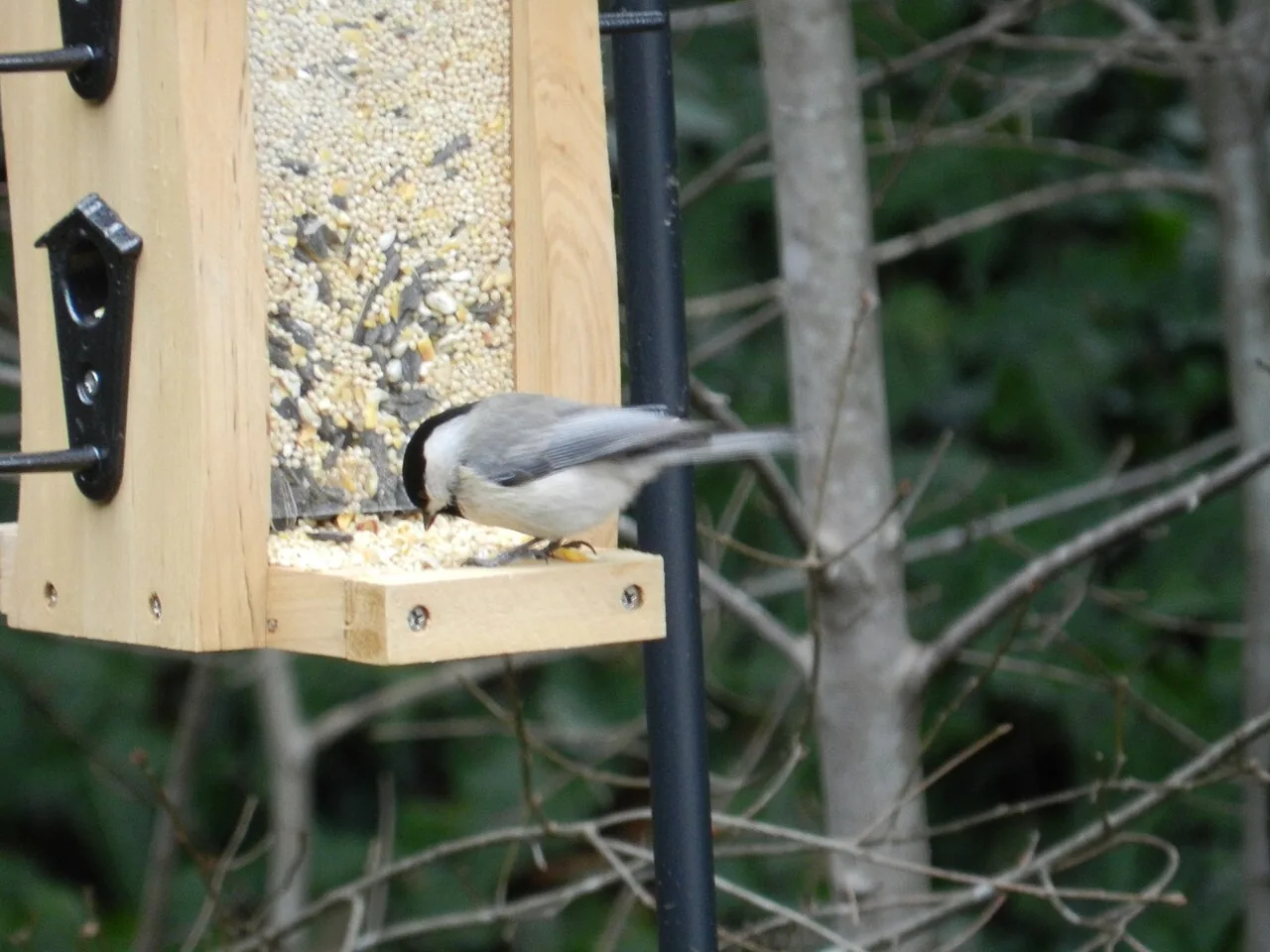
- Somewhere you can see from a window, ideally the one by the kitchen table. Half the joy is watching.
- Near cover, but not right inside it. A tree or shrub a few feet away gives small birds somewhere to dart to.
- Safe from window strikes. The old rule was to hang feeders either very close to a window or far from it. The Cornell Lab of Ornithology now says distance alone is not reliable, and the real fix is making the glass visible to birds with decals, screens or film. Their guide on where to put your bird feeder walks through it.
- Away from easy cat ambush spots, like low bushes right underneath.
About bears: if you live where black bears wander, Virginia's Department of Wildlife Resources recommends not leaving bird food out when bears are active. Check their living with black bears page before you hang anything. In bear country, hang the feeder only during the day and bring it in at night, or skip it and do the bird count at a park.
Who might show up in the Shenandoah Valley
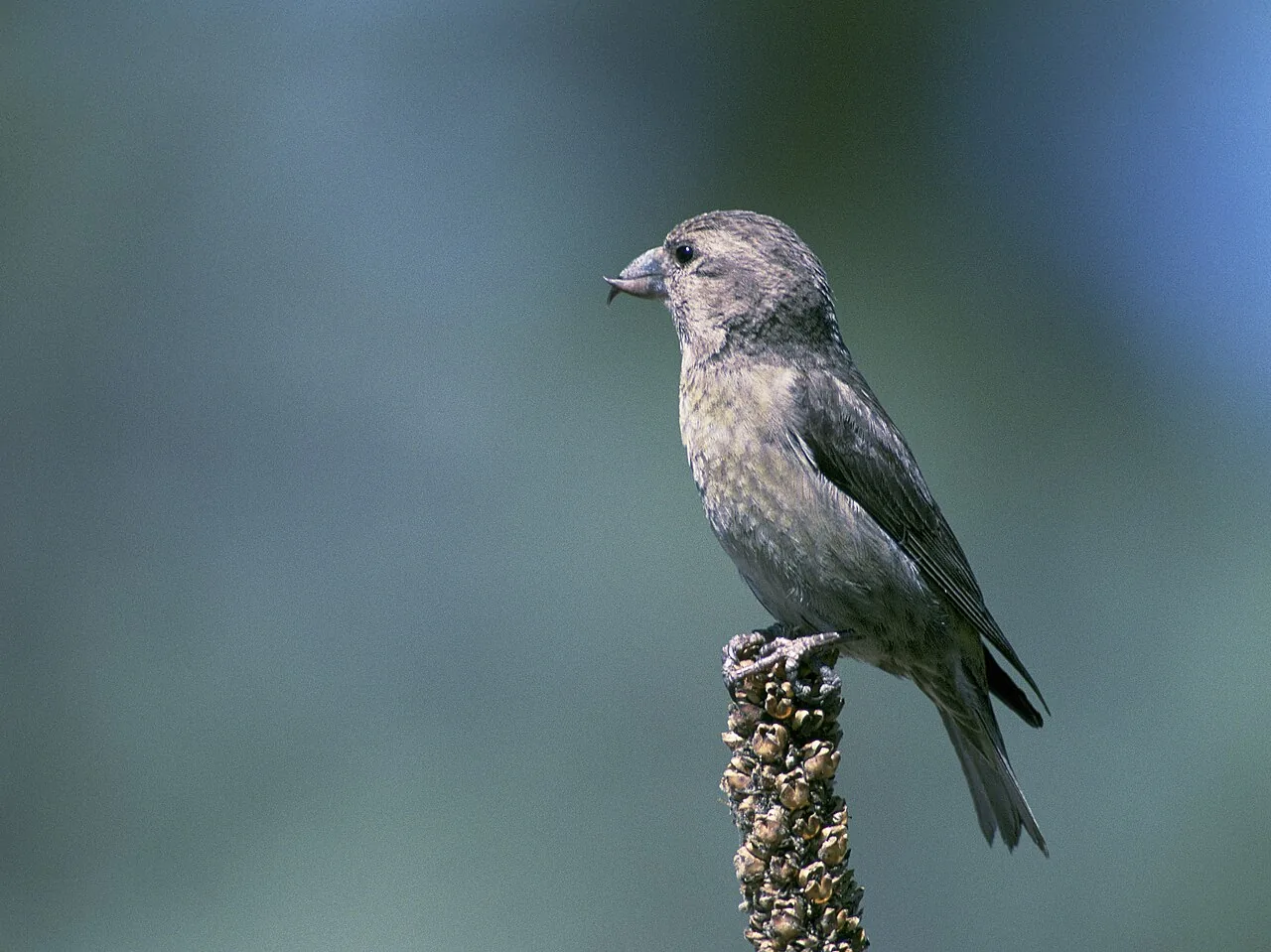
Here are some common fall and winter feeder visitors in the Valley. Kids love having a "most wanted" list:
| Bird | How to spot it |
|---|---|
| Carolina chickadee | Tiny, black cap and bib, says its own name |
| Tufted titmouse | Gray with a pointed crest and big dark eyes |
| White-breasted nuthatch | Walks headfirst down tree trunks |
| Downy woodpecker | Small, black and white, a red patch on the males |
| Northern cardinal | Bright red males, warm tan females |
| Dark-eyed junco | Slate gray with a white belly, shows up as it gets colder |
| Carolina wren | Brown, with a white eyebrow stripe and a very loud song |
If you see something you cannot name, the free Merlin Bird ID app from the Cornell Lab asks you three simple questions (size, colors, what it was doing) and suggests matches. It can also identify birds by their song.
Turn it into a week-long bird count
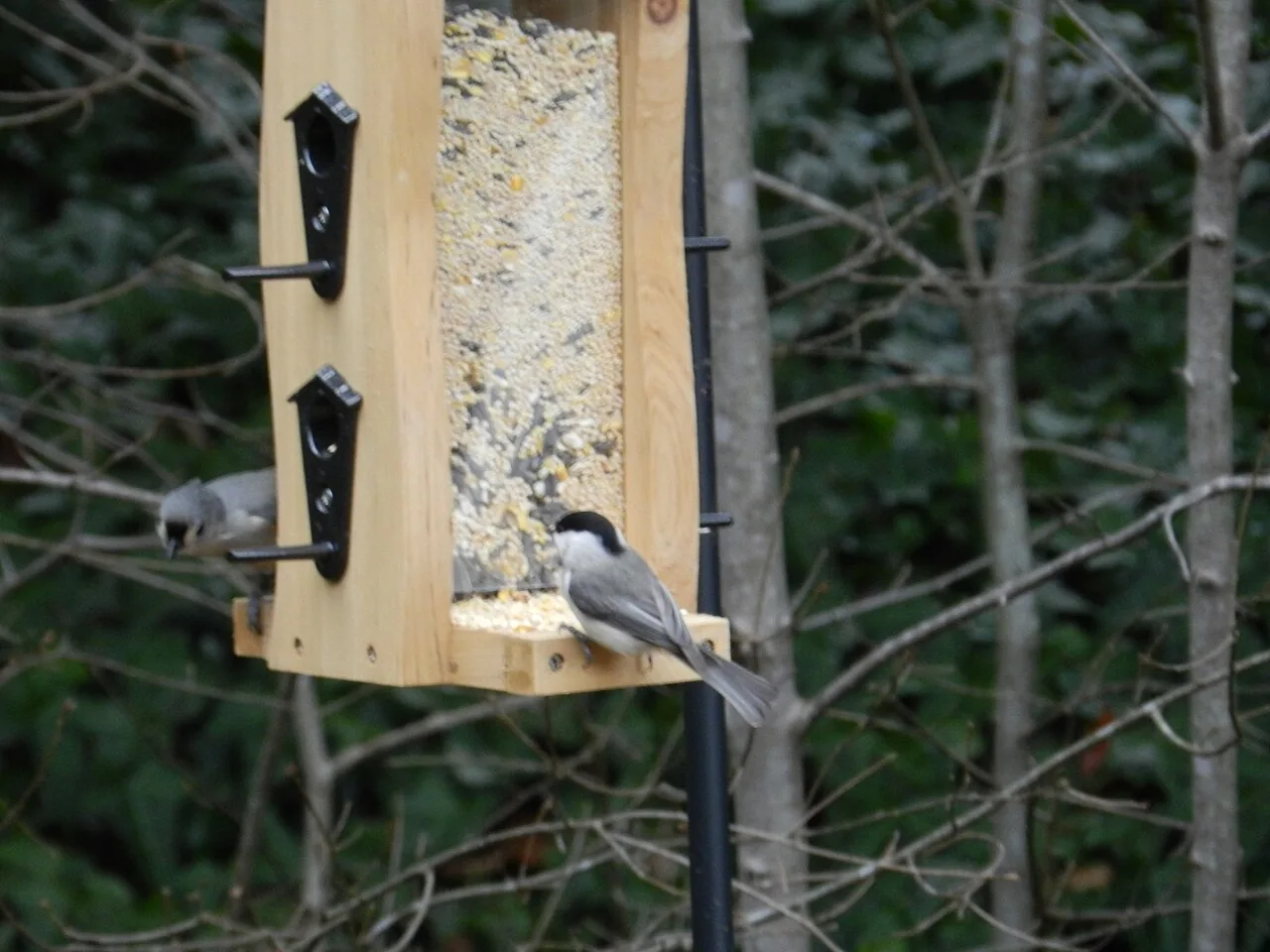
This is where a craft becomes a habit. Make a simple tally sheet: one row per bird, one column per day. Each morning at breakfast, everyone watches the feeder for five minutes and makes tally marks.
Tally sheet idea:
| Bird | Mon | Tue | Wed | Thu | Fri | Sat | Sun |
|---|---|---|---|---|---|---|---|
| Chickadee | |||||||
| Titmouse | |||||||
| Cardinal | |||||||
| Mystery bird |
At the end of the week, ask:
- Which bird came the most?
- What time of day was busiest?
- Did anybody chase anybody else off?
- Did the weather change who showed up?
Older kids can draw a quick bar chart. Younger kids can draw their favorite visitor. If your family gets hooked, the Cornell Lab's Project FeederWatch runs every winter starting in November, and families send in their counts for real scientists to use.
Make it work for different ages
- Ages 3 to 5: an adult ties the string and holds the cone. The child spreads with a craft stick and does all the rolling, which is the best part.
- Ages 6 to 9: they can do almost everything. Let them choose the hanging spot and run the tally sheet.
- Ages 10 and up: have them make two kinds of cones, like one with sunflower-heavy seed and one with plain millet, then compare which one gets eaten first. That is a real experiment.
Keep it fresh and safe for the birds
- Cool weather only. Fat spreads can go soft and rancid in heat, so this is a fall and winter craft.
- Replace cones that get moldy or soggy after rain. Toss them in the trash, not the yard.
- Do not add bread, salty snacks or sweets. Plain seed and plain spread are all the birds need.
- Clean up dropped hulls under the feeder now and then.
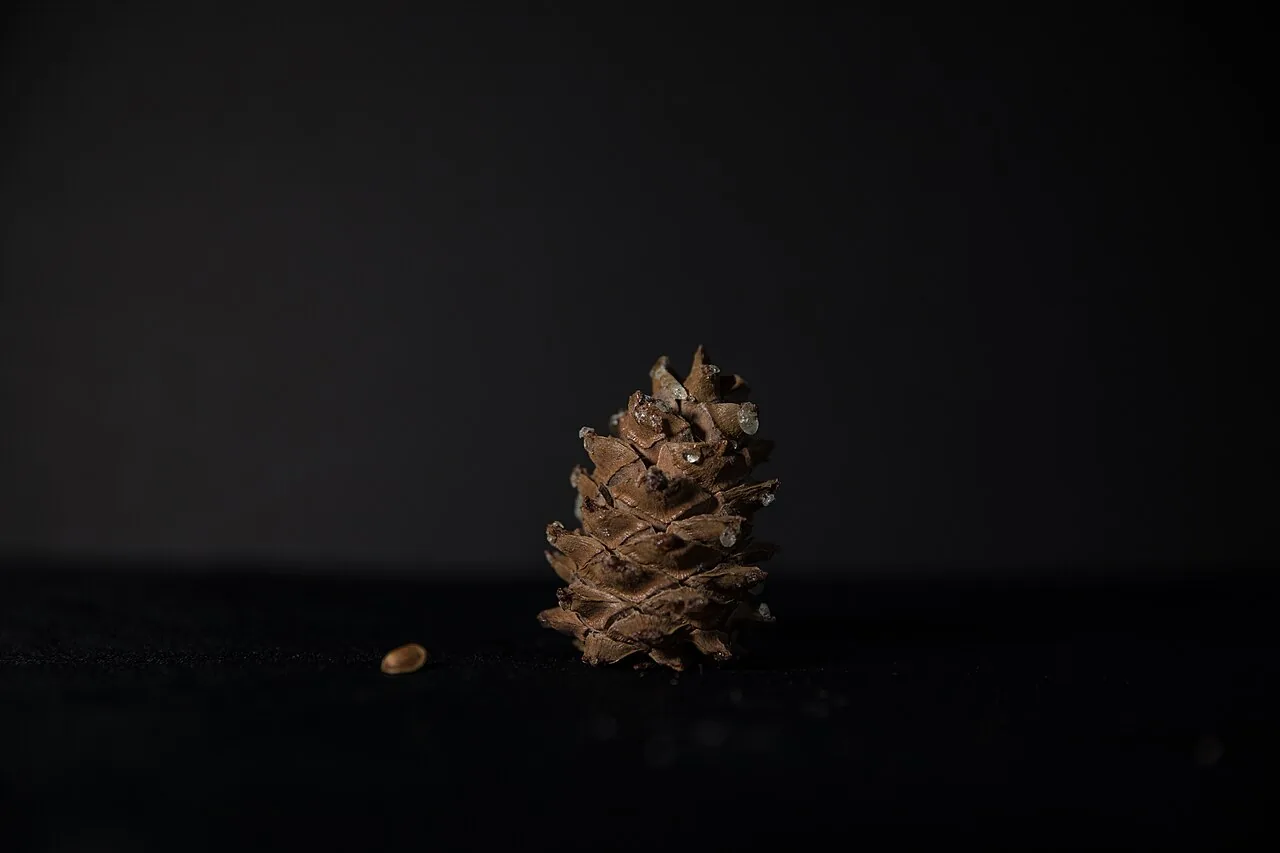
More pinecone ideas for the same walk
Gather a few extra cones. Once the feeder is up, they become:
- A sorting game. Line them up by size, or by open versus closed.
- A "does it open?" experiment. Put one closed cone in a warm room and one outside, then check after two days.
- A nature table. Add acorns, leaves and a feather (look only, do not touch feathers you find, since many are protected).
The best part of this craft is the quiet five minutes at the window it gives you every morning. Hang it tonight, and see who is there by breakfast.