
As an Amazon Associate I earn from qualifying purchases. Details
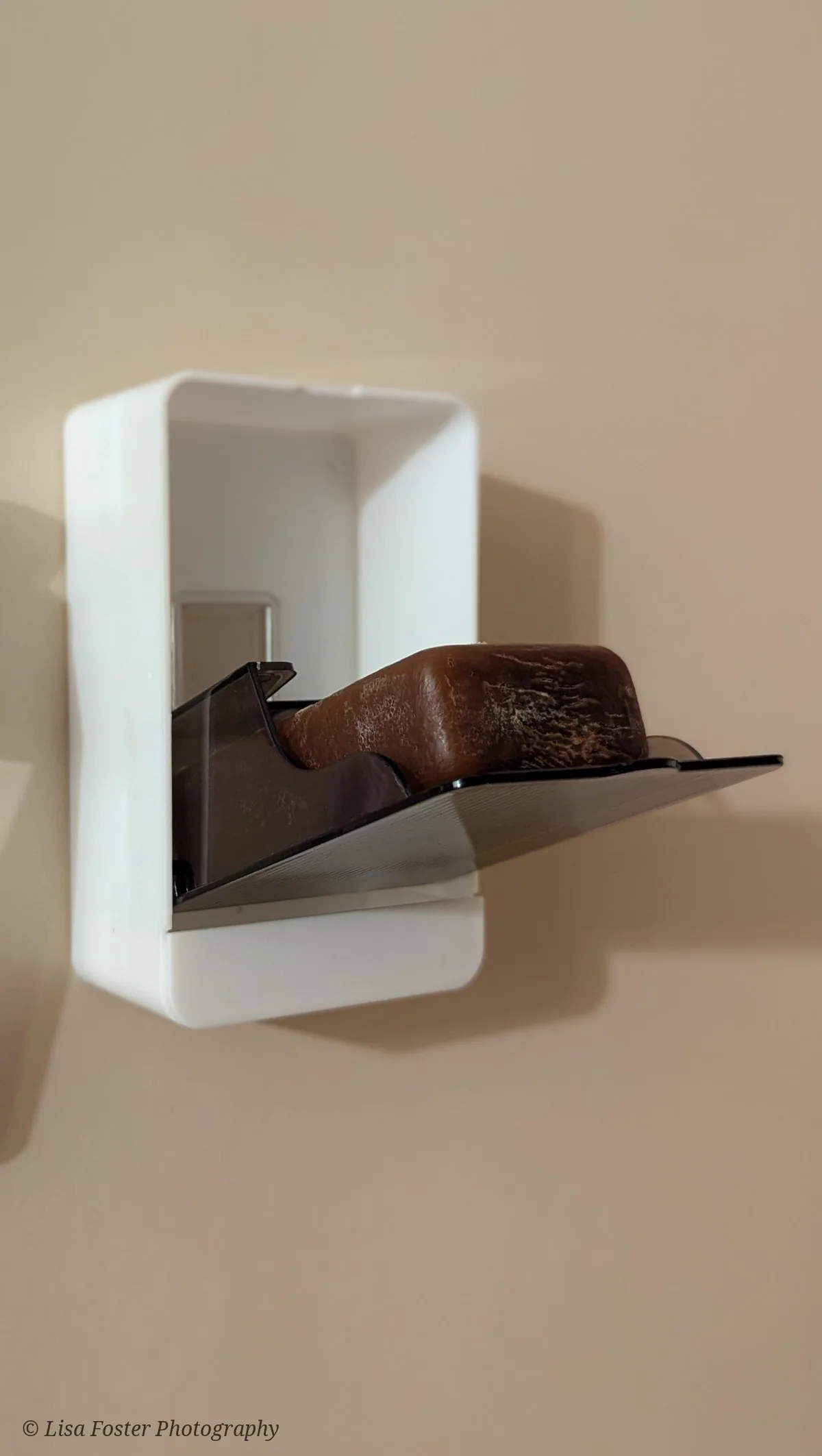
Some things in my shower are pretty. This bar of soap is not one of them. It is a dense, dark brown block that looks a little like a piece of bark, and it smells like a campfire that someone put out with a forest. It is also the soap I keep reaching for.
It is a Natural Birch Tar Soap "Degtyarnoe" by Neva Cosmetics, a 140-gram Russian bar sold in the US by Secrets of Siberia. It is the kind people in Russia call degtyarnoe mylo, and it has been a bathhouse staple there for generations. Here is what I learned when I looked into it, how I use it, and the cheap little wall box that keeps it from turning to mush.
Key takeaway. Birch tar soap is a plain, old-fashioned soap with birch tar added. It has a long traditional history, the smell is strong, and many people like it for oily or breakout-prone skin.
Not medical advice. I am a photographer sharing my own experience, not a doctor. These statements have not been evaluated by the Food and Drug Administration. This product is not intended to diagnose, treat, cure, or prevent any disease. If you have a skin condition, talk with a dermatologist.
Quick answers
| Question | Short answer |
|---|---|
| What is it? | A traditional soap bar with birch tar, a dark resin made by heating birch bark |
| What does it smell like? | Smoke, leather and woodsmoke. Strong. It fades on the skin after rinsing |
| Where does it come from? | Russia and northern Europe, where it was a bathhouse staple |
| How do I start? | Patch test, then once a day, and moisturize after |
| How do I make a bar last? | Keep it out of standing water. A draining holder makes a big difference |
What birch tar actually is
Birch tar is a thick, dark, smoky resin made by slowly heating birch bark without much air. It is one of the oldest materials people have worked with. Archaeologists have found it used as glue on stone tools from tens of thousands of years ago, and a 2026 study in PLOS One on the antibacterial properties of experimentally made birch tar points out that Mi'kmaq and Saami communities traditionally used it as a skin ointment and wound dressing.
In northern Europe and Russia it ended up in soap. Tar soap was the plain, practical bar you kept by the washbasin or took to the banya, the Russian steam bath, along with a birch-twig venik. It was cheap, it lasted, and the smell meant "clean" to a lot of grandmothers.
The banya connection
The banya is a ritual as much as a bath. You sit in the heat, step out to cool off, go back in, and somewhere in there you wash up. Tar soap fit right in: a sturdy bar that held up to hot, steamy rooms and hard water, with a smell that matched the woodsmoke from the stove. Families kept one bar going for months, and for many people the scent still means a Saturday at the bathhouse.
I like that history. Using it feels a little like borrowing a habit from someone's great-grandmother, and it makes an ordinary shower feel slower and more deliberate.
What is in the bar
My bar is made by Neva Cosmetics (Nevskaya Kosmetika in Russian), a St. Petersburg company. On the manufacturer's product page (in Russian), the toilet-soap version lists:
- Soap base: sodium tallowate, sodium palmate, sodium palm kernelate and sodium stearate. That is classic soap made from tallow and palm oils.
- Water and glycerin. Glycerin is a humectant that helps skin hold moisture.
- Betula tar. That is the birch tar.
- Small helpers: triethanolamine, PEG-400, disodium EDTA, citric acid, cellulose gum, benzoic acid and salt, which keep the bar stable and lathering in hard water.
So it is plant-based in its "active" part, the birch, but the bar itself is a traditional soap that includes animal fat. If you avoid tallow, check the label on the version you buy, because formulas vary from bar to bar and seller to seller.
The manufacturer says the bar has a high content of natural birch tar, has no dyes or added fragrance, and is suited to problem skin prone to breakouts. Those are their words, not a medical finding.
What it has done for me
This is the personal part, so please read it as one person's story and not a promise.
In my experience, this soap cleared up my hormonal acne really well. I had the kind of breakouts that come and go with my cycle along the jaw and chin, and after a few weeks of washing with this bar, my skin was noticeably calmer. That is what worked for me. Skin is personal, hormones are personal, and your results could be completely different. If your acne is painful, lasting or leaving marks, a dermatologist is the right next step, and the American Academy of Dermatology has a good overview of adult acne to read before you go.
Birch tar has been traditionally used for oily and breakout-prone skin in Eastern Europe, and its antimicrobial character is the usual reason people give. The lab research I found is on birch tar itself, not on this soap or on acne, so the most anyone can honestly say is that it may support a clean, less oily feel for some people.
About the smell. It is strong. It is not cutesy. It is not lavender. The first time I opened the box, I thought someone had lit a campfire in my bathroom. But it works for me, and the smell mostly rinses off and fades fast. If you love the smell of a woodstove or a leather saddle, you might even like it. If you live with someone sensitive to smells, maybe keep it in a closed box. Which brings me to the holder.
How I use it
If you want to try the same bar, here is the Neva Cosmetics birch tar soap I use.
Safety first: patch test on your inner arm for a few days, and keep it away from your eyes and broken skin.
These are the realistic habits that have worked for me:
- Lather in your hands, not on your face. Wet the bar, rub up a lather between your palms, then wash with the foam.
- Keep it short. About 20 to 30 seconds, then rinse well with lukewarm water.
- Moisturize after. A plain, fragrance-free moisturizer helps, because a good scrub with any bar soap can leave skin feeling a little dry.
- Start slowly. I began with once a day, at night. Some people only use it a few times a week.
- Stop if it stings. Redness, burning or flaking that sticks around means it is not for you.
Why a draining holder makes the bar last longer
A bar of soap's biggest enemy is a puddle. When it sits in water, the bottom turns soft and slimy, and that mushy layer washes down the drain the next time you use it. Tar soap is dense, but even dense soap melts away in a wet dish.
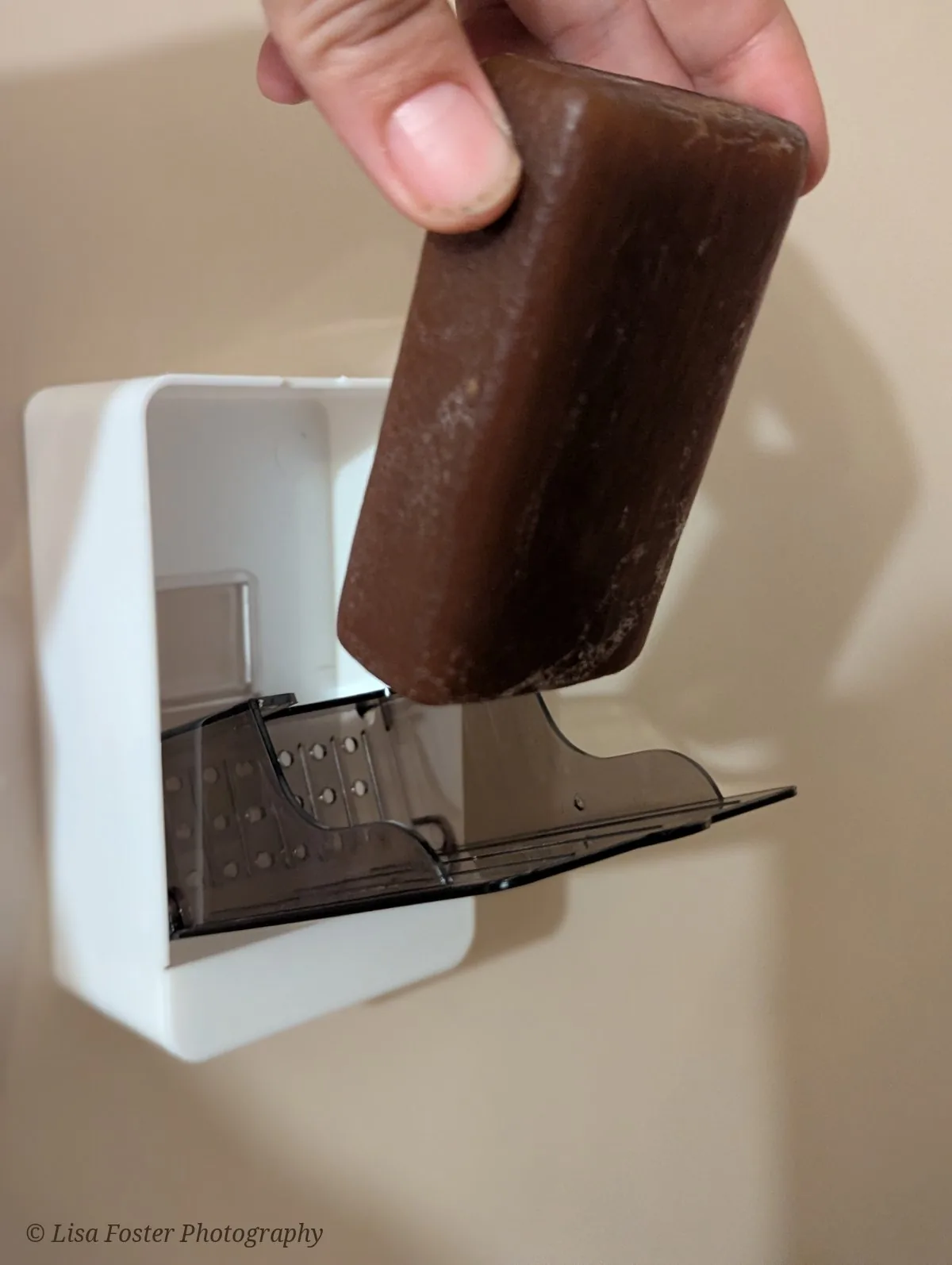
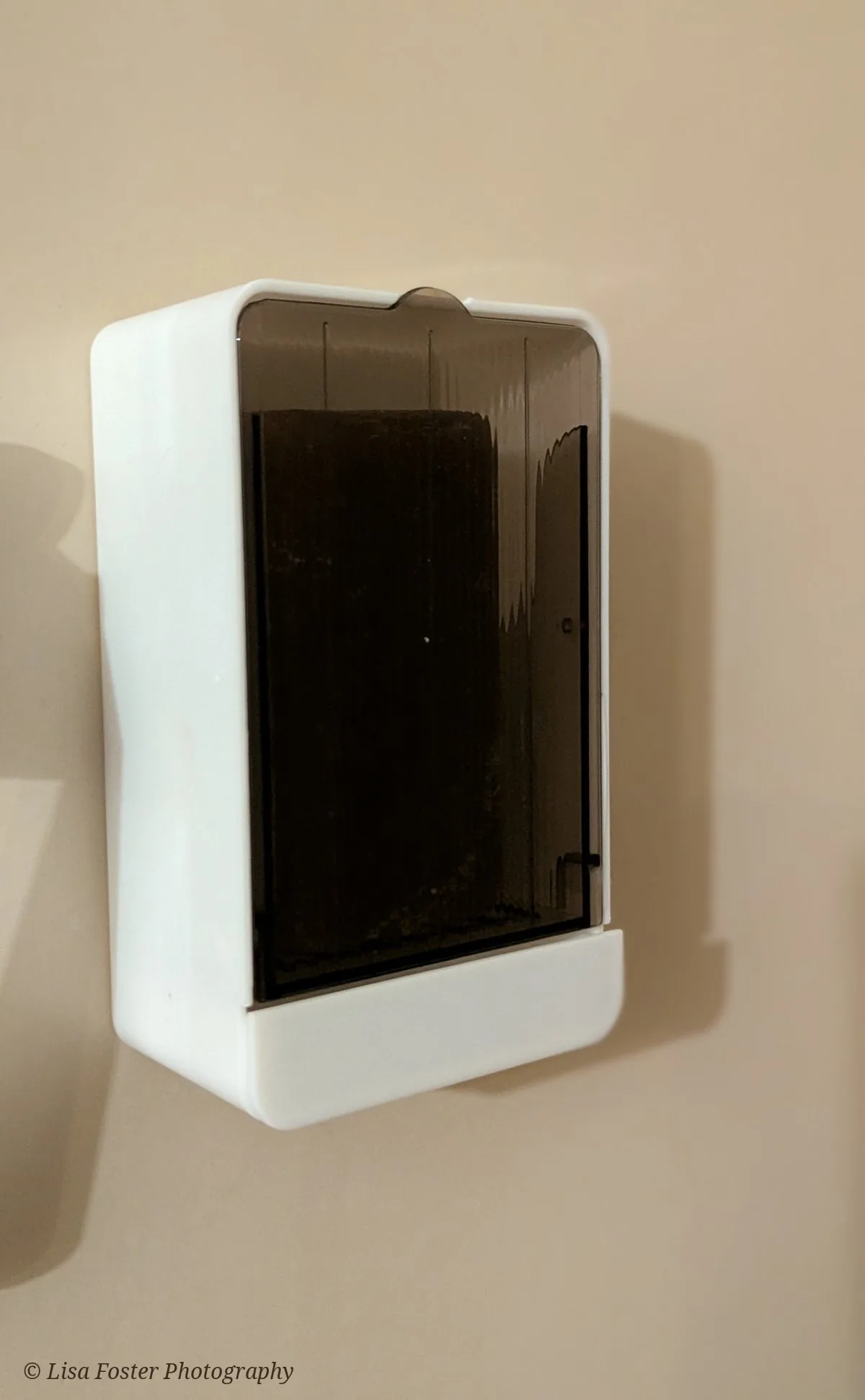
I picked up a small wall-mounted box with a self-draining tray, and it fixed the problem. It is a two-pack white self-draining wall soap box that sticks on with adhesive, so no drilling. Here is why it works:
- The bar sits on ridges, not in water. The smoky flip-down tray has little raised bumps and holes, so water runs off instead of pooling.
- There is a drip drawer. Water drips into a small pull-out tray at the bottom that you empty and rinse every few days.
- The bar is up out of the spray. It is not getting soaked every time someone showers.
- The lid closes. It keeps the bar clean and, in my case, keeps the campfire smell in its box.
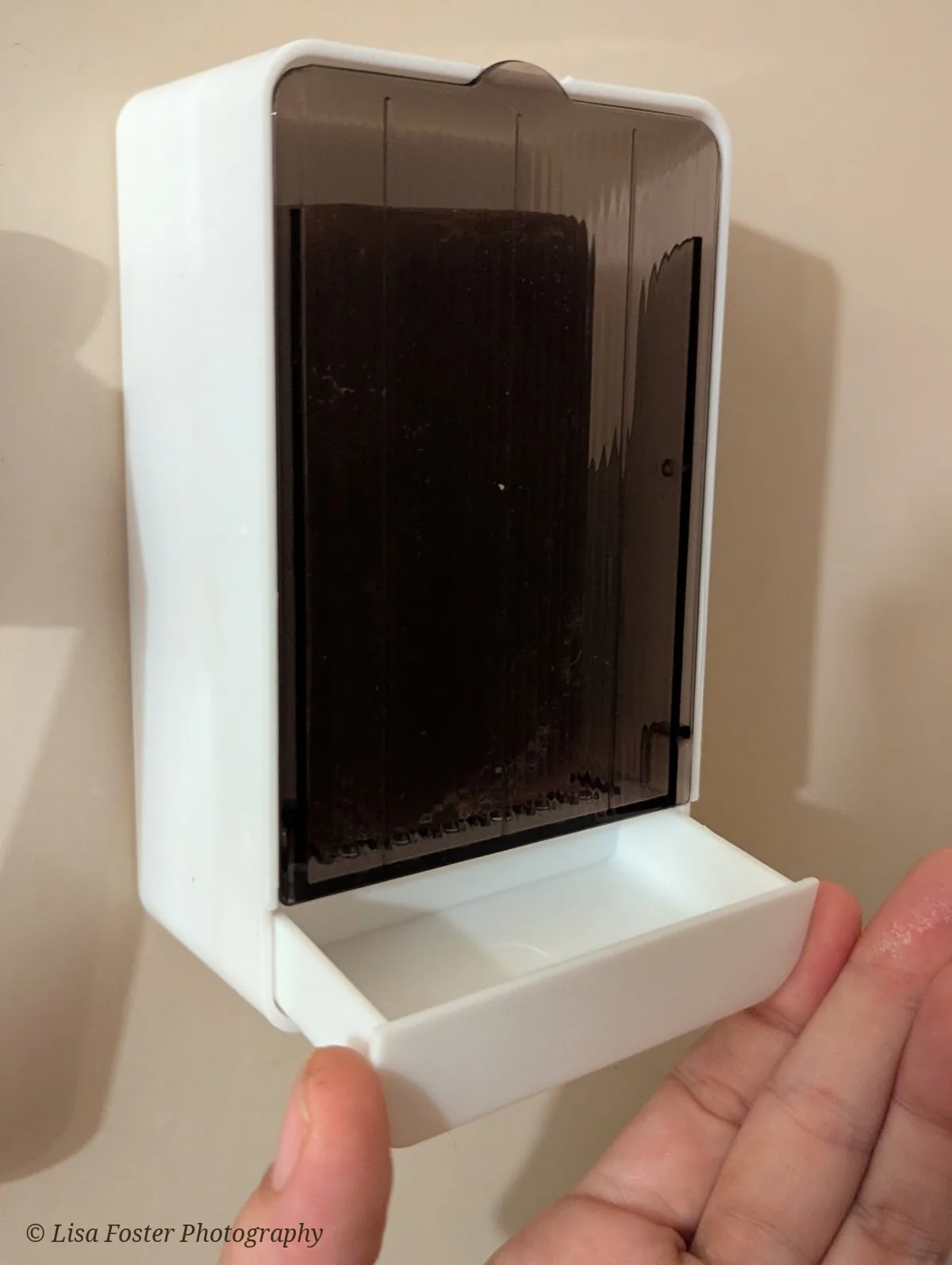
A few holder tips:
- Clean the wall first. Wipe the spot with rubbing alcohol and let it dry before you stick it on, then wait a day before loading it.
- Pick a spot out of the direct stream. Off to the side of the showerhead is ideal.
- Rinse the tray weekly. Soap residue can build up in the drain holes.
- Let the bar dry between uses. Leave the tray down for a bit after your shower if the bathroom is steamy.
Who might like it, and who should skip it
You might like it if you have oily or breakout-prone skin, you like simple, old-fashioned products, and a strong woodsy smell does not bother you.
You might want to skip it if you have very dry, eczema-prone or reactive skin, you are sensitive to smells, or you avoid animal-based ingredients.
The bottom line
This soap is not magic. It is a dark, smoky, old-world bar with a long history in Russian bathhouses, and for me it has been one of the few simple things that made a real difference with hormonal breakouts. Paired with a little box that keeps it dry, one bar lasts a long time.
If you try it, start slow and listen to your own skin.
Not medical advice. These statements have not been evaluated by the Food and Drug Administration. This product is not intended to diagnose, treat, cure, or prevent any disease.