
This article contains affiliate links. I may earn a commission from qualifying purchases at no additional cost to you. As an Amazon Associate I earn from qualifying purchases. Details
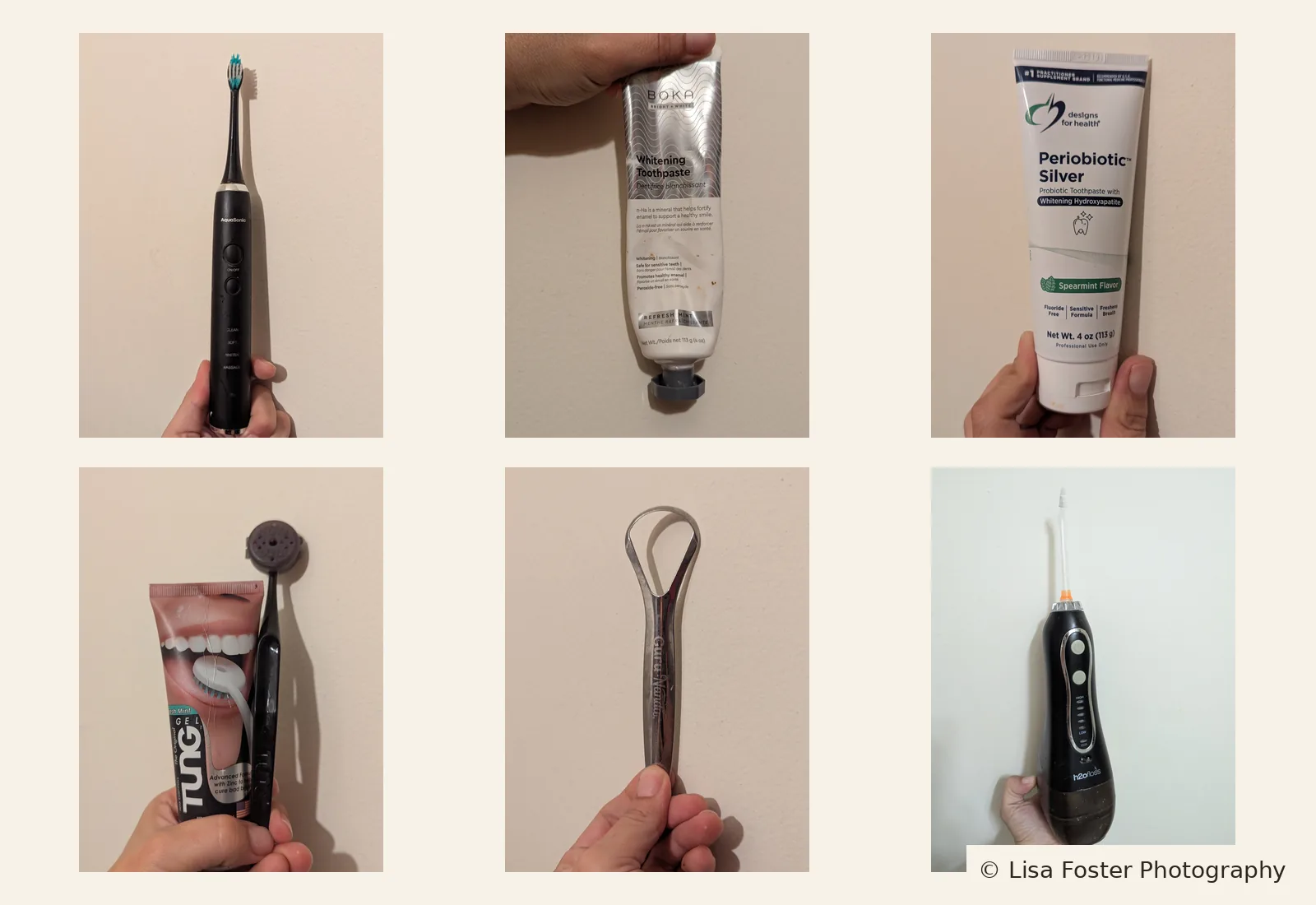
My bathroom counter is starting to look like its own little dental supply store.
An electric toothbrush. Two different toothpastes. A tongue scraper. A water flosser.
Apparently, brushing your teeth has become quite the production.
But somewhere between the hydroxyapatite toothpaste, the probiotic toothpaste, and products promising healthier gums, I started getting curious.
How much of this stuff actually works? And how much of it is just really good marketing?
I've been looking into the research behind the products I use, and a few things surprised me.
Some have pretty solid science behind them. Others sound impressive until you realize the studies are small, preliminary, or weren't done on the exact product being sold.
So here's what's in my routine right now, what the research says, and which products deserve a closer look.
Not because I think everyone needs my bathroom counter. Quite the opposite, actually.
| What I use | What the linked research covers |
|---|---|
| AquaSonic Black Series | Powered toothbrushes as a group |
| Boka Refresh Mint | Adult randomized trial and systematic reviews of hydroxyapatite formulations |
| Periobiotic Silver, Spearmint | Oral probiotics in other formulas |
| Tung Gel, Tung brush, GuruNanda scraper | Tongue cleaning and bad breath |
| H2ofloss cordless water flosser | Oral irrigators as a group |
| NatureWise Omega-3, 1,000 mg, with vitamin E | Omega-3s added to professional periodontal treatment |
My Sonic Toothbrush: Does the Research Support It?
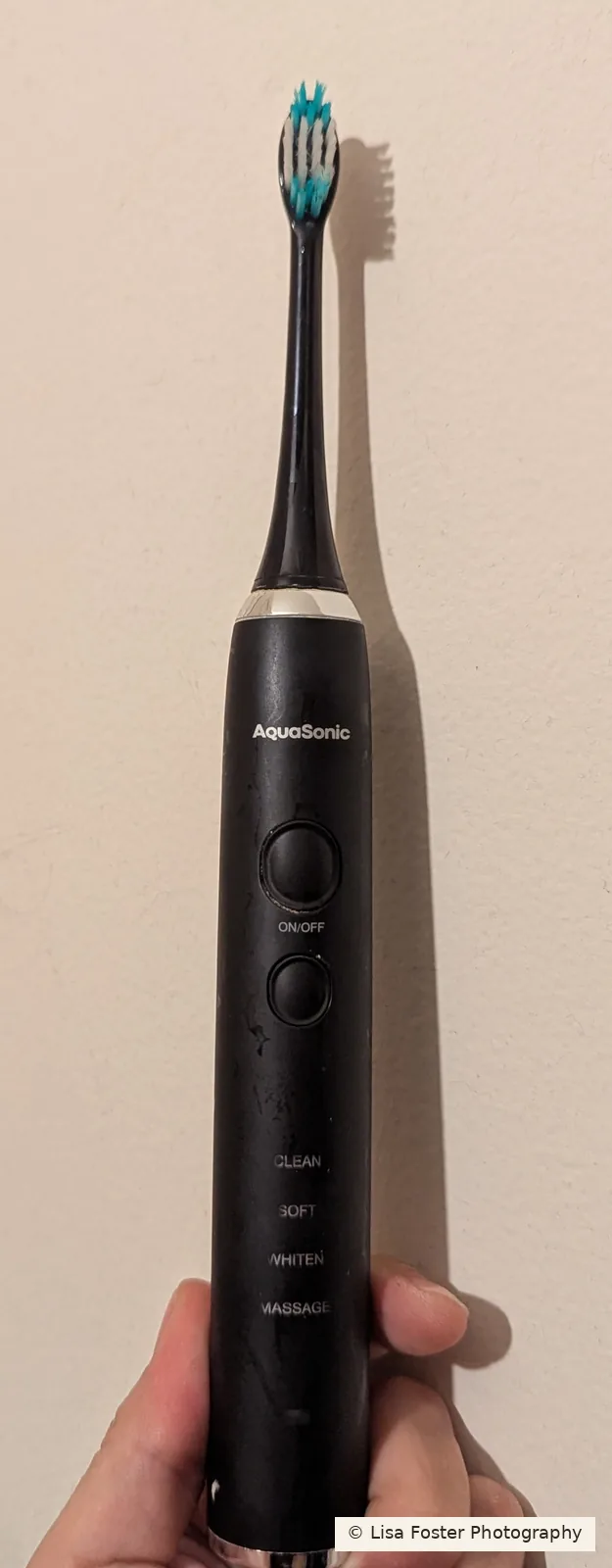
The AquaSonic on my bathroom counter has four settings: Clean, Soft, Whiten, and Massage.
Four settings for brushing my teeth. Apparently, even toothbrushes have gotten fancy.
But what interested me more was whether the sonic technology actually makes a difference.
And there's some encouraging research behind it.
A 2017 meta-analysis examined 18 clinical studies involving 1,870 participants. Researchers found that high-frequency, high-amplitude sonic toothbrushes removed more plaque and reduced gum inflammation more effectively than manual toothbrushes over periods of four weeks to three months.
A 2026 analysis of 19 randomized trials also found encouraging results for sonic brushes. Rotating-oscillating models ranked highest overall for plaque and gum inflammation, with sonic brushes next. Because only two trials compared those two types directly, the researchers described the ranking as provisional.
That's useful information if you're trying to decide whether an electric toothbrush is worth buying.
It's also worth knowing that some toothbrush research is funded or conducted by manufacturers, so I like looking at findings from different research groups rather than relying on one brand's claims.
These studies examine sonic technology more broadly, rather than my exact AquaSonic Black Series model.
For me, the interesting takeaway is that sonic brushing isn't just another gadget feature. There's clinical research supporting its ability to clean teeth and improve gum-health measures.
The brush on my counter: AquaSonic Black Series (paid link).
Why hydroxyapatite caught my attention
I've become much more interested in what's actually inside the products I use every day.
And hydroxyapatite is one ingredient that deserves a closer look.
It's a calcium-phosphate mineral that makes up much of our tooth enamel. In dental care, researchers have been studying whether hydroxyapatite-containing toothpaste can help protect and remineralize teeth.
What caught my attention wasn't just another product advertisement. It was the clinical research.
In an 18-month randomized study of adults, the per-protocol results showed no increase in the decay index for 89.3% of the hydroxyapatite group and 87.4% of the fluoride group.
The study had set a 20-percentage-point bar for calling one paste not meaningfully worse. The hydroxyapatite toothpaste met that bar. It did not show the two pastes were exactly the same.
The paper says the trial was funded by Dr. Kurt Wolff, the company behind the test toothpaste, and by the two universities that ran it.
A separate 2024 systematic review brought together 5 clinical trials and 8 in situ studies on hydroxyapatite in oral care. The in situ studies are controlled tests, not the same kind of evidence as the 18-month adult trial.
A 2025 systematic review is narrower still. It looked at initial cavities in people younger than 25, in four in situ trials of fluoride-free hydroxyapatite toothpaste compared with fluoride toothpaste.
On new lesions and on lesions getting worse, the reviewers found no significant difference. Lesion size and fluorescence after six months did differ. Those trials did not test the Boka tube I use, and four trials are not a long record for every adult.
That's worth talking about.
It doesn't mean every hydroxyapatite toothpaste has been independently tested, or that every formulation performs identically. Concentration, particle characteristics, and the actual product matter.
But it does mean there is real research behind this alternative—not simply a marketing trend.
Why I'm Exploring Fluoride-Free Alternatives
Part of my interest in hydroxyapatite comes from wanting to be more intentional about the ingredients I use every day.
Fluoride exposure is a subject I've spent more time looking into, particularly when it comes to ingestion and the potential effects of higher exposure levels.
For example, the National Toxicology Program's 2024 review found, with moderate confidence, an association between higher fluoride exposure, such as drinking water containing more than 1.5 milligrams of fluoride per liter, and lower IQ in children.
The review looked at total exposure from different sources and was not designed to evaluate fluoridated drinking water alone. It did not find enough data to say whether 0.7 milligrams per liter in drinking water carries that association. An association does not prove a cause and effect.
It's an important distinction, but it's also research I think deserves attention.
Fluoride toothpaste carries warnings about accidental ingestion, particularly for young children, and excessive fluoride ingestion during tooth development can cause dental fluorosis.
For me, exploring fluoride-free options is a personal choice. And finding clinical research supporting hydroxyapatite makes that choice particularly interesting.
I'm not suggesting every alternative toothpaste works the same way. I want to know which ingredients have meaningful research behind them, which formulations were actually studied, and what makes the most sense for my own routine.
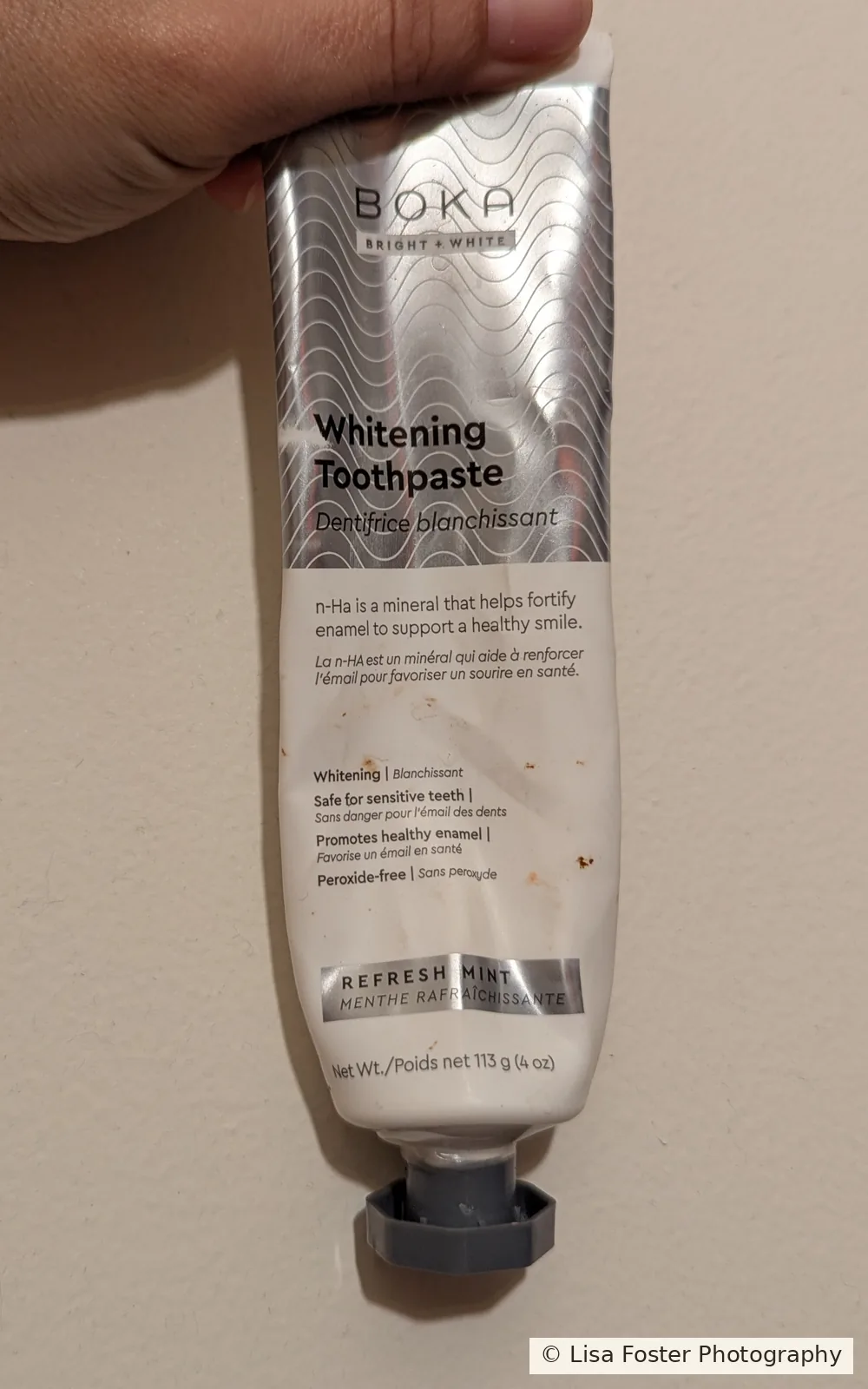
One of the toothpastes in my routine is Boka Refresh Mint (paid link), which contains nano-hydroxyapatite instead of fluoride.
The other toothpaste on my counter
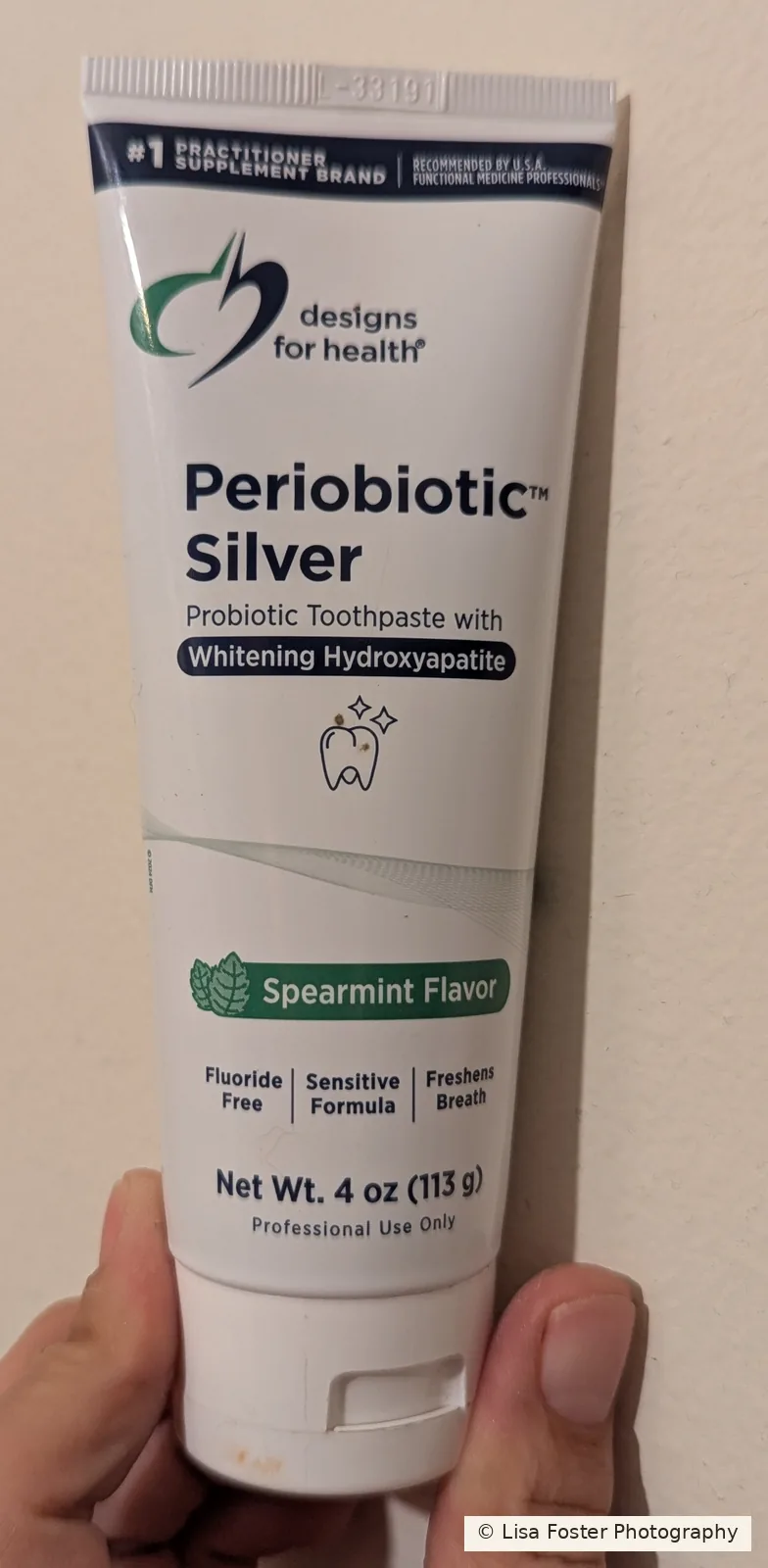
I also have Periobiotic Silver Spearmint (paid link) by Designs for Health. It combines hydroxyapatite, probiotics, and silver, and the tube is marked for professional use.
Designs for Health says it is intended for use under a licensed health-care practitioner.
Studies on oral probiotics in general have looked at plaque, gum inflammation, and breath. Those studies used other strains and formulas. They are not a result for this tube.
The little tools that are easy to overlook
Not everything on the bathroom counter needs a complicated explanation.
Sometimes it's the small habits that deserve the attention.
Cleaning your tongue
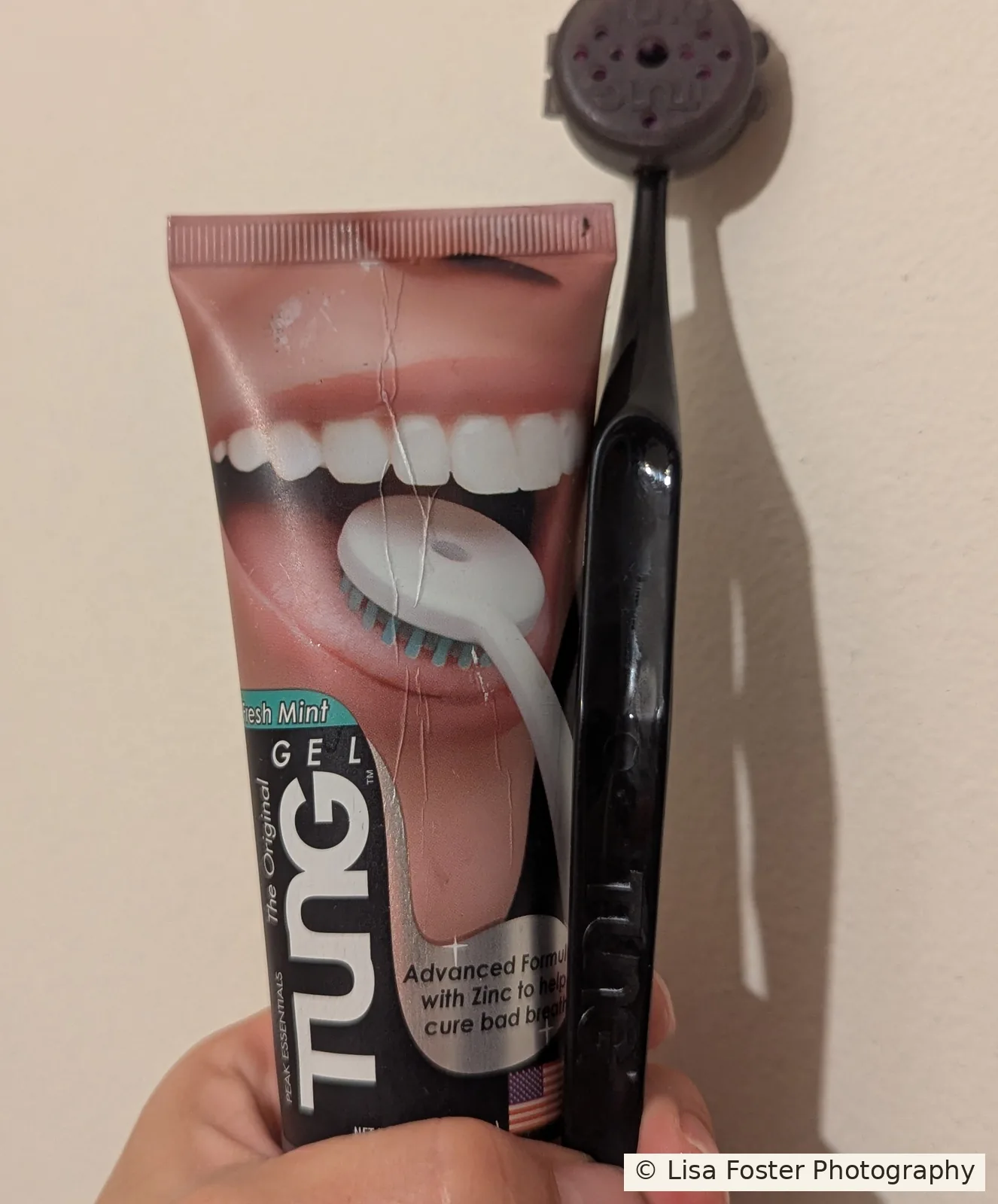
I use Tung Gel (paid link), the Original TUNG Brush (paid link), and a GuruNanda scraper (paid link).
A Cochrane review of tongue cleaning in general found the evidence for a lasting change in bad breath very uncertain. That review did not test these tools.
Getting between the teeth
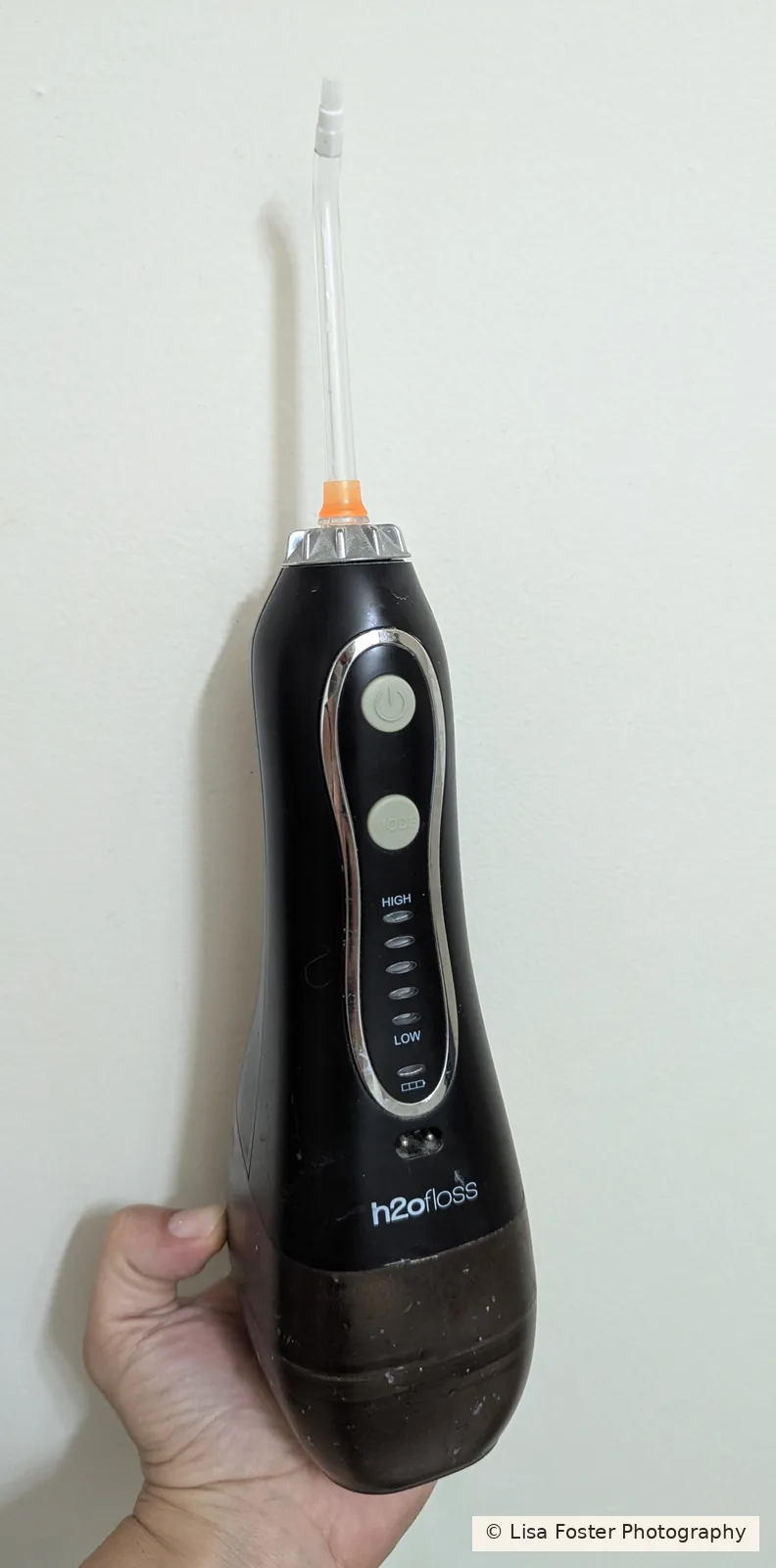
A toothbrush misses surfaces between my teeth. The American Dental Association says to clean between the teeth daily, with a tool that fits the space. The page names traditional floss and other devices.
My routine includes a cordless H2ofloss water flosser (paid link).
Studies on oral irrigators in general, used along with a toothbrush, are less tidy than the ads. A 2008 review found no benefit for visible plaque, and a positive trend for gum health.
A 2025 review found the gum-inflammation score with a water jet similar to floss, and it rated the certainty low to very low for plaque and for that score. Neither paper tested the H2ofloss I use. I use the flosser as an addition to the rest of my routine.
What about supplements and oral health?
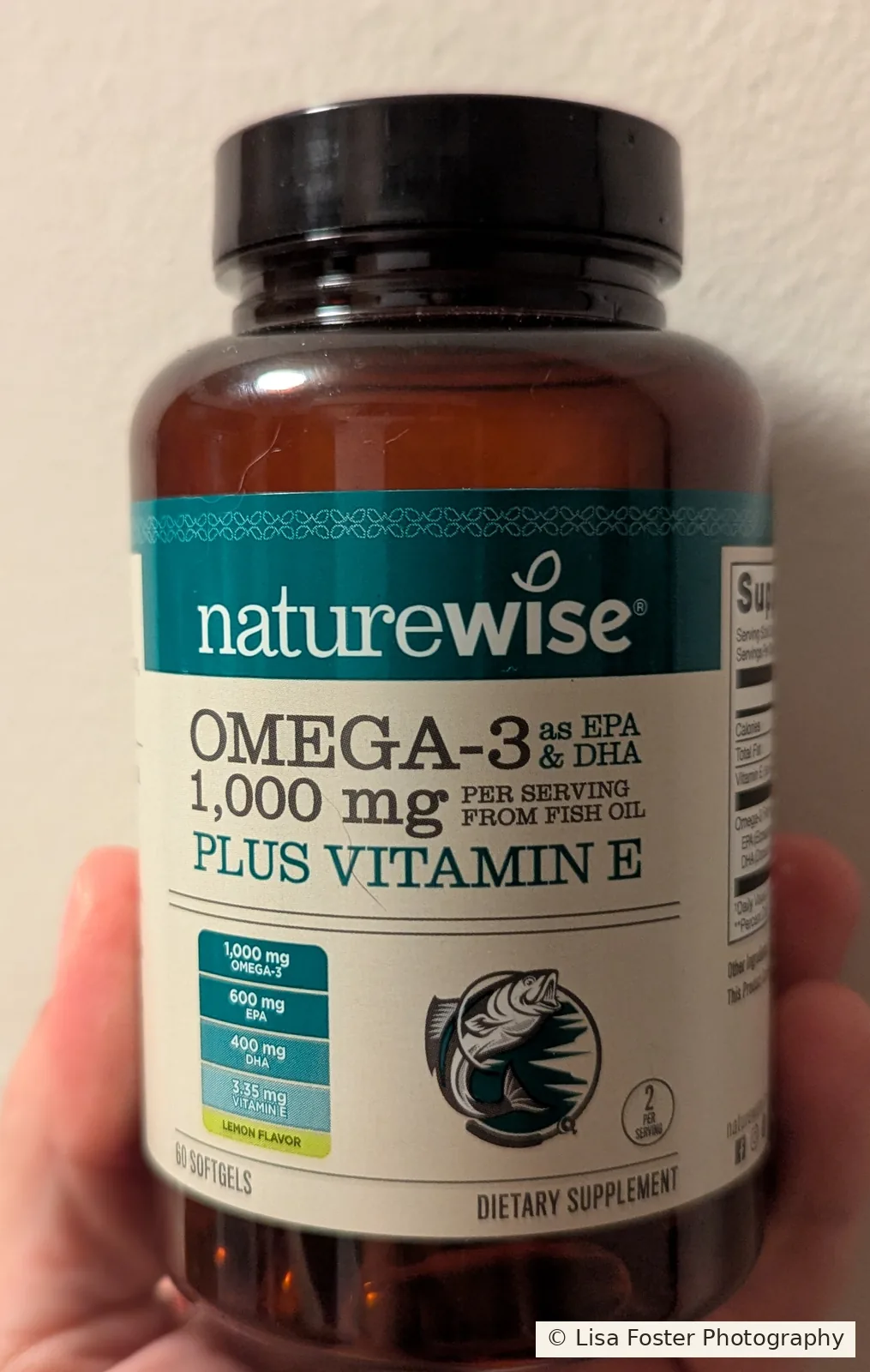
Here's another subject I've been looking into.
A 2022 review looked at omega-3s added to professional gum treatment, not taken on their own. Across 10 trials, the authors reported 0.39 millimeters more pocket-depth reduction and 0.41 millimeters more attachment gain than that treatment alone. They called the extra effect moderate.
A second 2022 review found the trials too different to settle the question. Neither study tested the softgel I take.
The omega-3 I take is NatureWise Omega-3 1,000 mg with vitamin E (paid link). That's what's in my cabinet, not a treatment for gum disease, so check with your doctor before adding it, especially if you take blood thinners.
And What About Biological Dentistry?
One area I've become especially interested in is how biological dentists approach saving teeth.
Most of us have heard the dreaded words, "You might need a root canal." But I've been learning that, depending on what's happening inside the tooth, there may be other options worth exploring before making that decision.
Biological and holistic dentistry often place greater emphasis on preserving healthy tooth structure, choosing biocompatible materials, and considering how oral health connects with the rest of the body.
What really caught my attention is the focus some practitioners place on keeping a tooth alive whenever possible, rather than simply keeping the outer structure of the tooth in place.
That can involve conservative decay removal, biomimetic restorations designed to preserve natural tooth structure, or procedures such as vital pulp therapy, which aims to preserve living tissue inside a damaged tooth.
Interestingly, vital pulp therapy isn't exclusive to biological dentistry. The American Association of Endodontists describes it as an option for carefully selected teeth and conditions, not as a substitute for a root canal in every case.
Root canals are another area where philosophies differ. Some biological dentists question whether conventional root canal treatment can eliminate all microorganisms within a tooth's complex internal structure. Others focus on identifying which teeth can still be treated conservatively and which have progressed too far for those approaches.
That distinction matters. A tooth with an inflamed but living nerve presents different possibilities from a tooth with dead tissue or an established infection. And alternatives aren't automatically appropriate for every situation.
What I appreciate about exploring this field is the opportunity to ask more questions before making a permanent decision.
Can the living tooth be preserved? What caused the problem? Are there less invasive options worth considering? And what are the long-term advantages and limitations of each option?
Those are conversations I'd like to have before deciding how to move forward.
If you're curious about this approach, the International Academy of Oral Medicine and Toxicology offers information about biological dentistry, along with a practitioner directory.
I'm interested in learning more about the possibilities—not because every alternative is necessarily better, but because understanding the options gives us a better chance to make informed decisions about our teeth and our health.
The biggest thing I've learned from looking at these products
I can spend quite a bit of money trying to build a perfect dental routine.
There will always be another toothpaste, another gadget, another ingredient, or another product promising to do something better.
Some innovations may genuinely be helpful.
Others need more research.
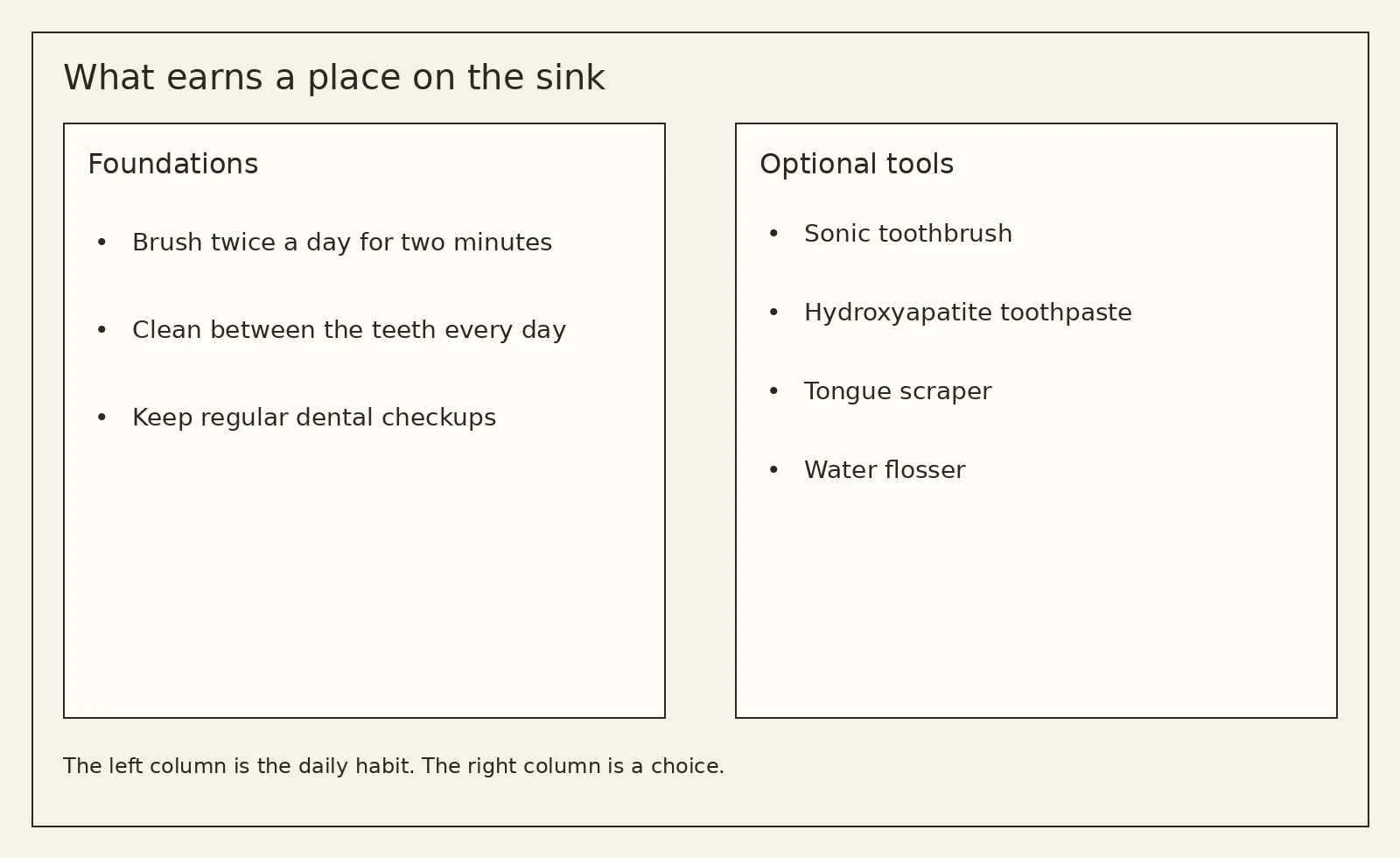
The fundamentals I come back to are still pretty straightforward: brush thoroughly, clean between the teeth, and keep up with professional dental care.
Everything else has to earn its place on my counter.
I'm interested in exploring newer options, and I want to understand what the research actually says before I talk about a product as if it were the right choice for somebody else.
Because a product being on my bathroom counter tells you what I use. It doesn't automatically tell you what's best for your teeth.
And I think that's a distinction worth keeping.
Foster the wild in you.
Not medical advice.
These statements have not been evaluated by the Food and Drug Administration. This is not intended to diagnose, treat, cure, or prevent any disease.
What's one dental product you've tried that made you curious enough to look into the science behind it?
Sources
- de Jager and colleagues, 2017, high-frequency, high-amplitude sonic toothbrush meta-analysis
- Luo and colleagues, 2026, network meta-analysis of toothbrush technologies
- Paszynska and colleagues, 2023, 18-month hydroxyapatite toothpaste trial in adults
- Pawinska and colleagues, 2024, 5 clinical trials and 8 in situ hydroxyapatite studies
- Journal of Dentistry, 2025, initial cavities in people younger than 25
- 21 CFR 355.50, labeling of anticaries drug products
- National Toxicology Program, 2024, fluoride exposure, neurodevelopment, and cognition
- ADA, Floss
- Cochrane review of treatments for bad breath, including tongue cleaning
- Husseini, Slot, and Van der Weijden, 2008, oral irrigation review
- Healthcare, 2025, dental water jet meta-analysis (doi 10.3390/healthcare13040396)
- Van Ravensteijn and colleagues, 2022, omega-3s with periodontal treatment
- Miller and colleagues, 2022, omega-3s with non-surgical periodontal therapy
- Designs for Health, Periobiotic Silver Spearmint
- American Association of Endodontists, 2021, vital pulp therapy announcement
- IAOMT, introduction to biological dentistry
- IAOMT, find a dentist