
A double rainbow in 2021, galaxies on the grass in 2025: why I keep going back to mile 51 on Skyline Drive.
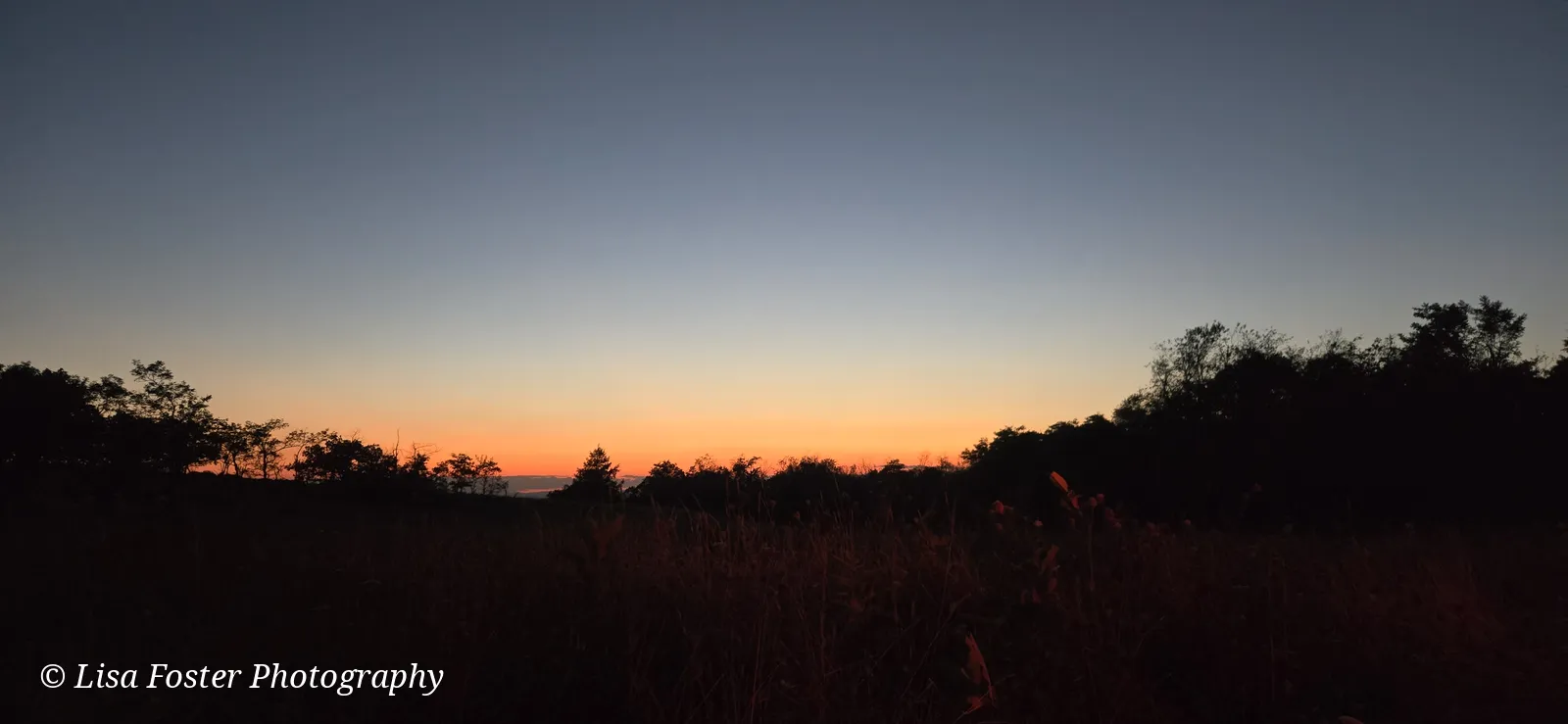
The first time Big Meadows really stopped me, it was raining. Spring 2021, sun breaking through the storm, and a double rainbow stretched right over the meadow behind the Big Meadows sign. Four years later I came back after dark for the Night Skies star party and ended up looking at the Whirlpool Galaxy and the Eagle Nebula through strangers' telescopes. Same meadow, completely different magic. If you've only driven past it in daylight, here's why it's worth pulling over, and staying late.
Big Meadows is the biggest open space in Shenandoah National Park: about 134 acres of grass at roughly 3,500 feet, right at mile 51. With no trees overhead and the nearest big city far away, it's one of the best places in Virginia to lie back and look up once the sun goes down.
The park calls it "one of the darkest skies on the east coast," and Big Meadows has become the center of its astronomy programs: ranger-led star parties, regular visits from amateur astronomers with telescopes, indoor talks at the lodge, and, in some years, the park's Night Sky Festival.
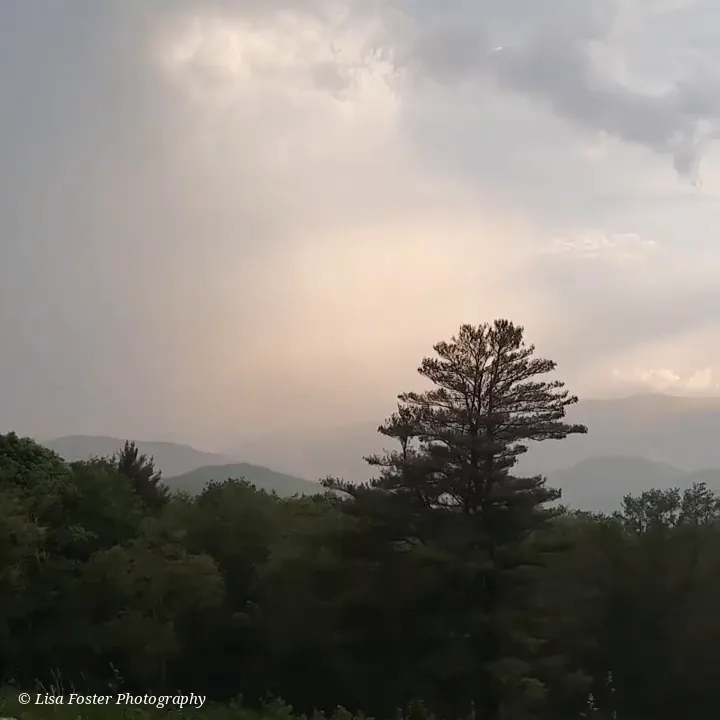
Spring 2021: rain, a rainbow and the Big Meadows sign
I was there on May 26, 2021, on a late-spring evening when rain kept moving over the mountains and the sun kept finding gaps in it. At the Big Meadows sign on Skyline Drive, a rainbow was showing over the meadow behind it.
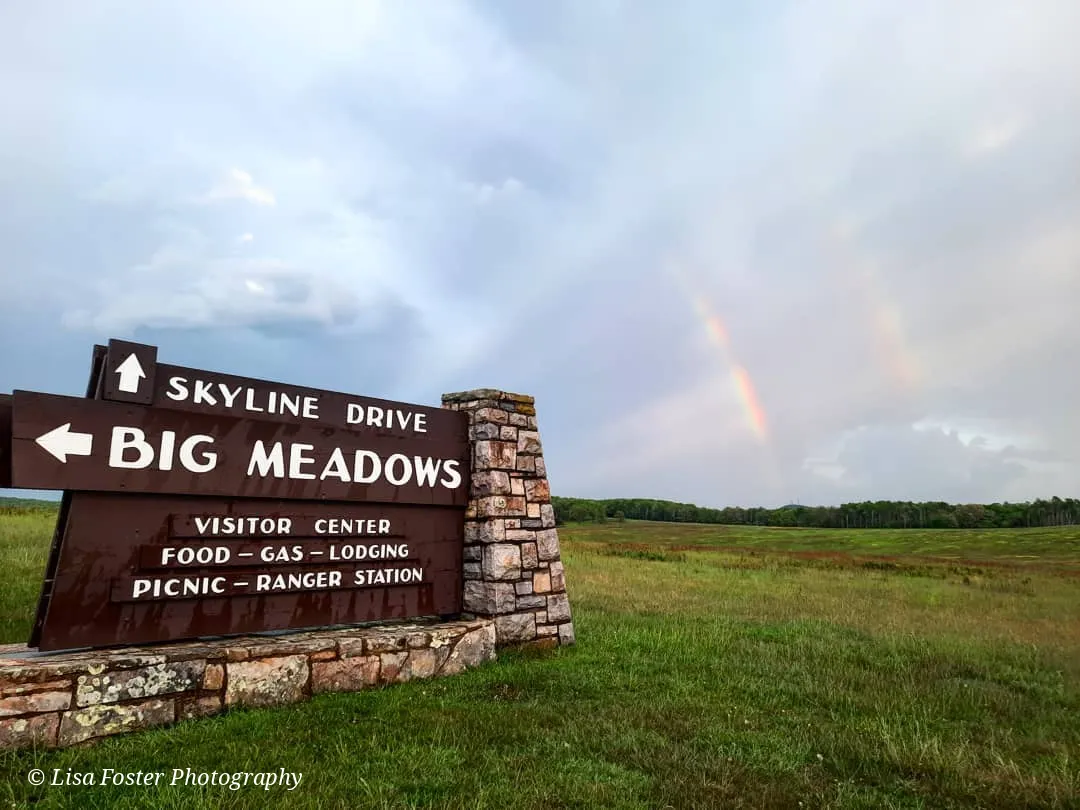
Out over the grass, it was a full double rainbow. (NOAA has a good explainer on what causes a rainbow.)
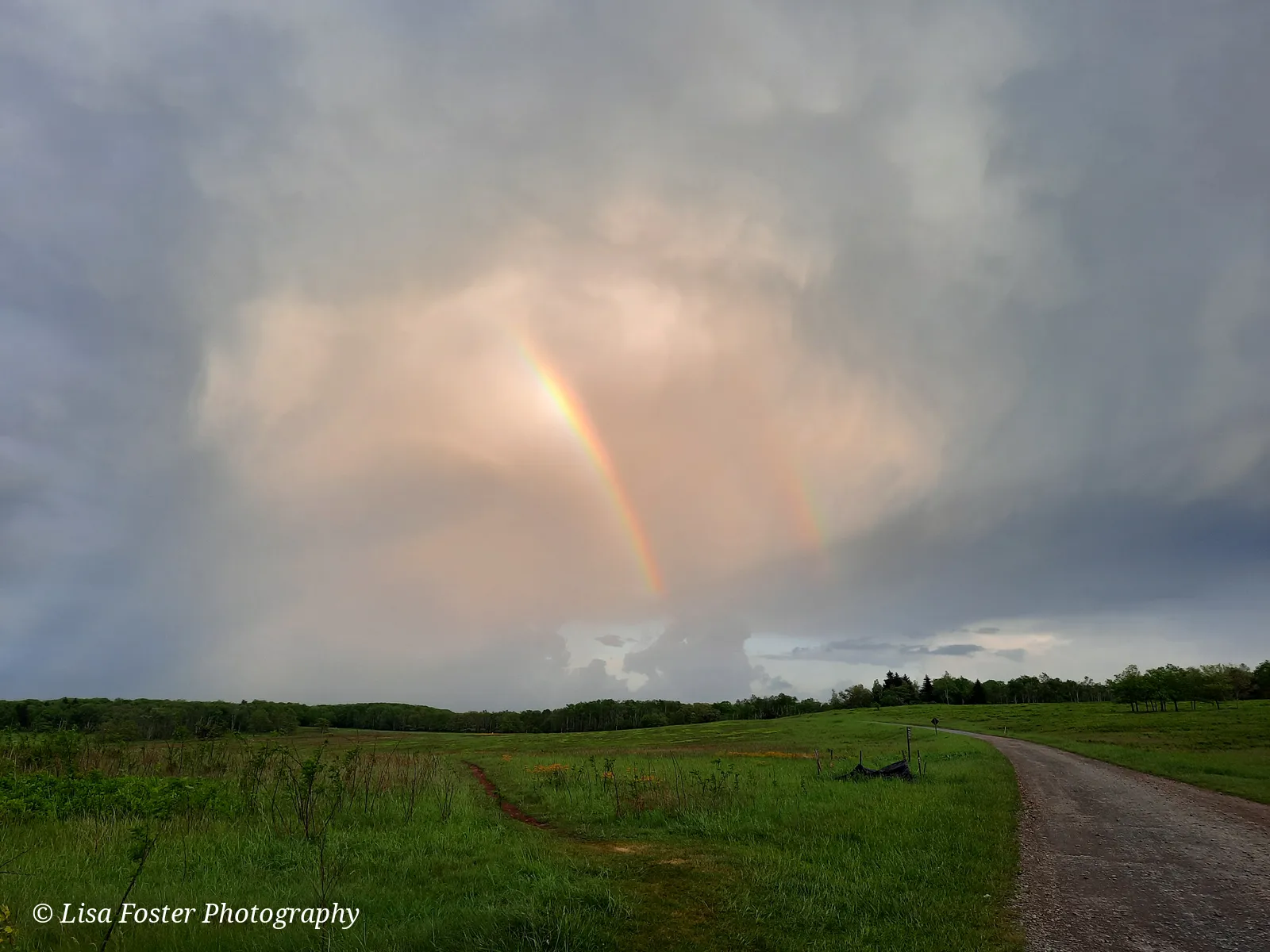
My caption the next day: "Rains coming in over the mountain, the spring rain that still has the sun shining through and that touch of peacefulness in the air."
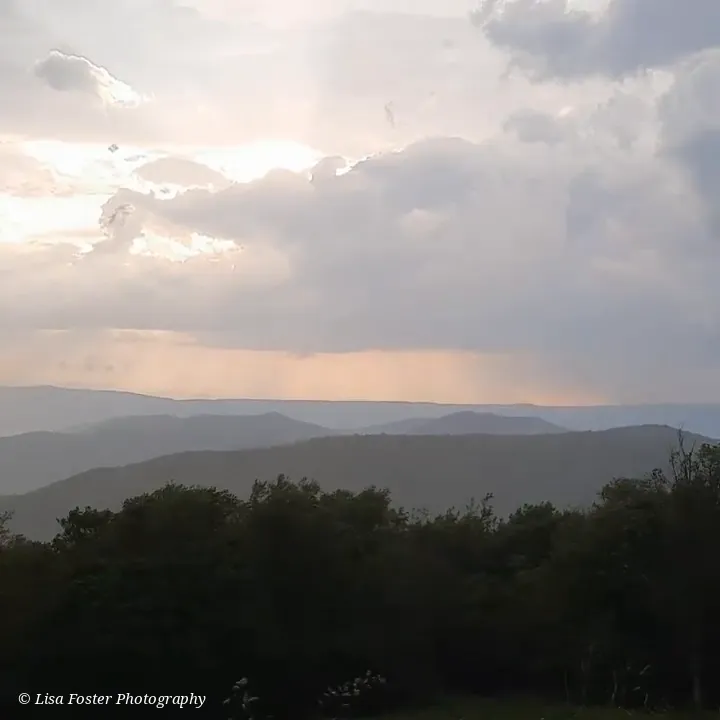
Fall 2025: my night at the Night Skies star party
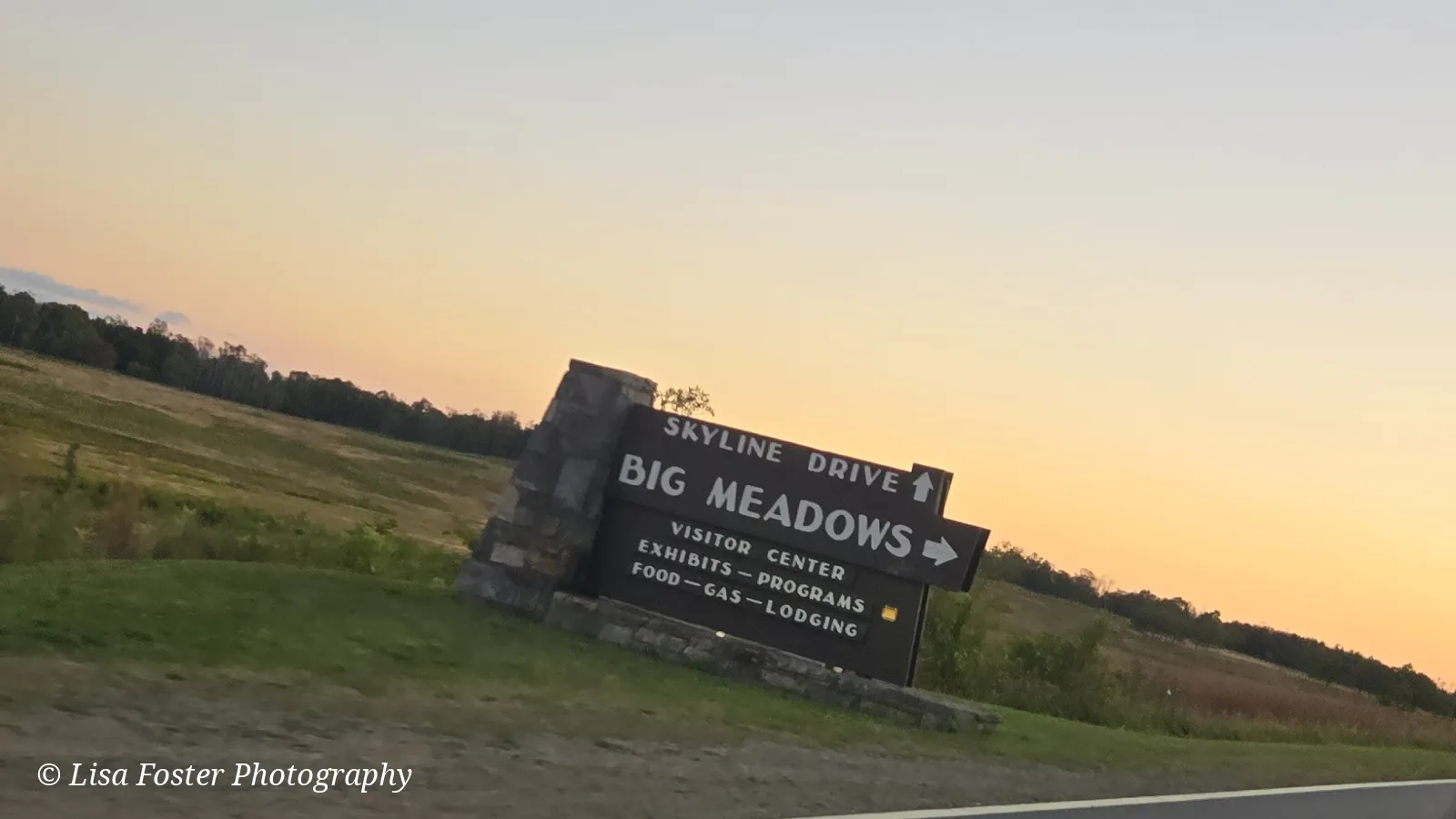
On September 12, 2025, I went back for the Night Skies event at Big Meadows. I passed the same sign on the way in, this time at sunset.
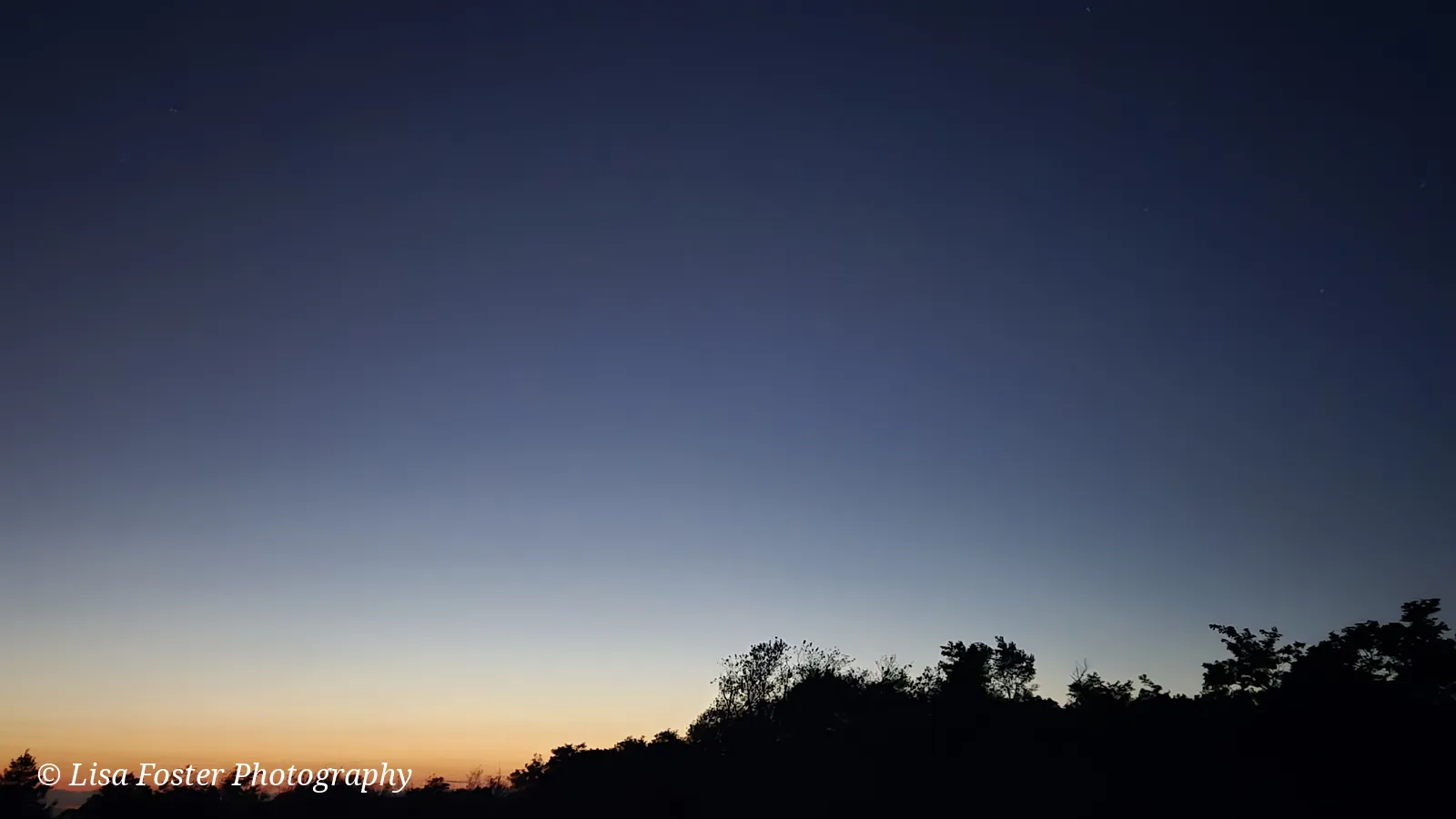
By a little before eight the sun was down, and amateur astronomers had their telescopes set up on the grass while people gathered around them in the blue light of dusk.
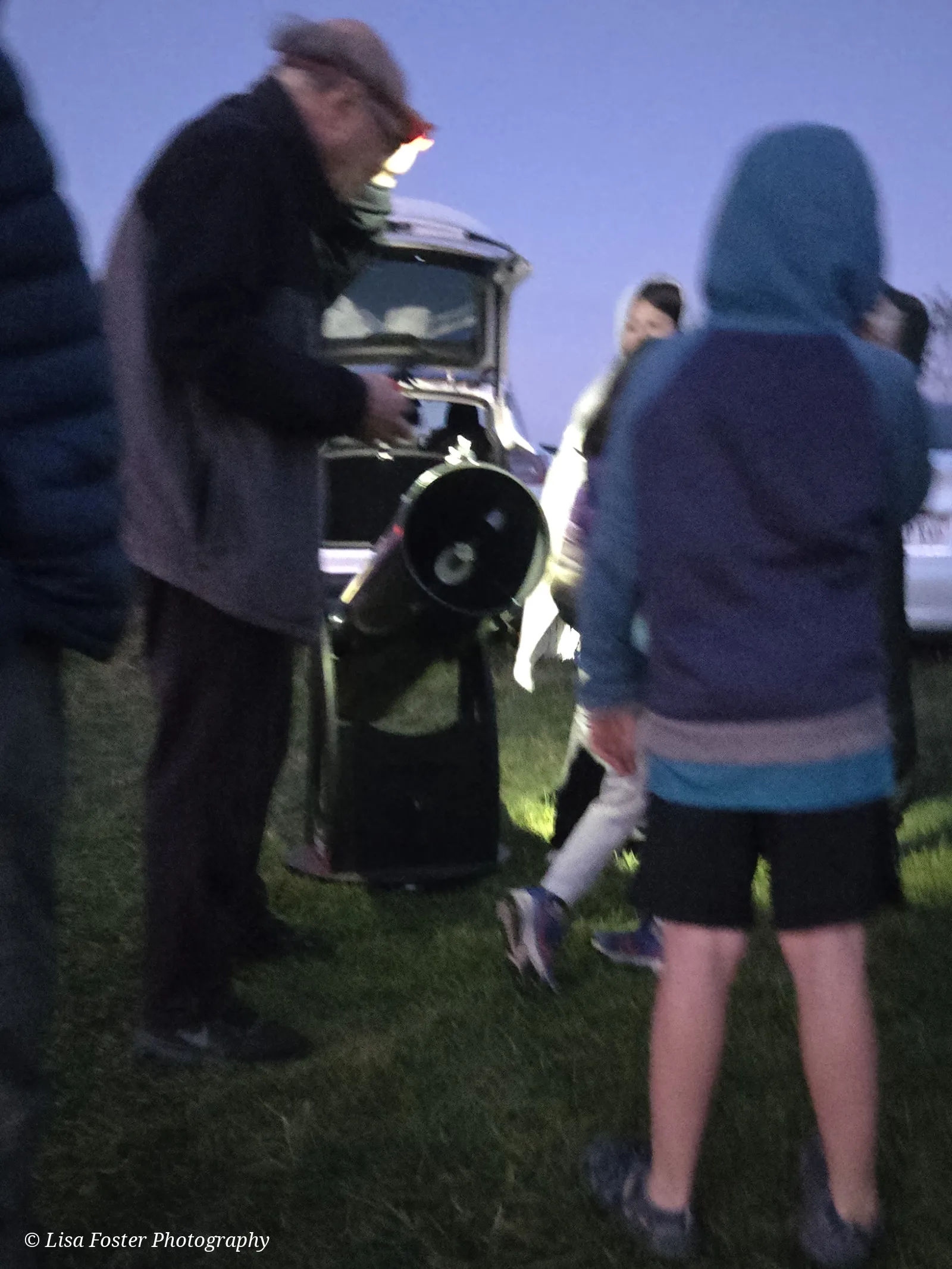
Through other attendees' telescopes I saw the Eagle Nebula, the Whirlpool, the Lagoon Nebula and the Butterfly, plus Saturn and a star cluster.
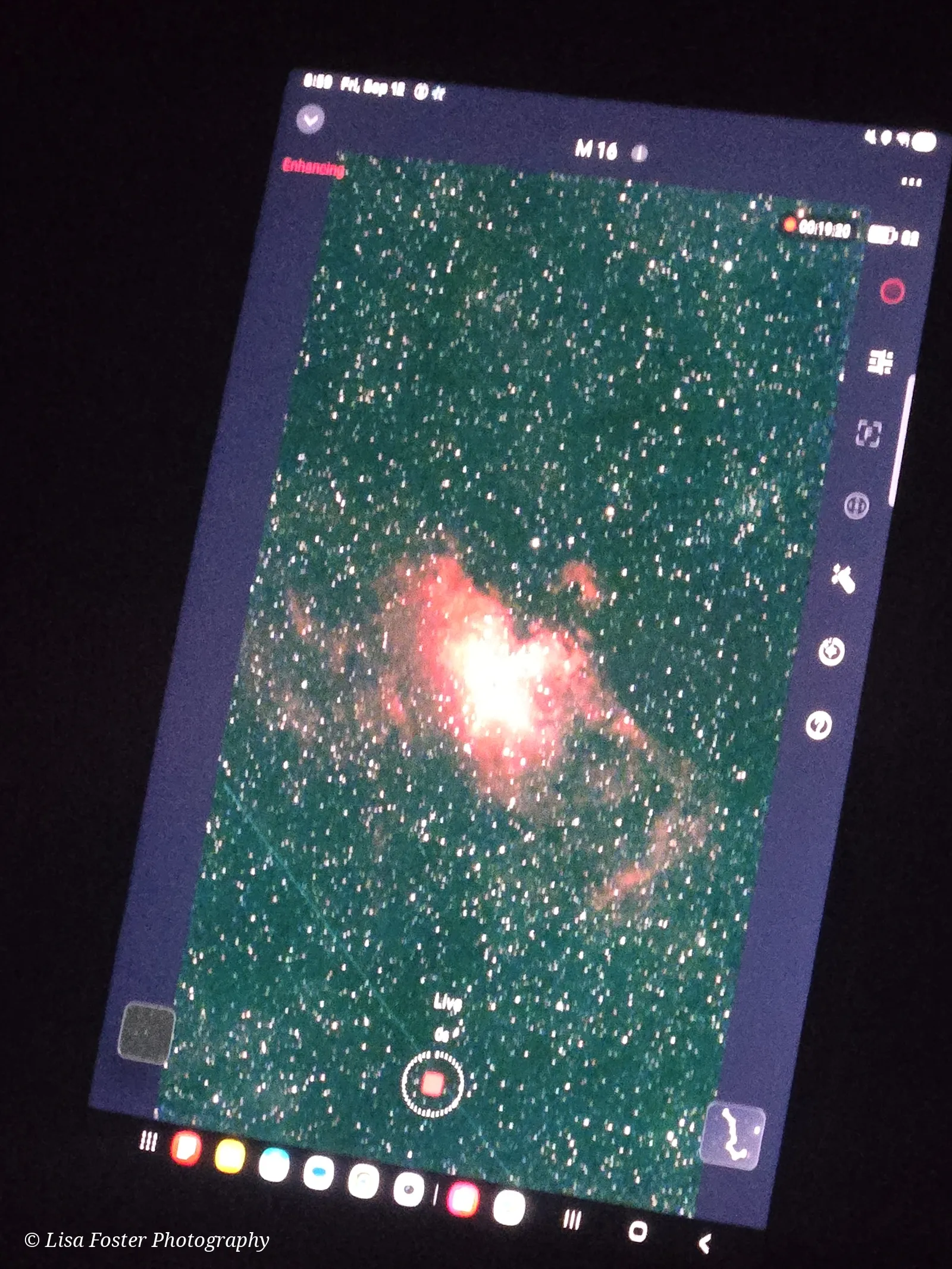
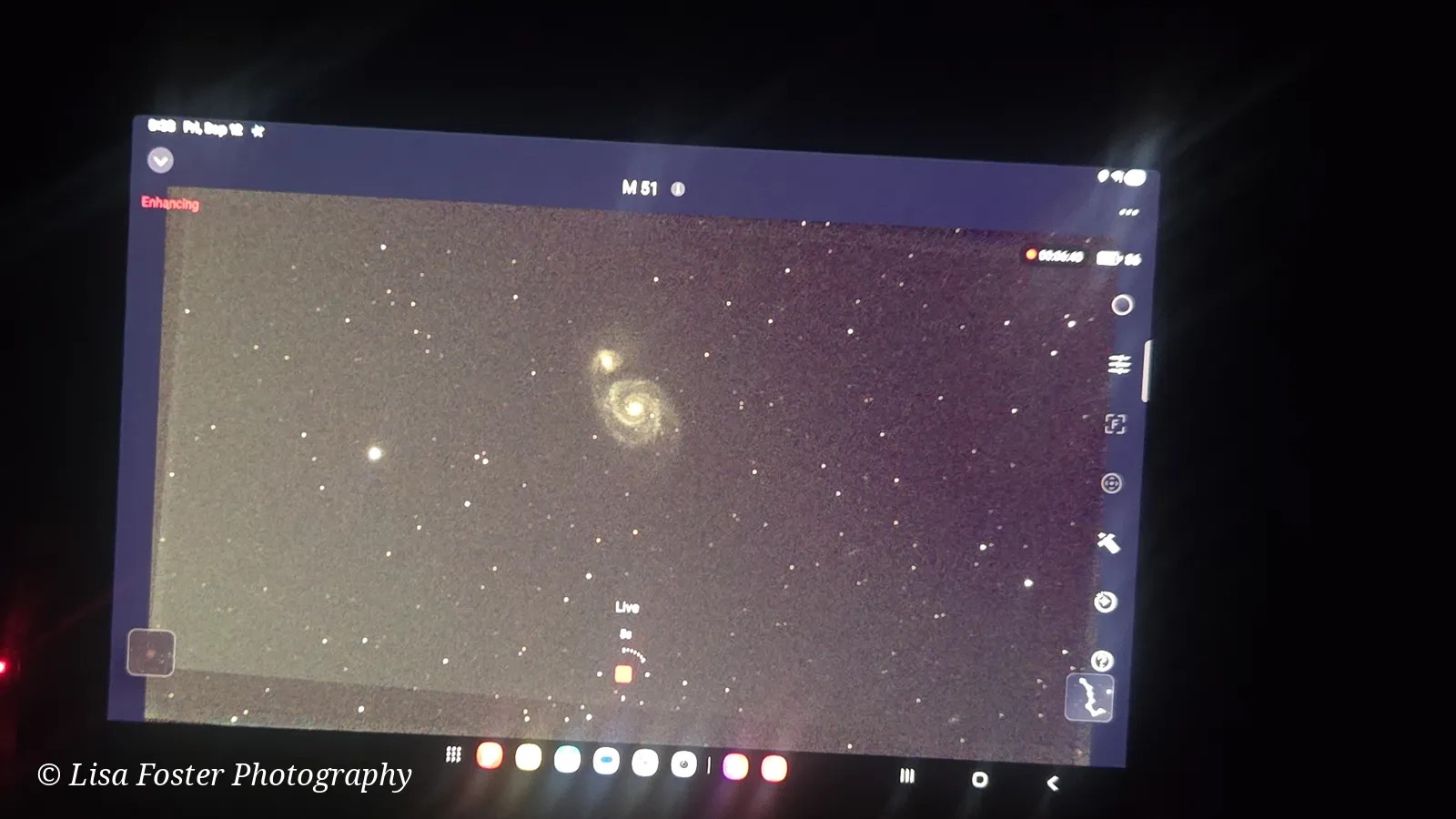
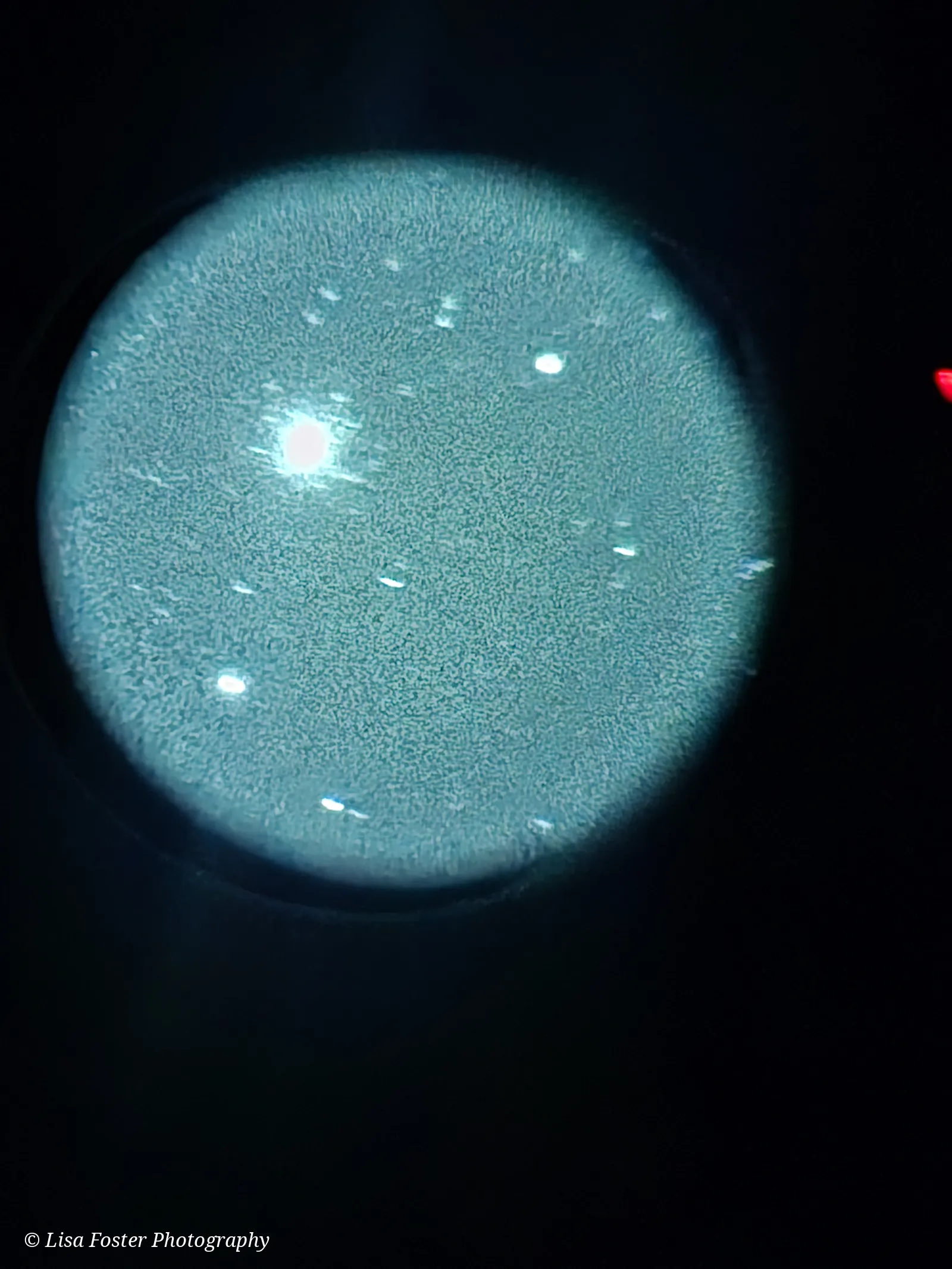
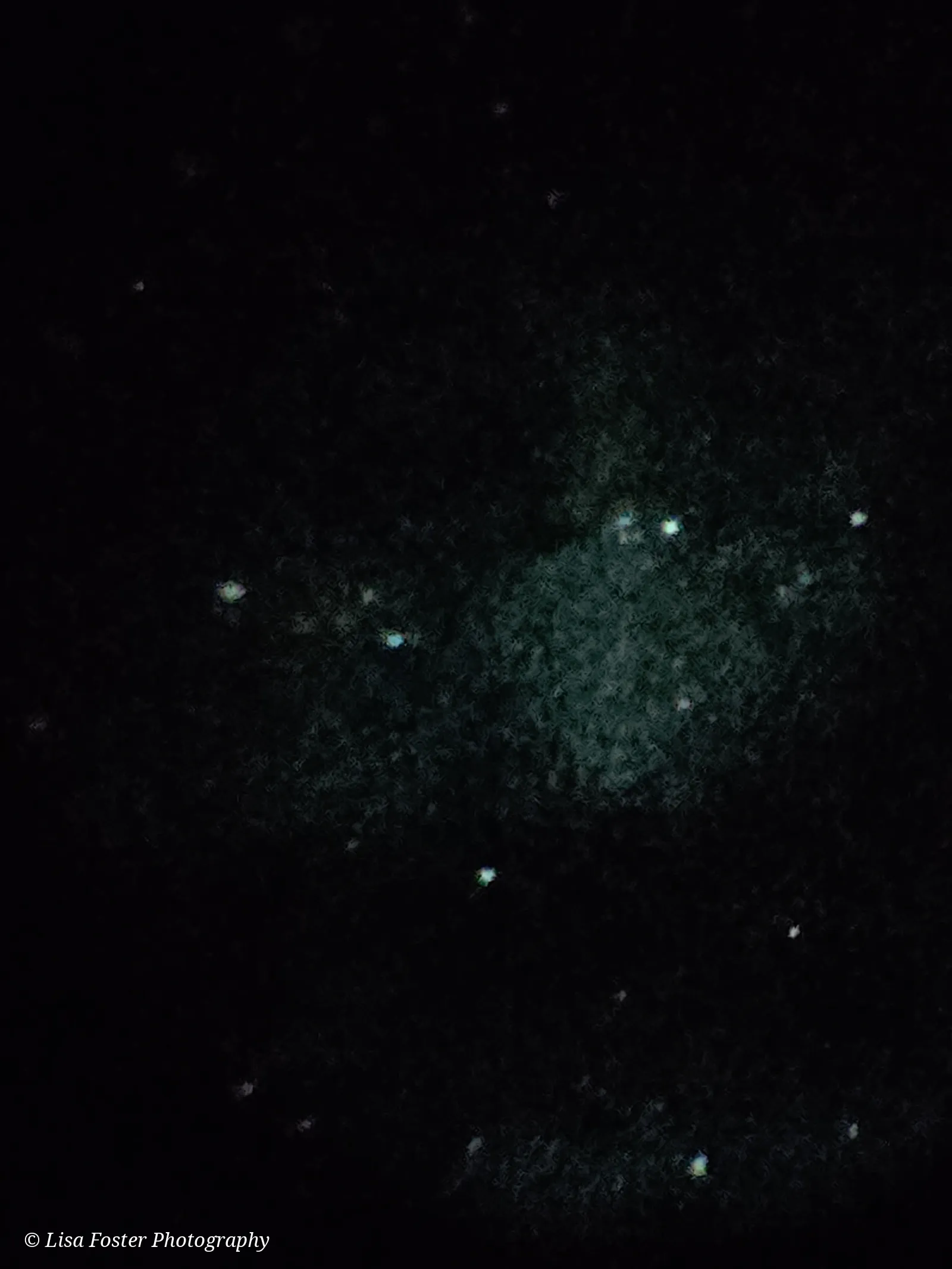
Once it was fully dark, the Milky Way showed overhead, and the lights of the valley glowed far below the ridge.
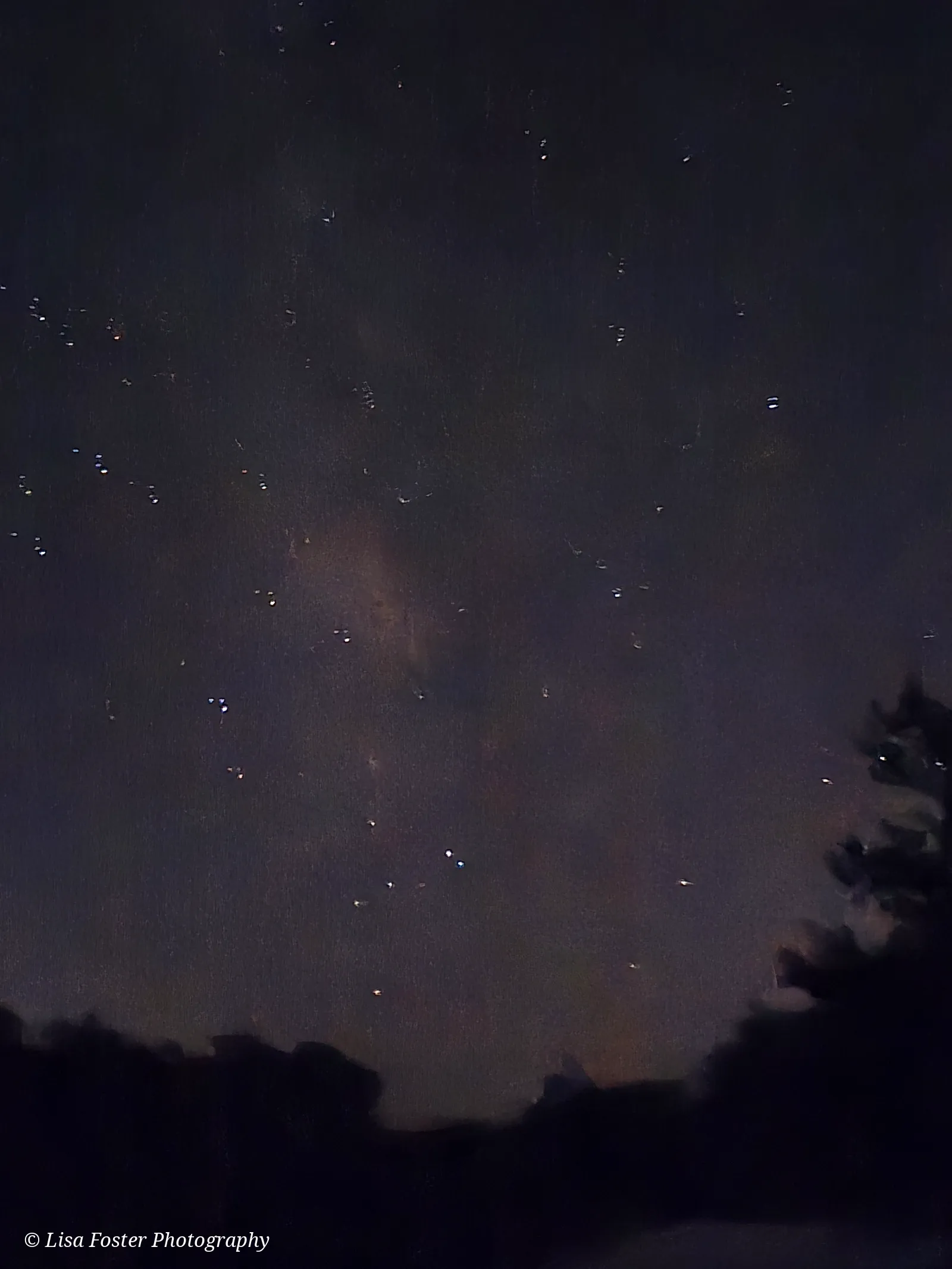
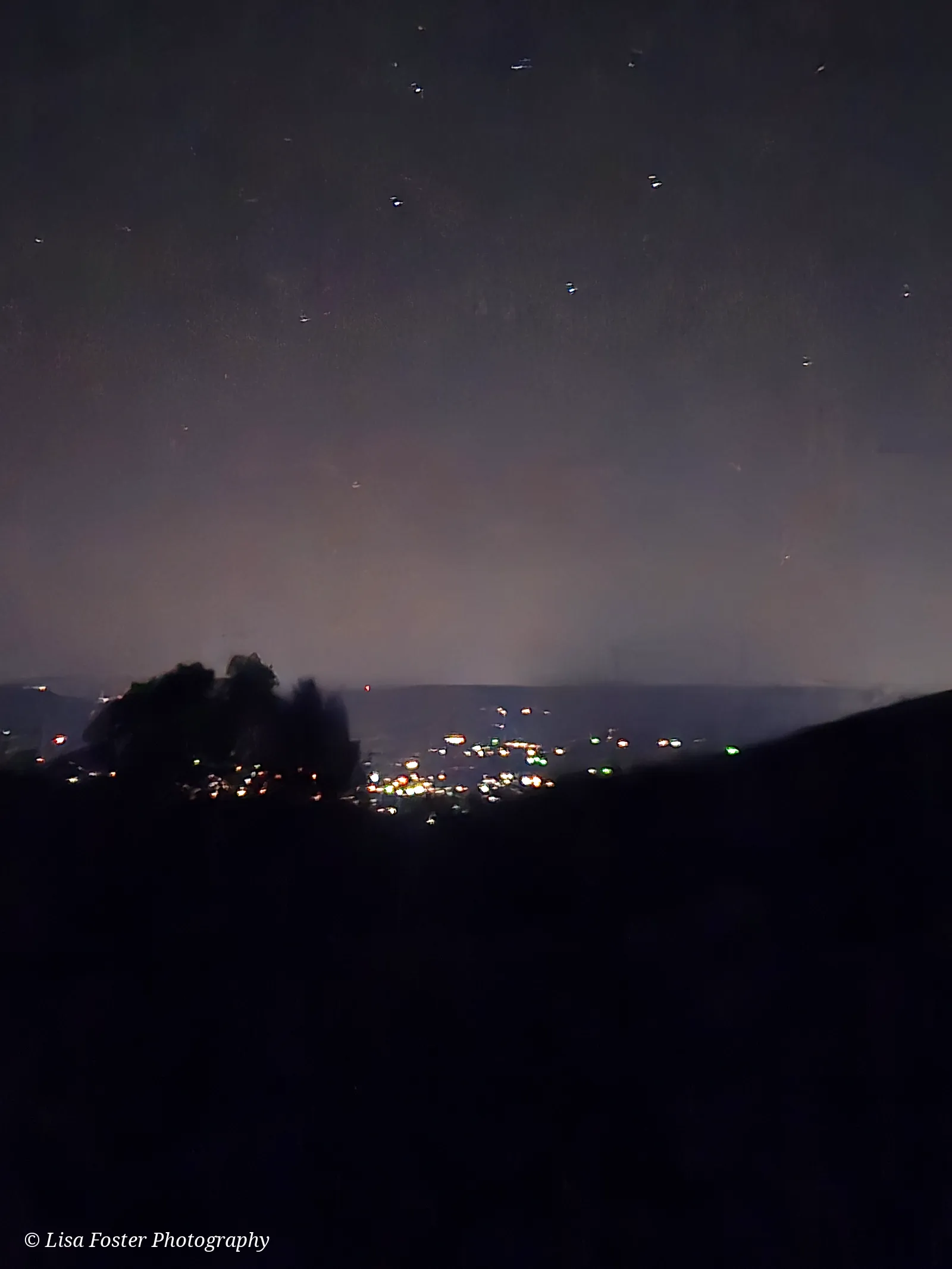
I'm definitely going again.
Why the sky is so good here
Three things work in the meadow's favor. It's high, so a lot of the haze from the valleys sits below you. It's far from big-city light pollution, with forest and ridges in every direction. And it's open, so the sky reaches all the way down to the treeline instead of stopping at the first branch.
The meadow itself is a bit of a mystery. A 2025 National Park Service report says its soils and plants are different from the grassy balds elsewhere in the Appalachians. The best guess is a long history of lightning fires and burning and clearing by Indigenous people, followed by grazing before the park opened in 1935. The park still keeps it open with mowing, cutting and prescribed burns. That work protects rare plants and two globally rare mountain wetlands, and it also keeps the view of the sky wide open.
Ranger star parties
The park's own night program at Big Meadows is the Big Meadows Star Party. The NPS ranger program page describes it as a 45-minute program to "explore the night sky in Big Meadows," meeting at the Rapidan Fire Road at mile 51. In 2024, the NPS event calendar listed it every Tuesday, Thursday and Saturday at 9:30 p.m. from May 25 to September 2. The park posts each season's schedule on its calendar and at the visitor centers, so the days and start times can change from year to year.
Rangers also lead the Big Meadows Evening Program at the campground amphitheater, a talk on the park's natural or cultural history. The park's advice for both is simple: dress for cool mountain nights and bring a flashlight. On clear nights, check the weather first, because a cloudy sky cancels the stargazing.
Night Skies with the amateur astronomers
The other regular program is Night Skies, run with amateur astronomers through the park's lodging concessioner. It's held in the Big Meadows area, outside the Rapidan Camp gate at mile 51, and it's free to park visitors. The astronomers talk about light pollution and then point out what's up that night. Telescopes are provided, and they recommend bringing your own binoculars, a blanket, a chair and a flashlight.
In 2026 the sessions ran roughly every two weeks from May into late October, starting earlier as the nights got longer: around 9:00 p.m. in June and July and closer to 7:00 p.m. in October. The schedule lists what to look for at each one, such as Venus, Jupiter, Saturn, the Milky Way, a Perseids night in August, and the Moon at different phases. The last 2026 session listed is October 23, at 6:45 p.m., featuring Saturn and a 94% Moon. Bad weather cancels the outdoor part. The organizers say to call 540-999-2222 on the day to check, and some sessions move indoors to Big Meadows Lodge.
The concessioner also hosts Let's Talk About Space, indoor talks by NASA/JPL Solar System Ambassador Greg Redfern at Skyland and Big Meadows Lodge. If the sky is clear afterward, the group heads outside to look up. The 2026 Big Meadows Lodge dates listed are October 14, November 18 and November 19, all at 8:00 p.m.
The Night Sky Festival
Shenandoah's Night Sky Festival is the park's biggest astronomy event: stargazing, ranger talks, kids' activities and guest speakers on subjects like space weather and space travel. It's free with park admission, and the park asks people to bring a flashlight with a red filter.
The festival has usually been held in August, around the Perseid meteor shower. In 2023 it ran August 11–13, with programs at Byrd Visitor Center and Big Meadows and a late-night Telescope Party in the meadow hosted by the Rappahannock Astronomy Club, the Richmond Astronomical Society and the University of Virginia's astronomy department. The 2024 festival was listed for August 2–4 but didn't take place. As of this writing, the park's festival page doesn't list dates for a 2026 or 2027 festival, so it's worth checking that page before planning a trip around it.
The meadow by daylight
Even if you come for the stars, it's worth getting there before dark. The meadow is one of the best places in the park to see white-tailed deer, which come out to graze along the edges in the early morning and toward evening. Virginia's Department of Wildlife Resources lists Big Meadows on the Virginia Bird and Wildlife Trail, with chipping and field sparrows in the grass and vultures and other raptors riding the air over the ridge.
The weather here is part of the show too. With nothing tall in the way, you can watch showers come across the mountains long before they arrive.
That same changeable weather is the catch for stargazers. A clear afternoon doesn't promise a clear night, and at this elevation it can be much cooler after dark than it was in the valley.
What to bring for a night in the meadow
Paid links: if you buy through these, I may earn a commission at no extra cost to you. As an Amazon Associate I earn from qualifying purchases.
- A red light. Both the park and the astronomers ask for a red-filtered light, because white light ruins everyone's night vision. A headlamp with a red mode, like the Black Diamond Spot 400 (paid affiliate link), keeps your hands free.
- Binoculars. The Night Skies hosts recommend them. A pair of Celestron UpClose G2 10x50 binoculars (paid affiliate link) gathers plenty of light for the Moon, star clusters and the Milky Way.
- A star wheel. A planisphere like the Night Sky 30°–40° star finder (paid affiliate link) is made for Shenandoah's latitude (Big Meadows sits around 38.5° north).
- A first telescope. If the telescopes at a star party win you over, the Celestron AstroMaster 70AZ (paid affiliate link) is a simple manual refractor that's easy to carry to the meadow.
- Something warm to sit on. The astronomers suggest a blanket and a chair. A Rumpl Original Puffy blanket (paid affiliate link) is water-resistant, which helps on dewy grass. For chairs, Pioneer Camp (paid affiliate link) has folding camp chairs and other gear.
- A rain layer. Weather changes fast up here. A packable shell like the Columbia Women's Arcadia II (paid affiliate link) covers the surprise shower.
Staying the night
Driving Skyline Drive in the dark after a late program is slow going, so it's easiest to stay close.
Big Meadows Lodge, about a mile from the meadow, was built in 1939 with Massanutten Mountain stone and native wormy chestnut and is on the National Register of Historic Places. The concessioner describes it as a home base for night-sky and astronomy programs, with the meadow nearby as "a perfect canvas for stargazing." Its 2026 season is May 4 to November 29.
Big Meadows Campground (mile 51.2) has 221 sites, all by reservation only, for the 2026 season of March 25 to November 29. There's no cell service, so plan ahead. Big Meadows Wayside, also at mile 51.2, has the only gas pumps inside the park.
Paid links: the stay and gas links below are affiliate or referral links. If you book or sign up through them, I may earn a commission at no extra cost to you.
- Park lodges: Big Meadows Lodge and Skyland (mile 41.7) are booked through the park concessioner at goshenandoah.com. Big Meadows Lodge also appears on Expedia.
- Hotels in Luray: the nearest town, down the mountain through Thornton Gap. Compare hotels in Luray on Expedia.
- Cabins: Vrbo cabins near the park in Page and Madison counties.
- Gas: GasBuddy compares prices before you head up onto Skyline Drive (referral code EM4F5VF).
Nearby trails
Several trails start close to the meadow. The best known is Dark Hollow Falls, from a parking area at mile 50.7, a short but steep walk down to a waterfall. I wrote about it in Dark Hollow Falls. The National Geographic Trails Illustrated map of Shenandoah (paid affiliate link) has a Big Meadows inset showing the trails, campground and lodge.
Big Meadows at a glance
| Location | Skyline Drive mile 51, central Shenandoah National Park |
| Elevation | About 3,500 feet |
| Big Meadows Star Party | Ranger program, 45 minutes, Rapidan Fire Road (mile 51). Summer season; check the NPS calendar |
| Night Skies | Amateur astronomers, free, outside the Rapidan Camp gate. Roughly twice a month, May–October. Schedule; day-of status 540-999-2222 |
| Let's Talk About Space | Indoor talks at Big Meadows Lodge and Skyland. Schedule |
| Night Sky Festival | Usually August; no current dates posted. NPS festival page |
| Bring | A red-filtered light, warm layers, binoculars, a blanket or chair |
| Lodge / campground (2026) | Lodge May 4–Nov 29; campground Mar 25–Nov 29, reservations only |
| Entrance | Park entrance fee required. NPS: Fees & Passes |
If you're driving the whole length of Skyline Drive and wondering what the gas will cost, I worked that out in Skyline Drive fall color on a gas budget.
Looking up
By day, Big Meadows is a wide green break in the forest where the weather has room to move. After dark, that same openness means the whole sky to look at, from one treeline to the other.
Prints of my Shenandoah photos are in the photography shop, and more trips are on Foster Your Journey. What's the darkest sky you've ever seen, and where were you?
Sources: National Park Service, Attend a Ranger Program, Big Meadows Star Party, 2024 event listing, Night Sky Festival, 2023 Night Sky Festival announcement, 2024 Night Sky Festival listing, Big Meadows, Campgrounds, Operating Dates & Hours, Evaluation of 20 years of vegetation change in Big Meadows (2025). Shenandoah National Park Lodging (Delaware North), Night Skies, Let's Talk About Space, Big Meadows Lodge. Virginia DWR, Big Meadows, Shenandoah National Park.