
As an Amazon Associate I earn from qualifying purchases. Details
An easier way to put fall leaves to work in your garden—and give a little something back to nature.
Every fall, trees spend weeks dropping perfectly good material all over our yards.
And what do we do?
Rake it up, wrestle it into enormous bags, and haul it away.
Meanwhile, we're paying for bags of mulch at the garden center.
Nature must think we're ridiculous.
Here's the good news: those leaves scattered across your lawn might be one of the most useful things your garden gets all year.
And putting them to work is surprisingly simple.
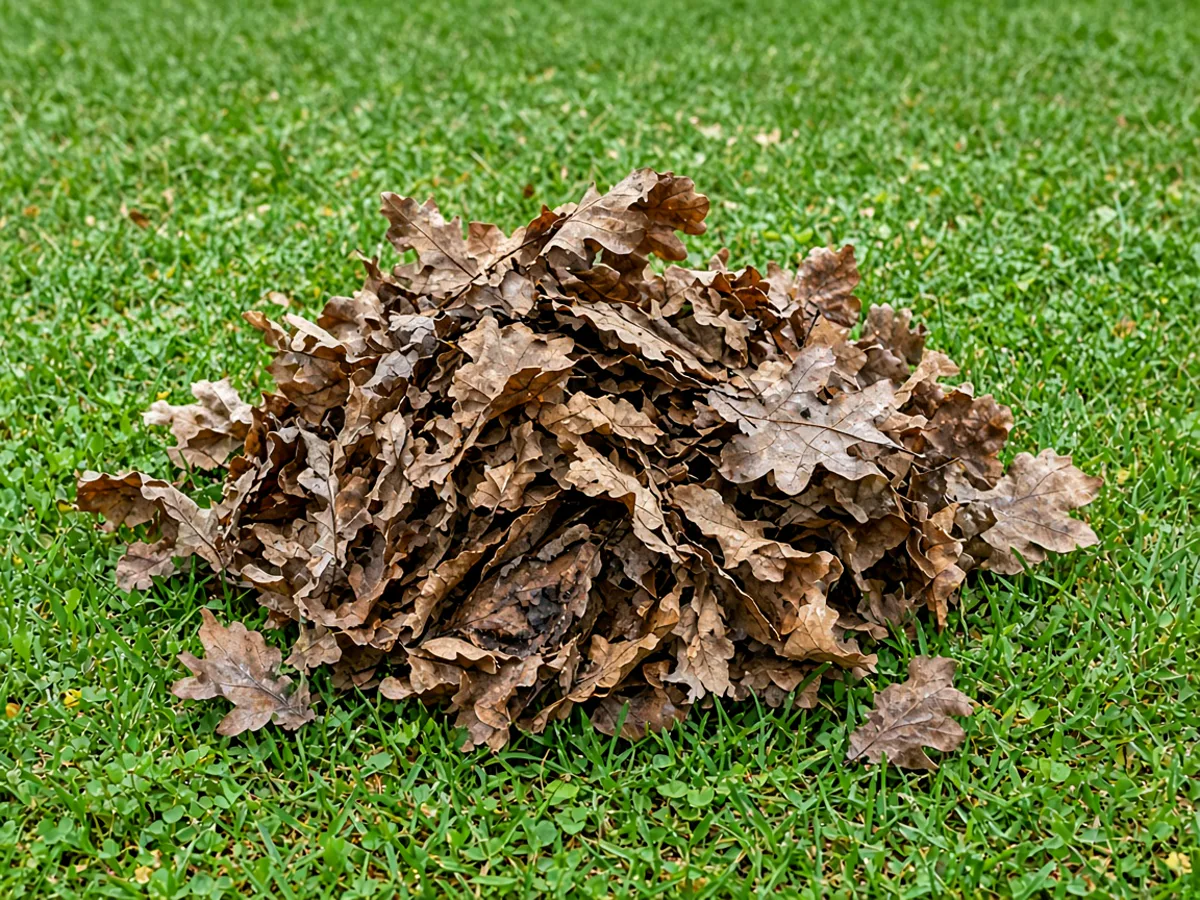
Those crunchy leaves are doing more than making a mess
Think about a walk through the woods in October.
Nobody shows up with a leaf blower to tidy the forest floor. Fallen leaves settle between trees and plants, slowly breaking down and feeding the soil beneath them.
Your backyard can benefit from a little of that same natural recycling.
A layer of leaves can help protect soil from erosion, moderate temperature changes, retain moisture, and eventually add organic matter.
Best of all? It's free.
You don't need to turn your entire yard into a forest. Just give some of those leaves a second job.
The easiest garden project you probably weren't planning
Start small. One flower bed is plenty.
If you've got dry leaves on the lawn and a mower that can mulch them, run over a manageable patch. Shredded leaves settle more easily into garden beds, and they don't tend to blow around or form heavy, water-blocking mats as readily as whole leaves.
Then spread them around your plants like a loose, natural blanket.
There's just one thing worth remembering:
Give your plants a little breathing room.
For perennial flowers, aim for roughly 1–2 inches of mulch, keeping it away from the crown—that little central area where the plant grows out of the soil.
Around trees, approximately 2–3 inches can work well, but keep the mulch several inches away from the trunk. You should still be able to see where the base of the tree widens into the roots.
Think cozy blanket, not buried alive.
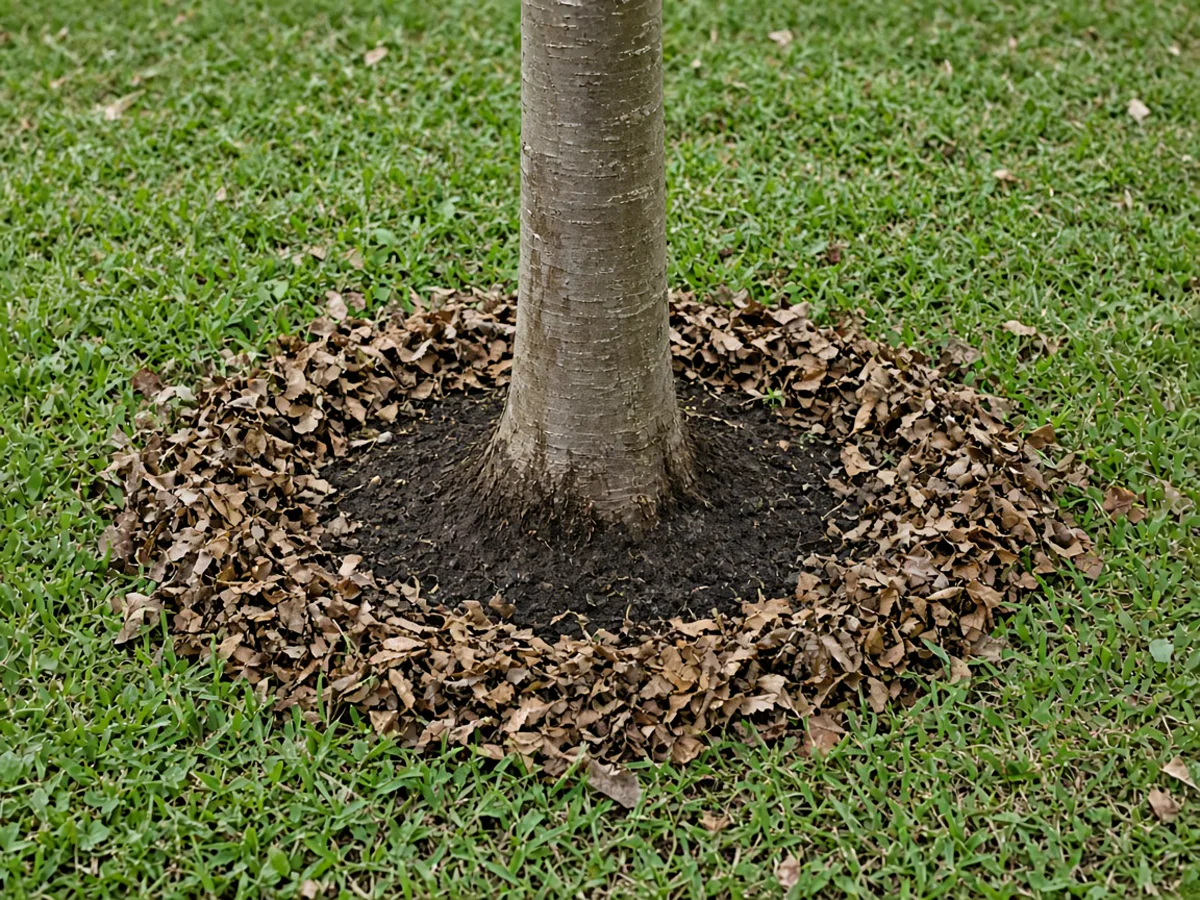
And that's pretty much the project.
No expensive landscaping makeover. No perfectly symmetrical mulch beds. Just leaves doing something useful instead of filling another bag.
But wait. Not every leaf needs shredding.
Here's my favorite part of this whole idea.
Some of those leaves are already being used.
Not by your plants.
By the tiny residents of your backyard.
Butterflies, moths, and other beneficial insects may spend part of their lives tucked into fallen leaves or sheltered beneath them. Toads, salamanders, and other small creatures also benefit from undisturbed leaf litter.
So while shredded leaves can be useful in a garden bed, consider leaving some whole leaves in a quiet corner, beneath shrubs, or in a natural area where they won't cause problems.
You don't have to choose between a cared-for yard and a wildlife-friendly one.
You can have both.
And suddenly, that slightly messy corner of the garden starts looking a lot more interesting.
Try the one-bed experiment this fall
Instead of tackling the entire yard, pick one garden bed.
Give it a light layer of shredded leaves, keeping the crowns and tree trunks clear.
Take a picture.
Then come back in a few weeks and see what's changed.
Have the leaves settled? Are they breaking down? Have any piled against the plants? Does the layer still allow water to reach the soil?
You might be surprised how quickly nature starts doing its thing.
And if you're curious, photograph the same bed again in spring.
There's something satisfying about watching what used to look like yard waste slowly become part of the garden.
One little reminder: Use healthy leaves, and avoid putting diseased plant debris back into the garden. If you have black walnut trees and sensitive plants, check the guidance for those leaves before using them fresh; thorough composting is another option.
Do you need to buy anything?
Probably not.
If you already have a rake and a mower that shreds leaves, you're in business.
A garden doesn't need a collection of expensive gadgets to benefit from something trees provide for free.
If you're starting from scratch, a sturdy leaf rake is one of those useful tools that earns its place in the shed. But there's no reason to buy a special machine just to try this on one garden bed.
Use what you have first.
A Few Tools That Make the Job Easier (If You Need Them)
Most of what this job needs is already in the garage. A rake, and a mower that shreds leaves, are enough for one bed.
If moving the shreds by the handful is the part you dread, two small tools help.
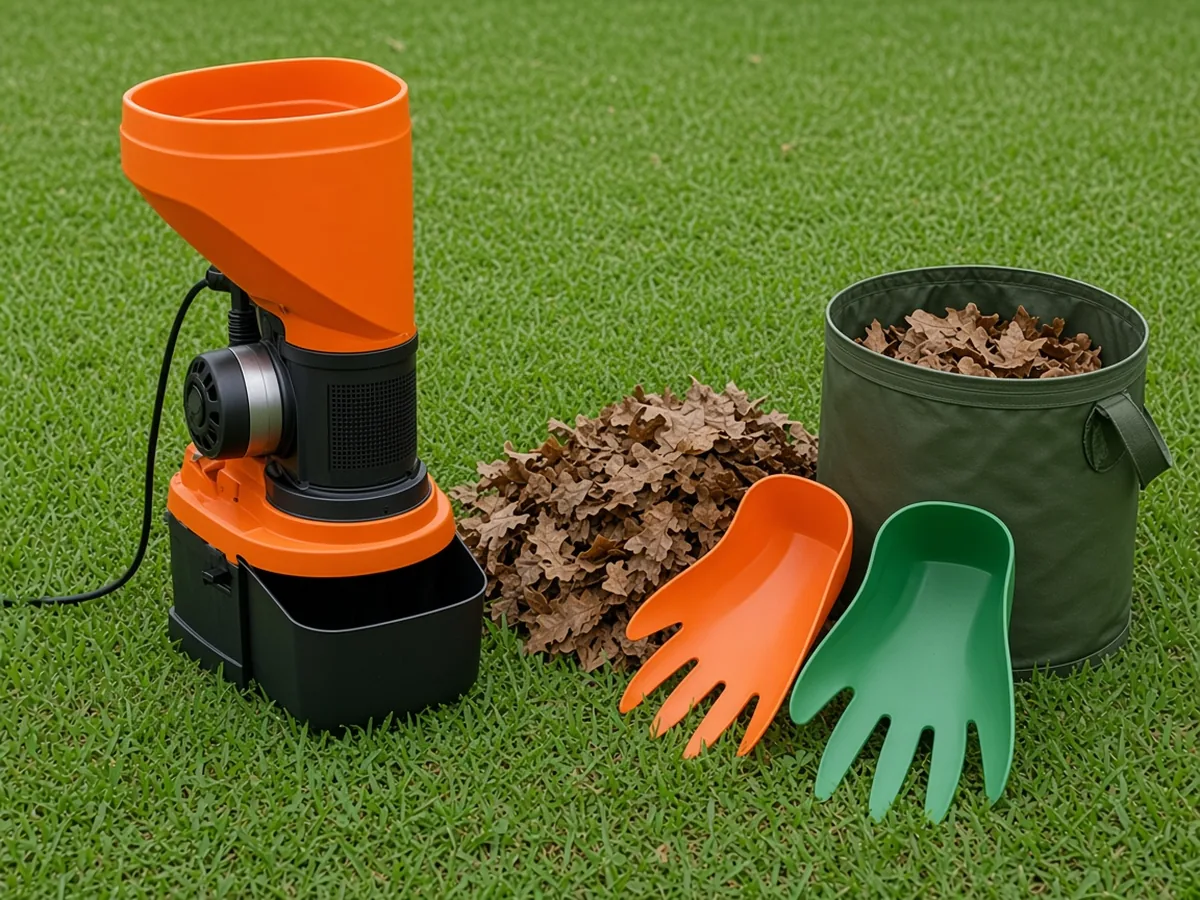
GARDEASE leaf scoops are oversized hands for gathering shredded leaves and setting them into a flower bed (paid affiliate link).
The Fiskars 30-gallon Kangaroo collapsible garden bag holds leaves while you move between beds, then folds flat for the shed (paid affiliate link).
For a yard that produces more leaves than a mower pass can handle, the WORX WG430 13-amp electric leaf mulcher is built to shred a large pile of dry leaves (paid affiliate link). WORX states an 11-to-1 reduction. Try the mower you already own before you buy one.
As an Amazon Associate I earn from qualifying purchases. I may earn a commission if you purchase through the links above.
Maybe fall cleanup doesn't have to mean cleaning everything away
There's something lovely about looking at a pile of leaves and seeing something other than another chore.
A little protection for the garden.
A place for small creatures to shelter.
Organic material slowly finding its way back into the soil.
And one less bag dragged to the curb.
This fall, before you get rid of every last leaf, save a few for the garden.
Your trees have already done the hard part.
Have you ever tried using fallen leaves as mulch, or do you usually rake everything away? I'd love to know what works in your garden.
More seasonal inspiration from Foster the Wild: Plant garlic in the Shenandoah Valley.