
As an Amazon Associate I earn from qualifying purchases. Details
October in a Shenandoah Valley garden is a put-the-beds-to-bed month. Let me be honest about the calendar: in zones 6a and 6b, the extension table has already closed the window on starting spinach and kale. Garlic, spring bulbs, a cover crop, and the leaves are what is still in season.
Key takeaway. Look up your zone, plant only what that row still allows, and mulch it. It is too late to start fall spinach this year.
This is garden advice from Virginia Cooperative Extension and the Central Shenandoah Valley Master Gardeners, not a promise about your microclimate. A south slope runs warmer. A hollow runs colder. Look up your own spot on the USDA Plant Hardiness Zone Map before you treat the whole valley as one zone.
Quick answers
| Job this week | Zones 6a and 6b | Zones 7a and 7b | Source |
|---|---|---|---|
| Plant garlic | Sept 1–Oct 1, so the published window is closing or closed | Oct 1–Oct 30 | VCE 426-331 |
| First-frost range, 50% chance | Oct 5–15 | 7a: Oct 15–25. 7b: Oct 25–Nov 5 | VCE 426-331, Table 1 |
| Cover crop, latest | Not later than Nov 1 | Not later than Nov 1 | VCE 426-334 |
| Spring bulbs | Finish planting and mulch them | Same, on the central-valley calendar written for 6a and 6b | Central Shenandoah Valley Master Gardeners |
| Start fall spinach from the table | Window ends Oct 1 | 7a window ends Oct 10 | VCE 426-331 |
The central valley calendar the Master Gardeners publish is written for USDA zones 6a and 6b, and they tell gardeners elsewhere in Virginia to shift the tasks. They use October 15 as the average first fall frost they plan around. Their month-by-month gardening calendar is worth bookmarking.
Find your zone before you pick a date
Virginia Tech's home garden vegetable planting guide, publication 426-331 (SPES-673), says Virginia's mountains put several hardiness zones in a small area. Roanoke County, as their example, has four zones and about a 30-day difference in planting. The Shenandoah Valley is the same kind of place. Winchester, Front Royal, Luray, and a ridge above them are not one number.
Table 1 in that guide gives the average (50 percent chance) first fall frost as October 5–15 for zones 6a and 6b, October 15–25 for zone 7a, and October 25–November 5 for zone 7b. Zone 8 dates are in the same table and are not the valley floor. Actual frost moves with the year. The guide says to favor the earlier or later end of a range from local experience.
I would look up the address, then use the garlic row for that zone, not a neighbor's zone.
Garlic
Table 2 of 426-331 lists garlic for zones 6a and 6b as September 1–October 1, fall only. Spring planting is marked not recommended. Table 3 lists garlic for zones 7a and 7b as October 1–October 30. Table 4 pushes zone 8 to October 15–November 15, which is the wrong row for most of this valley.
If the map says 6a or 6b and today is October 13, the published window has passed. I would not pretend a late clove will match the table. If the map says 7a or 7b, October is the month they printed.
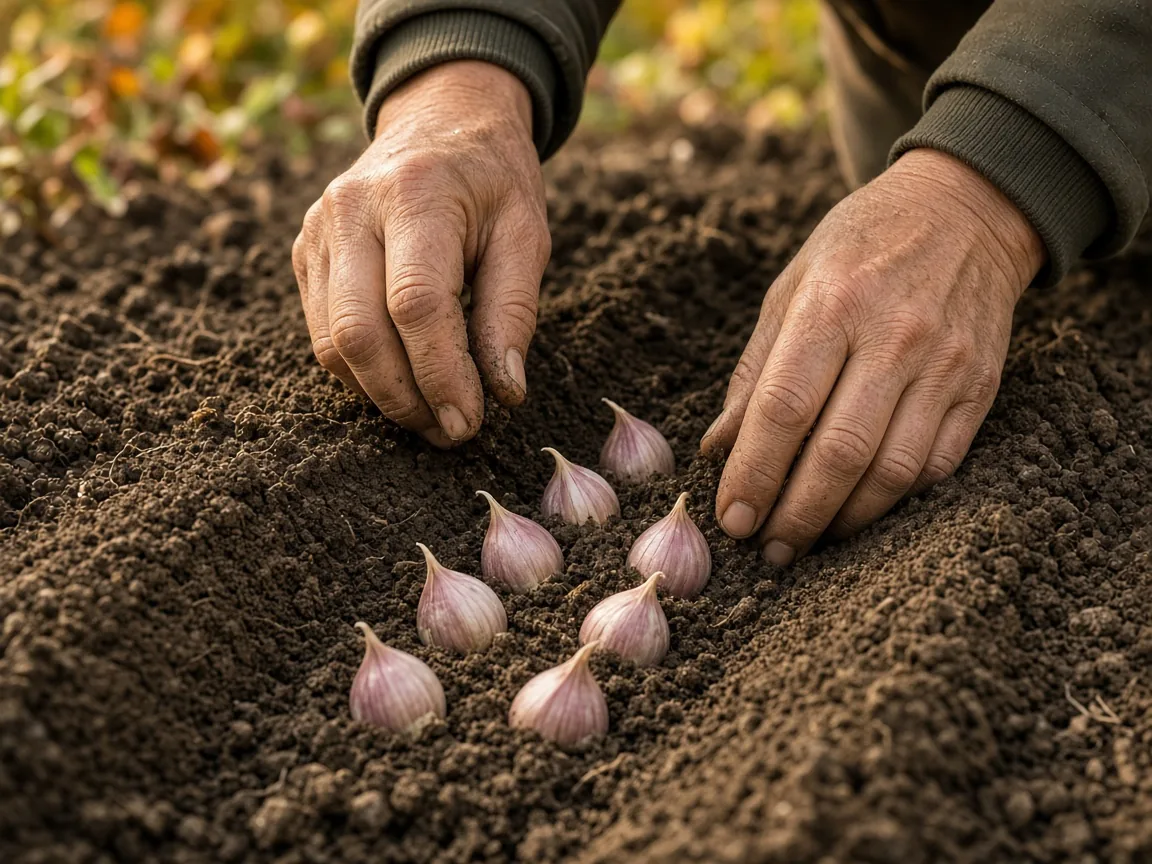
Grocery-store cloves are a gamble, so buy seed garlic meant for planting. Separate the cloves, plant them pointed end up at the depth your supplier recommends, then mulch.
Ira Wallace's October notes for Virginia, published by the Virginia Association for Biological Farming, say late October is time to finish garlic, potato onions, Egyptian onions, and shallots, and to cover them with 3–4 inches of mulch, then free any shoots trapped under a heavy mat once about half have emerged. That is a working gardener's note, not the Virginia Tech table. If the two disagree with your zone's row in 426-331, I follow the Tech table for the planting window and Wallace for the mulch check.
Spring bulbs
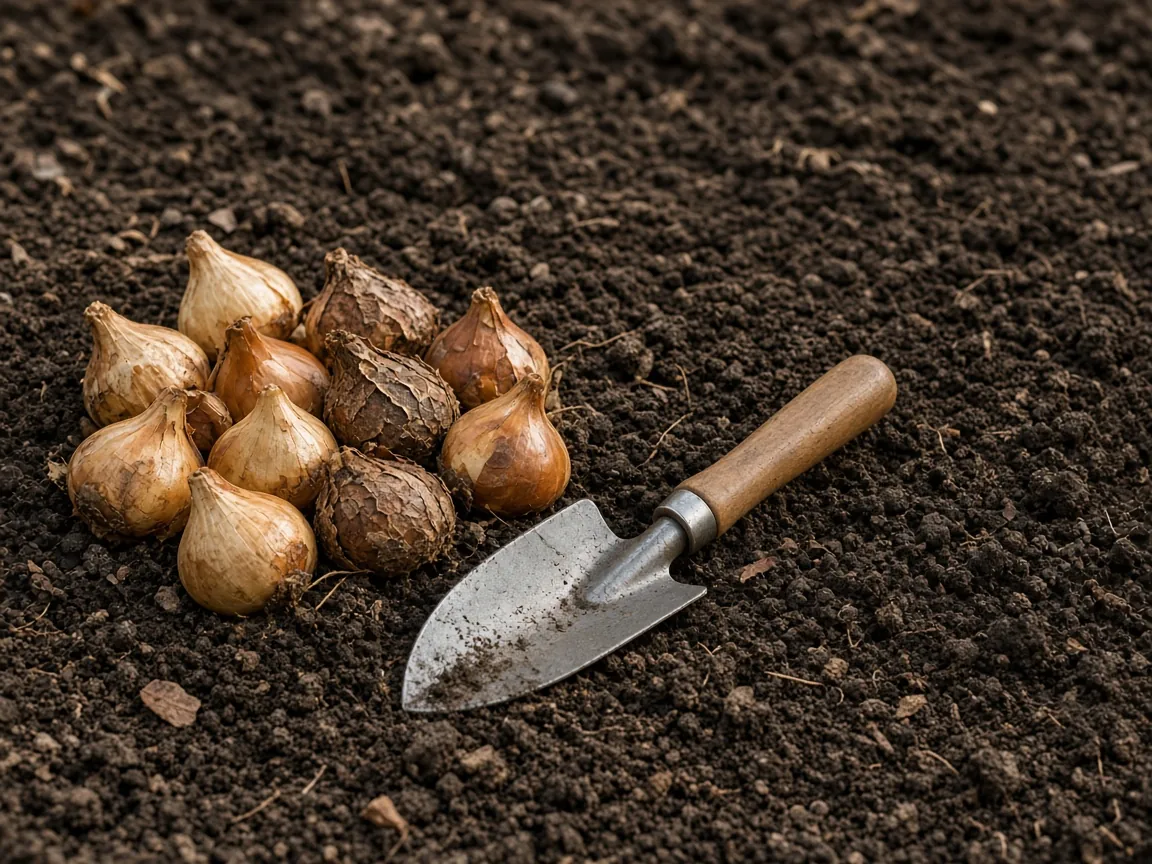
The Master Gardeners' October list says to finish planting spring-flowering bulbs and mulch them, to extend the rooting season. That is the job if the bulbs are already in the garage.
Plant them where you will see them from the kitchen window, not in a bed you plan to dig again in March. Mulch after the ground cools, not so early that the mulch keeps the soil warm and the bulbs from rooting. A light layer you can still see the bed through is the idea. A buried bulb under a wet mat of whole maple leaves is how they rot.
Cover crops
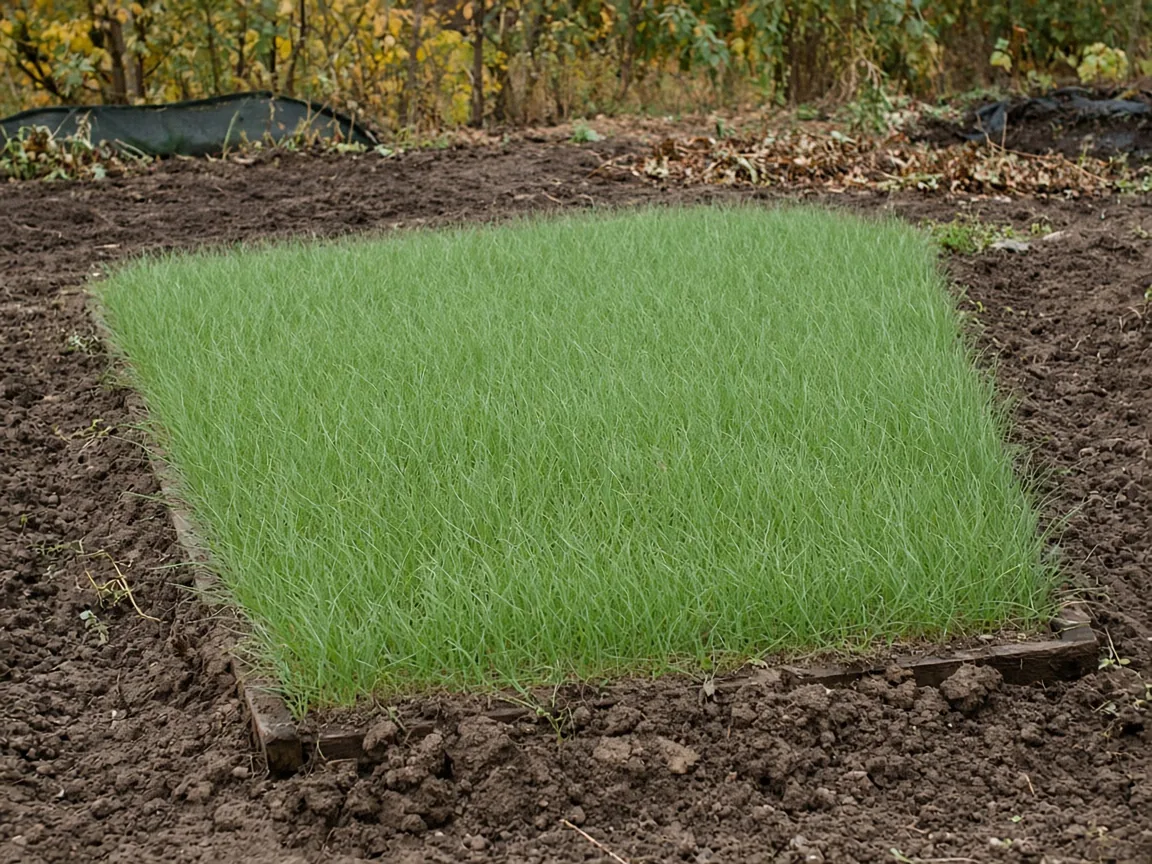
Virginia Cooperative Extension publication 426-334, Fall Vegetable Gardening, says a cover crop protects soil that would otherwise sit bare and erode, and adds organic matter when you turn it in next spring. Winter cover crops can go in as early as August 1 and should not be planted any later than November 1. They need some growth before a hard frost.
Till under summer residues, broadcast the seed, and rake it in, preferably before a rain. Ask a seed store for the rate, or use the table in 426-334. If one bed has to be planted very early in spring, leave that bed bare. A cover crop delays spring planting until the growth breaks down. Bare beds this week can still take a cover crop. November 1 is the late edge that publication prints.
Leaves
The Master Gardeners say to rake leaves, compost them, and add them to the garden next year. They also say to keep mowing at 3–4 inches. Whole wet leaves matted on a lawn are not the same as a compost pile.
They say to discard diseased and insect-infested plants and not to compost them. Tomato and squash foliage that spent the summer spotted belongs in the trash, not in the leaf pile you will spread on the salad bed.
Shredded leaves are the mulch I would use on the bulb bed and around perennials. A thick slab of unshredded leaves on a crown is the mat Wallace warns about on garlic. If you do not have a mower that mulches, a pile of dry leaves run over on the driveway is enough. Any rake you already own does the job.
Herbs and what a frost ends
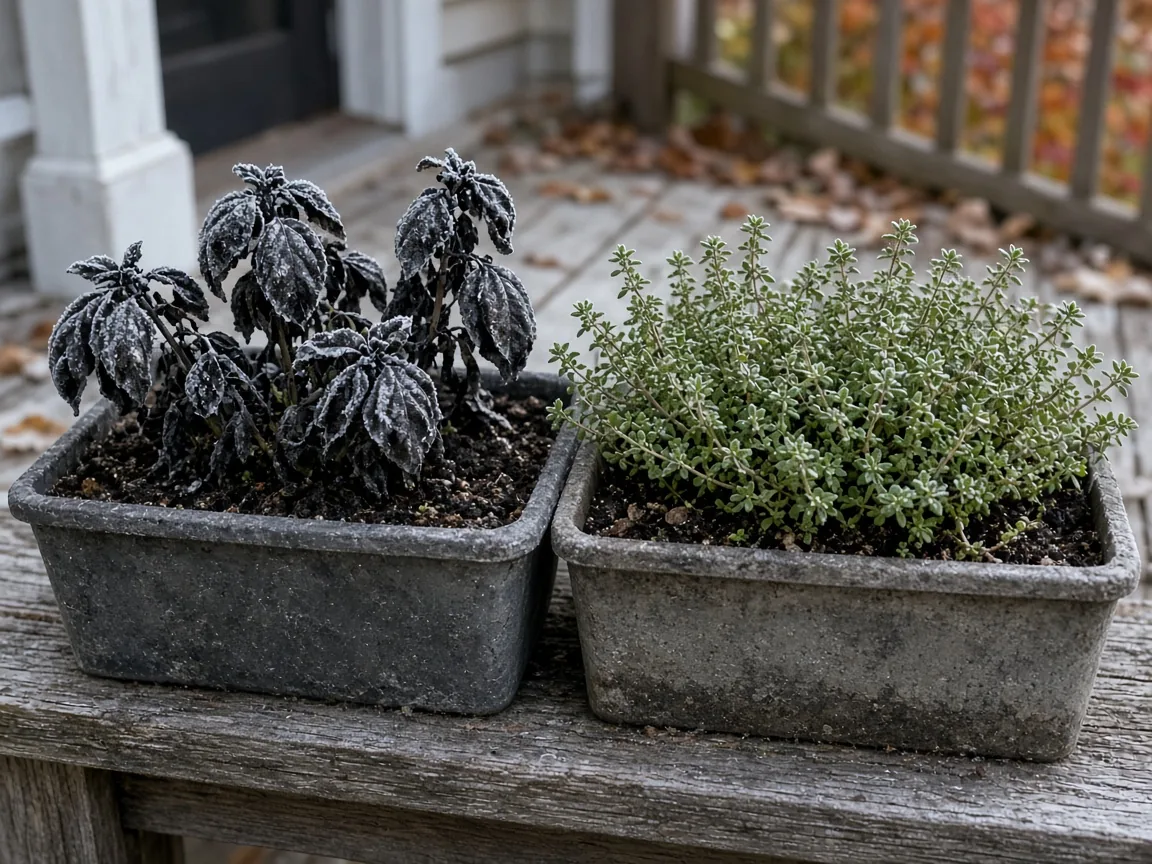
A light frost ends basil. I pull it or make the last pesto before the night the forecast drops, and I do not promise it will shrug the cold off. The Master Gardeners say to beware that October 15 frost date on their 6a/6b calendar, to protect container trees and shrubs by moving them and covering the soil with straw or leaves, and to cover sensitive plants on a cold night and take the cover off the next morning.
They also say you can take cuttings of healthy annuals such as coleus and begonias, root them, and grow them in a sunny window. That is the houseplant version of "save it."
I would pot a rosemary I want next year and bring it in before a hard freeze. I leave thyme, sage, and parsley in the ground and mulch them. That is just my habit. Containers move.
What to cut, and what to leave for a professional
The October calendar says to prune dead and weak limbs so winter does not do it for you, and to hire a professional for large trees. It also says it is normal for yews, pines, arborvitae, and junipers to shed inner needles now. That shedding is not a reason to cut the shrub down.
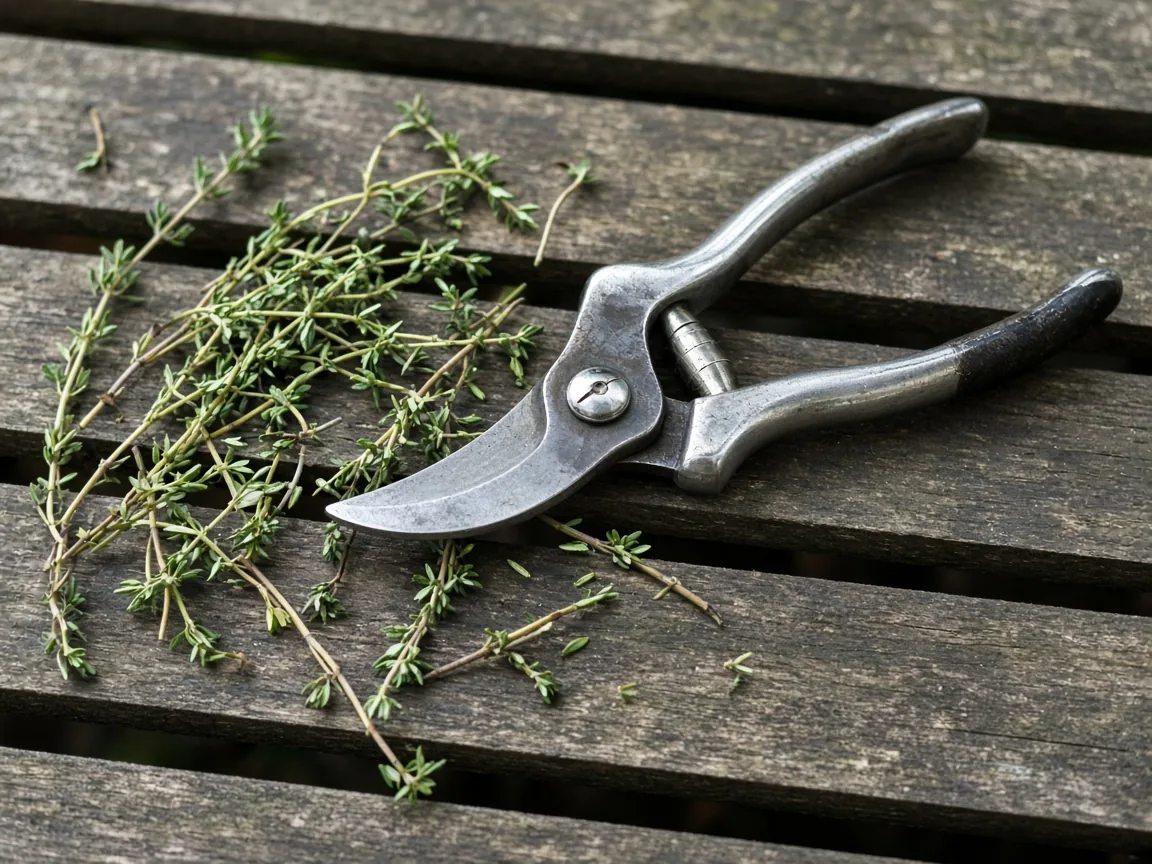
A bypass pruner is the hand tool for a green stem and a small dead twig. The pair I would reach for is the Fiskars bypass pruning shears, 5/8-inch cut capacity. I would not use them on a branch that belongs to an arborist.
Wipe the blade after sap. It is a good habit anyway.
A week-of-October 13 checklist
- Look up the address on the USDA map. Write down 6a, 6b, 7a, or 7b.
- If you are in 7a or 7b and garlic is not in yet, plant it inside the October 1–30 window and mulch 3–4 inches, then watch for trapped shoots.
- If you are in 6a or 6b, do not pretend the September 1–October 1 garlic window is still open. Spend the hour on bulbs, leaves, and cover.
- Finish spring bulbs you already bought. Mulch them.
- Sow a cover crop on bare beds before November 1, or leave the early-spring bed bare on purpose.
- Rake. Compost healthy leaves. Throw out diseased plants.
- Harvest or cover anything a frost will end. Pull basil. Move containers. Take the cover off in the morning.
- Cut dead twigs with a bypass pruner. Call someone for the big limbs.
What this is not
This is not a shopping list, and it is not a promise about your hollow. Every yard runs a little warmer or colder, so treat these dates as a starting point.
Prints are in the shop. The gas-budget drive is Skyline Drive fall color on a gas budget. More notes are on Foster the Wild.
I will check back in when the Master Gardeners' calendar turns to November.
Which bed are you covering this week, the garlic, the bulbs, or the one you are leaving bare on purpose?