The leaves are down and the woods look bare. Look lower. The fallen wood is where November is busiest.
Why I leave the log
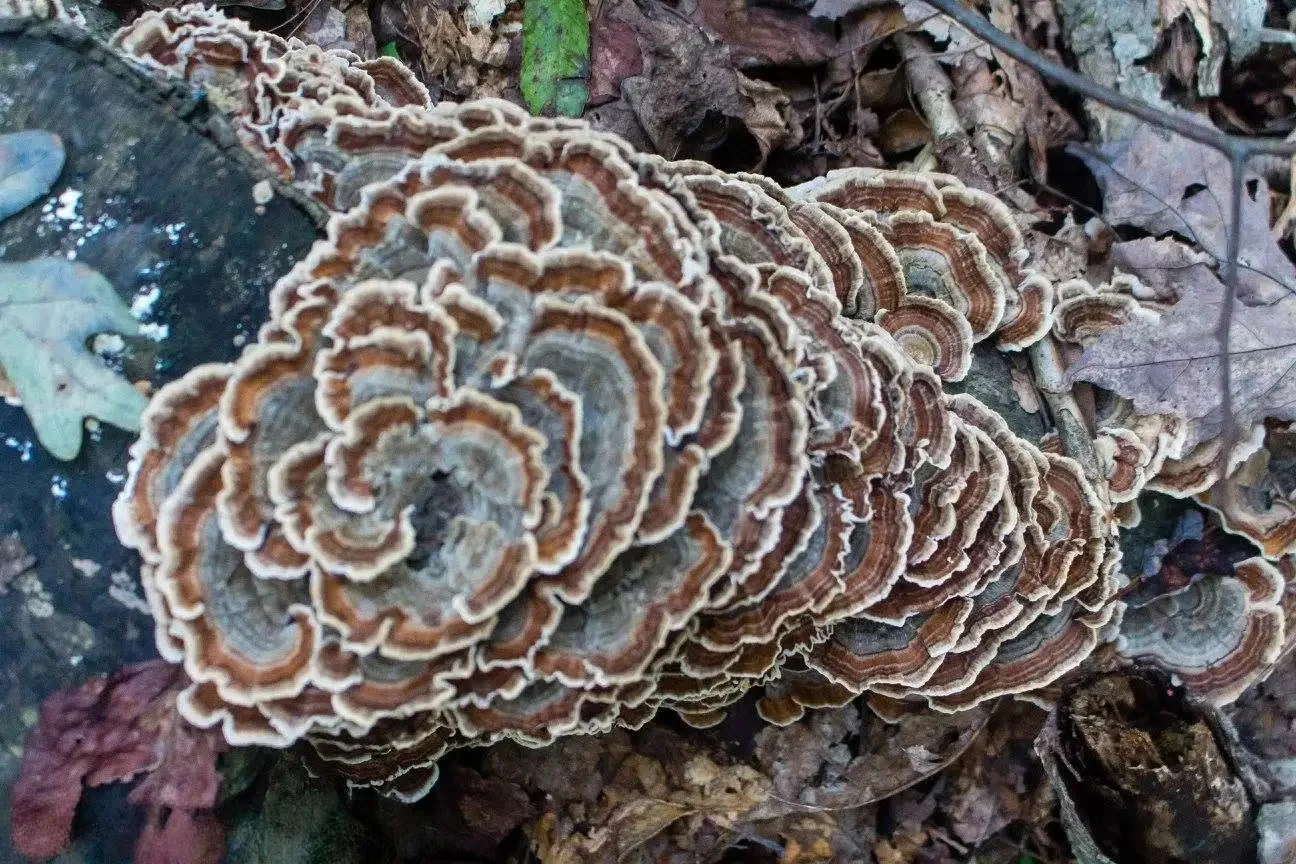
Every fall I'm tempted to tidy. Drag the fallen branch to the curb, clear the stump, make it neat. Then I find something like this growing on it and I leave it right where it is.
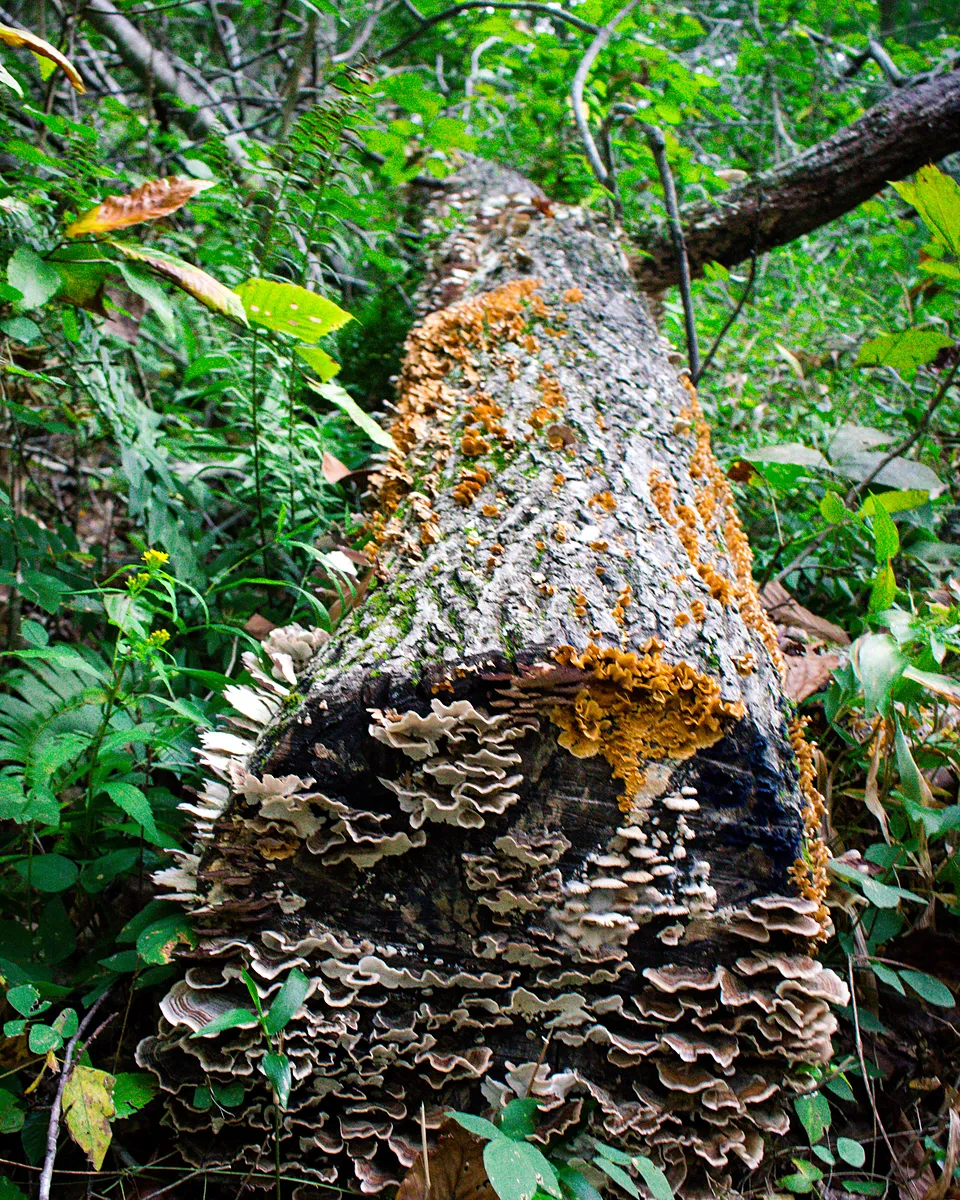
Fungi on dead wood are decomposers. They break the tough wood down and return its nutrients to the soil. Shenandoah National Park describes fungi as critical to the forest because they release nutrients from dead material so it can be recycled into new life. The park also prohibits disturbing woody shelf mushrooms, which is one more reason I leave them. A log left alone is slowly becoming part of the forest floor.
Turkey tail
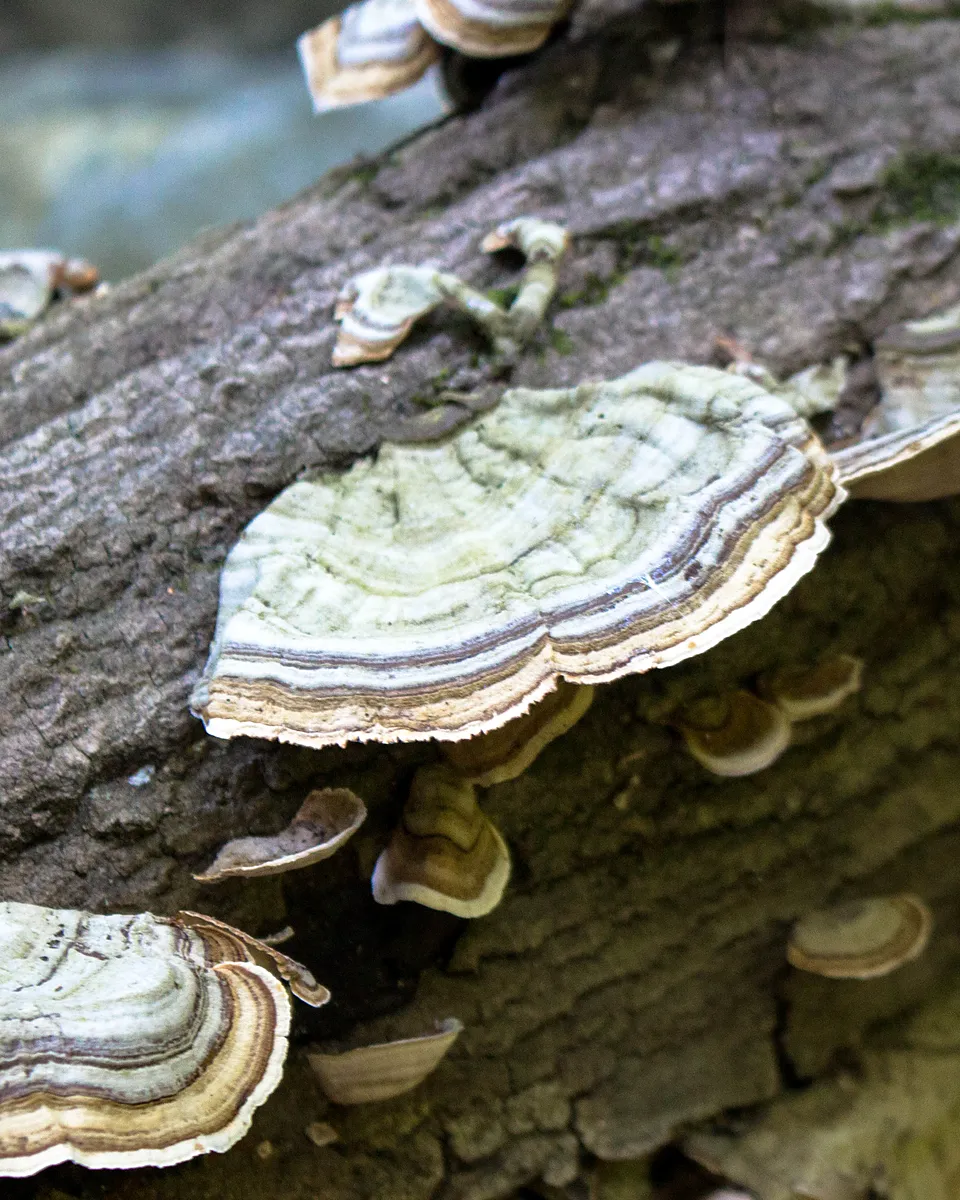
Turkey tail is one I always look for. Its thin, leathery fans grow in bands of brown, gray, rust and cream, often stacked in rows on fallen hardwood. It is common in Virginia: iNaturalist has thousands of Virginia records, in every month of the year.
I think the rosette at the top of this post may be turkey tail. The bands of color and the way it grows in layers look the part. But I only photographed the top, and the underside is one of the important clues. True turkey tail has tiny pores underneath, while some of its look-alikes don't. So for now, I'm leaving the identification open.
Old man of the woods
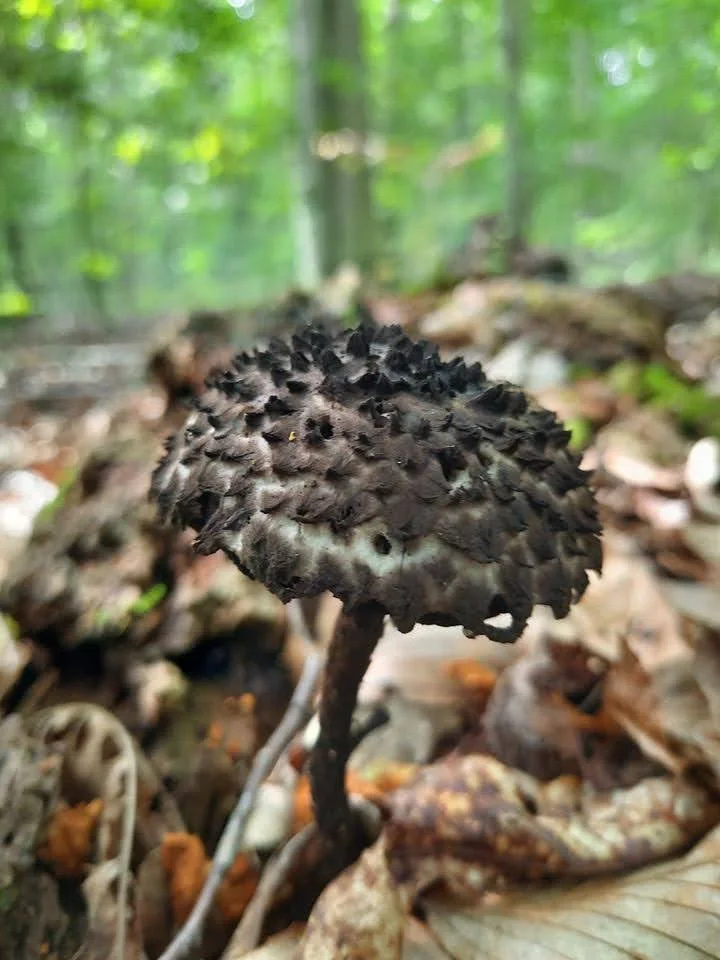
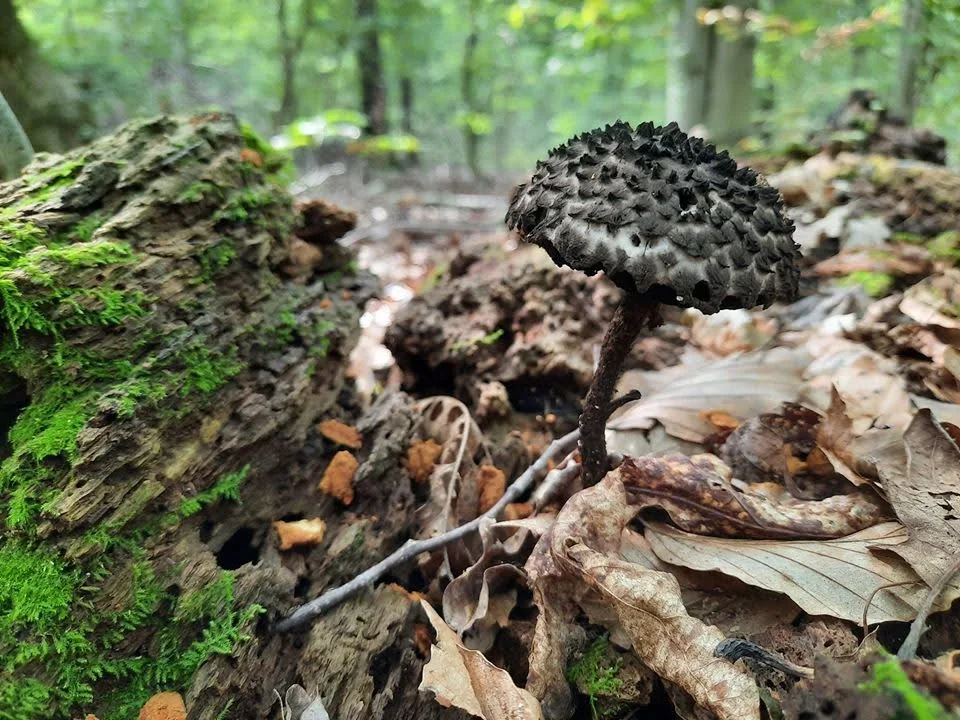
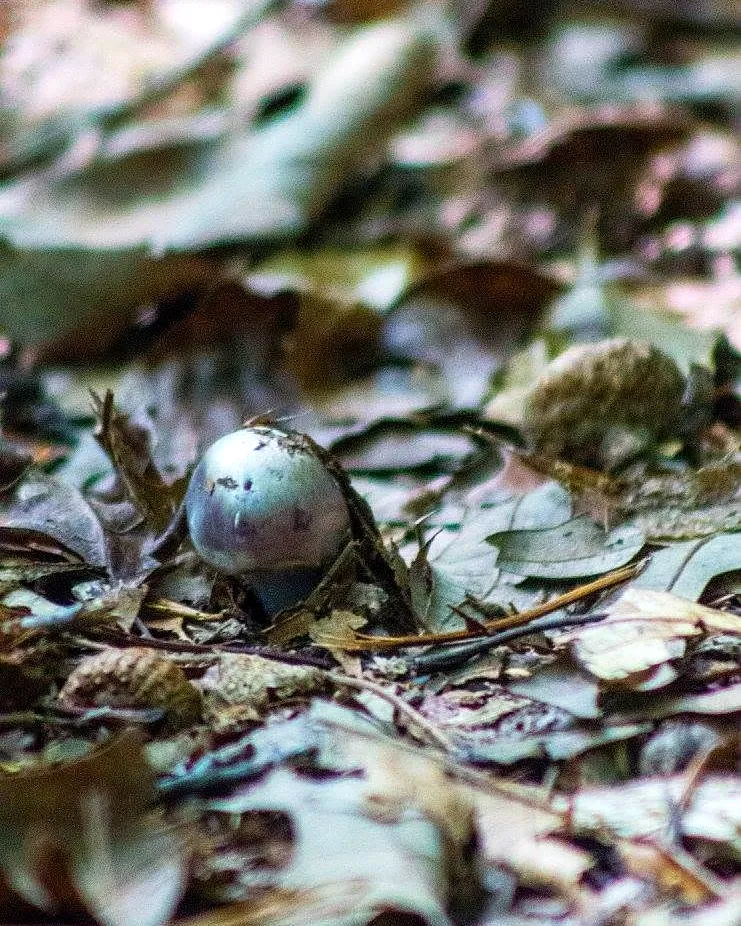
This is one of my favorite woodland finds. It's a good match for the old man of the woods group: a gray-black cap covered in big, soft, shaggy scales, with white showing between them, on a woolly dark stalk. The Blue Ridge Foothills & Lakes Virginia Master Naturalists describe old man of the woods (Strobilomyces) growing with hardwoods, especially oaks, in summer and fall. Members of this group have pores rather than gills beneath their caps.
A close relative, Strobilomyces confusus, also grows in Virginia and is very hard to tell apart. So I'll call this the old man of the woods group and leave the exact species to the experts.
My fungus collection
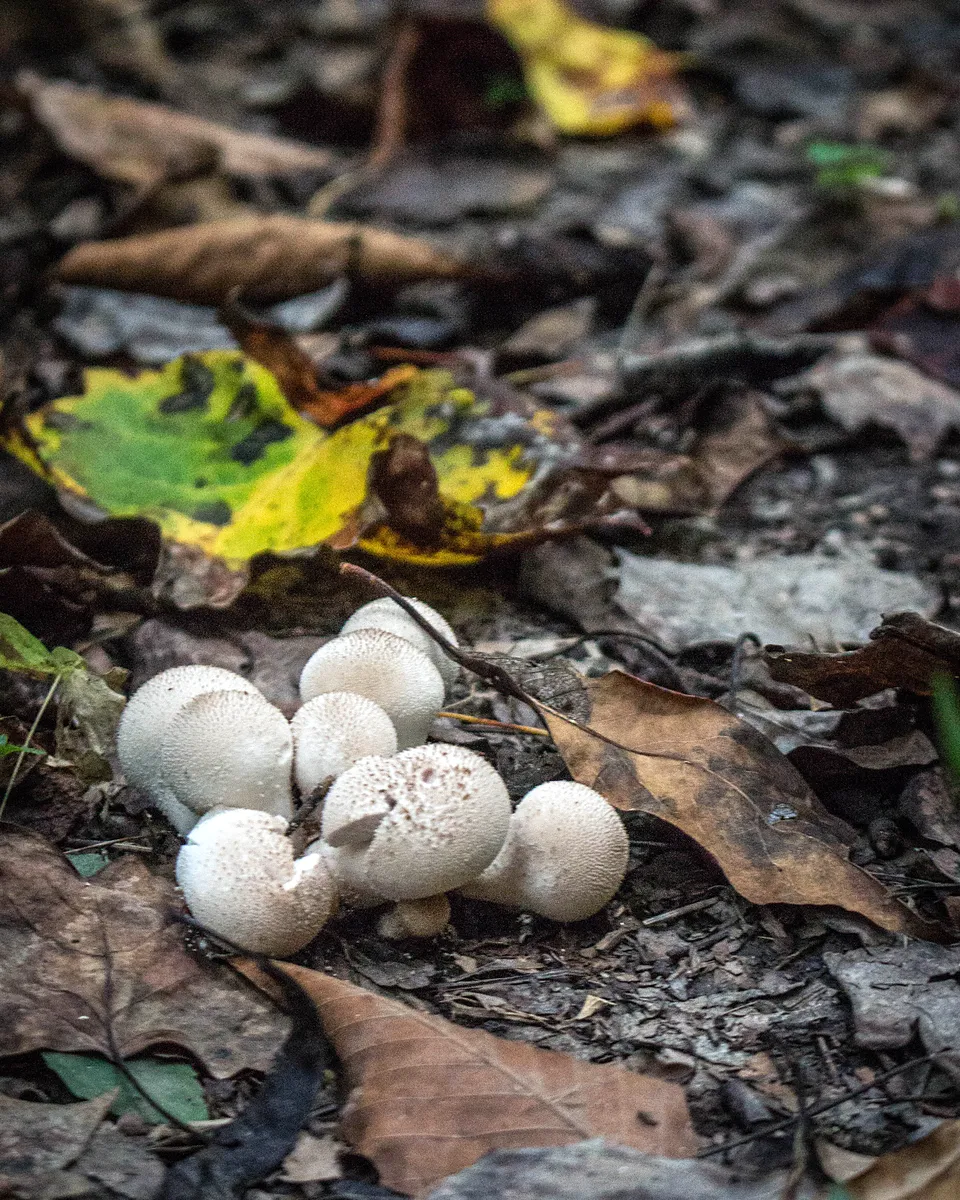
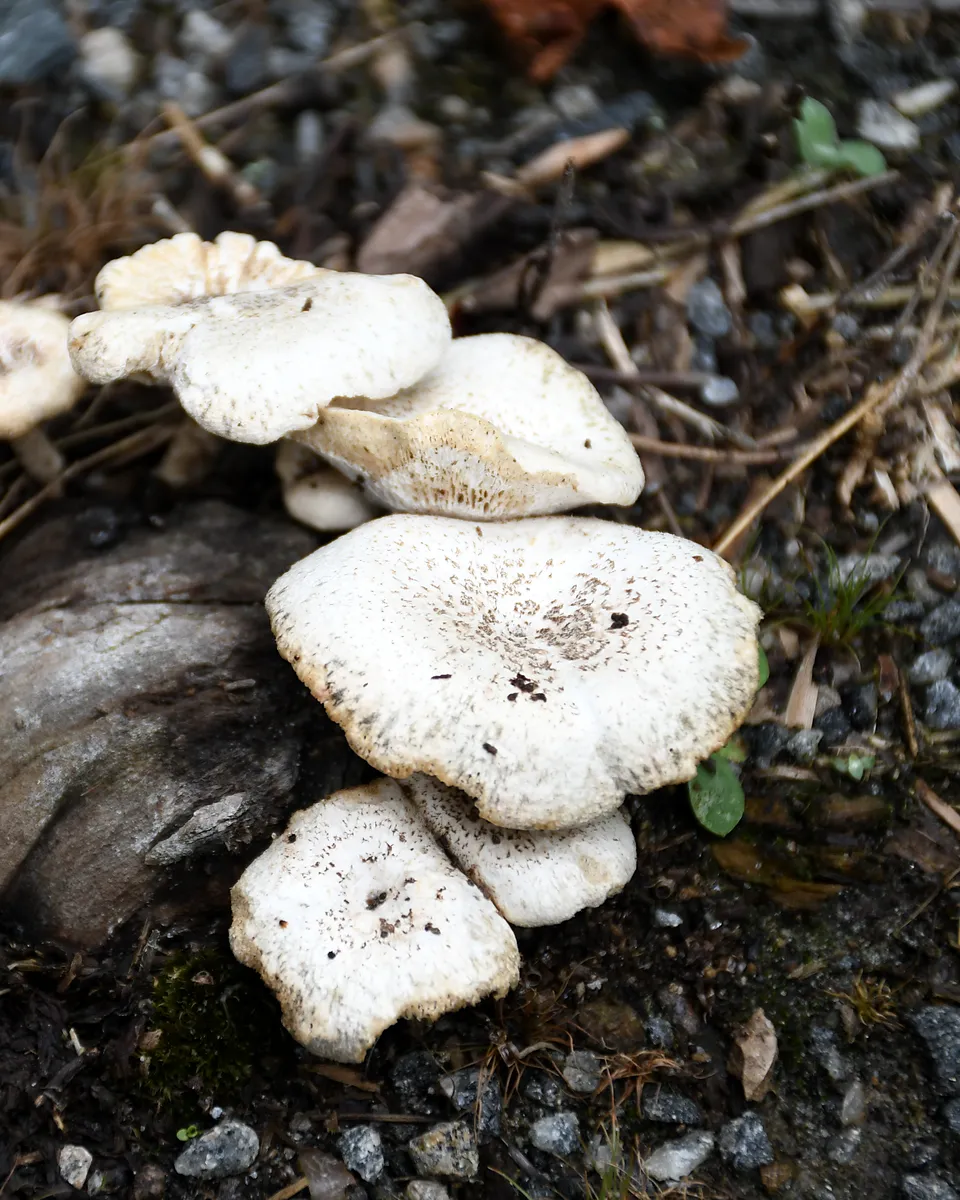
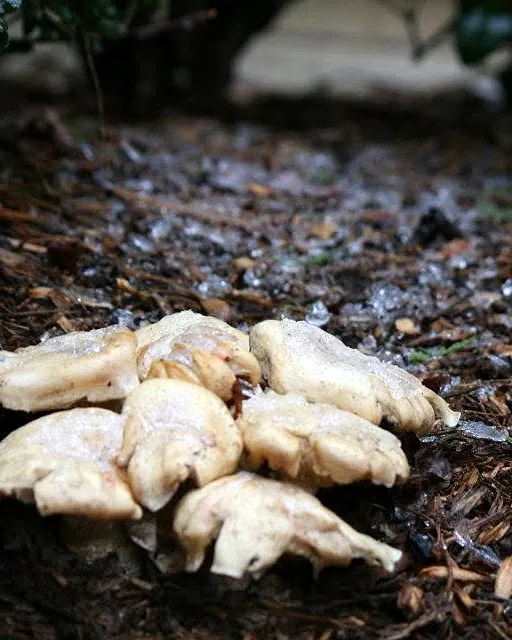
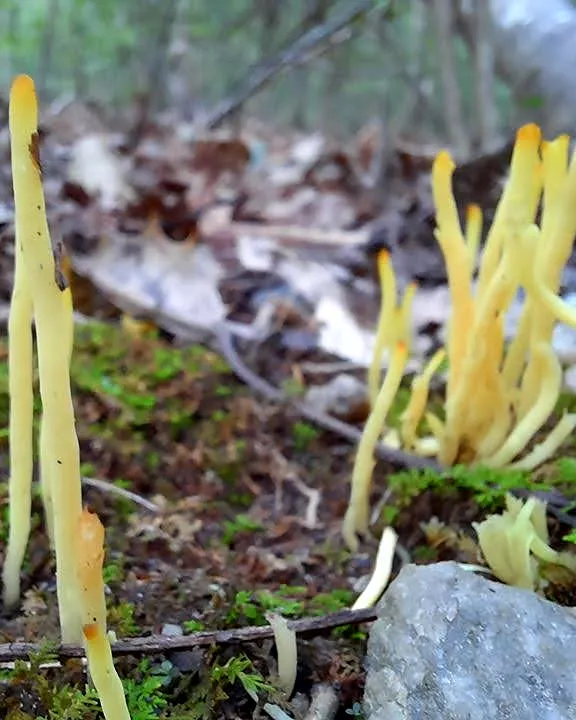
These came out of my own photo library, from different woodland walks over several years, not just this November. I pulled the best ones and grouped them by shape. Same rule as always: they're for looking at, not for picking.
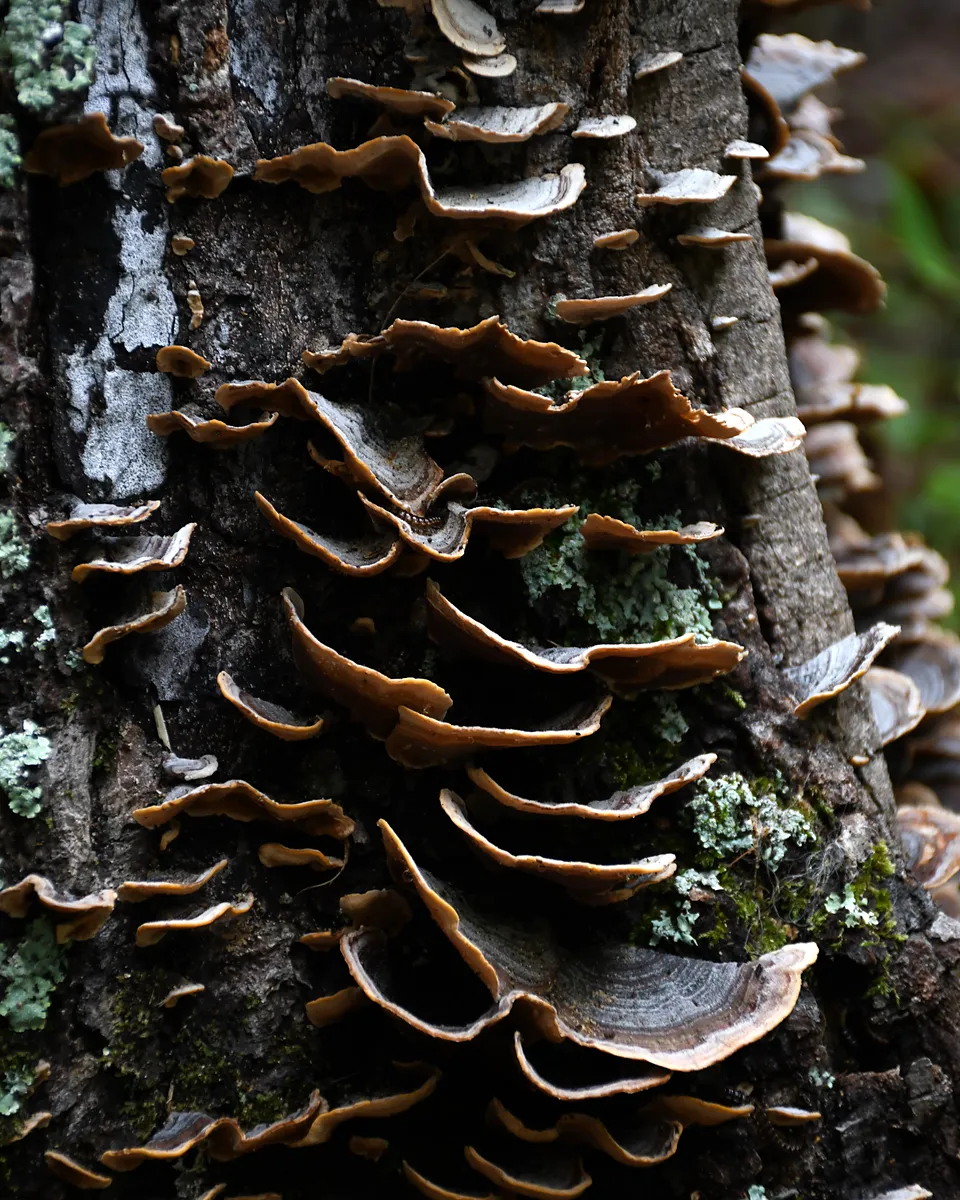
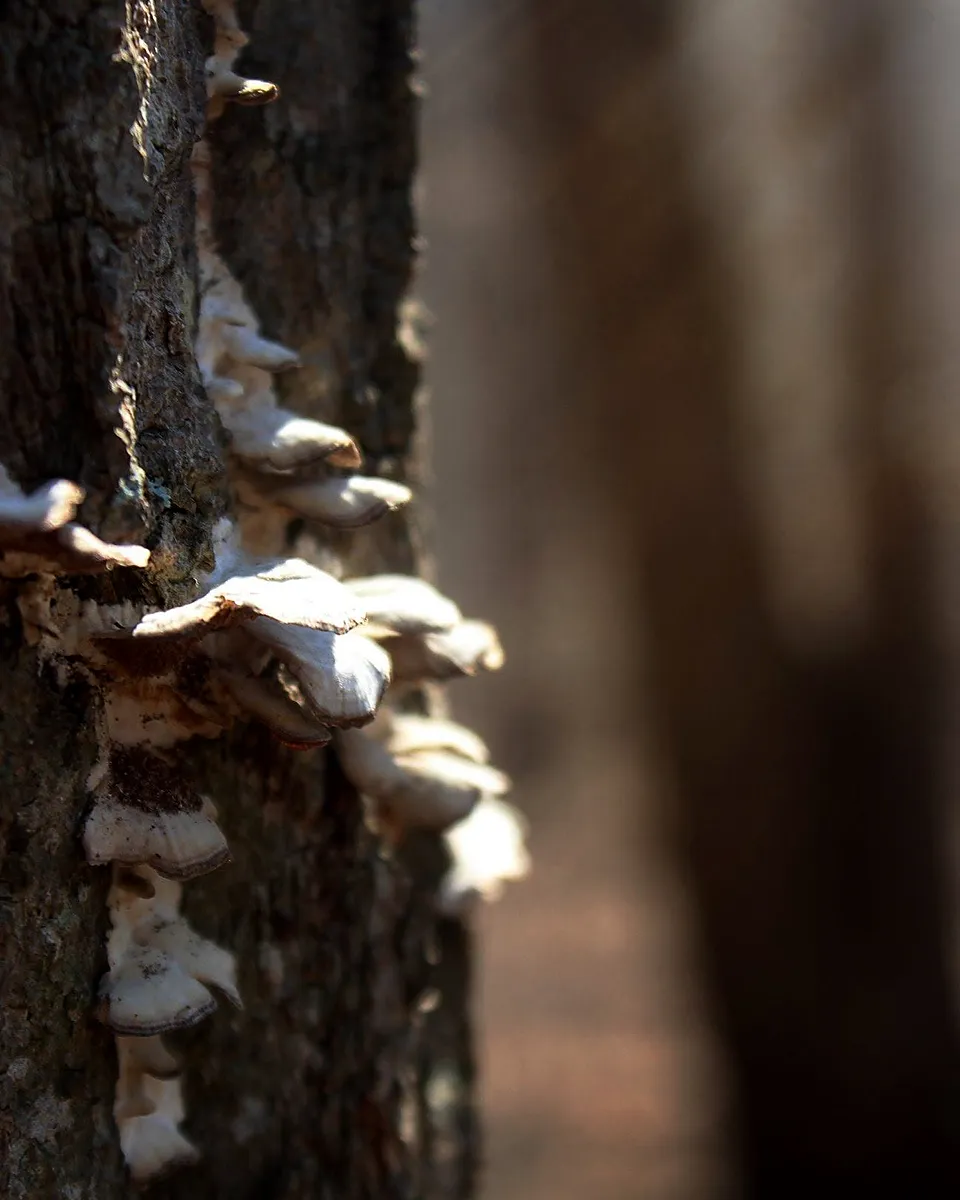
Brackets and shelves
Shelf or bracket fungi grow straight out of the wood like little balconies. Many look alike from the top, so I don't name these.
Caps and gills
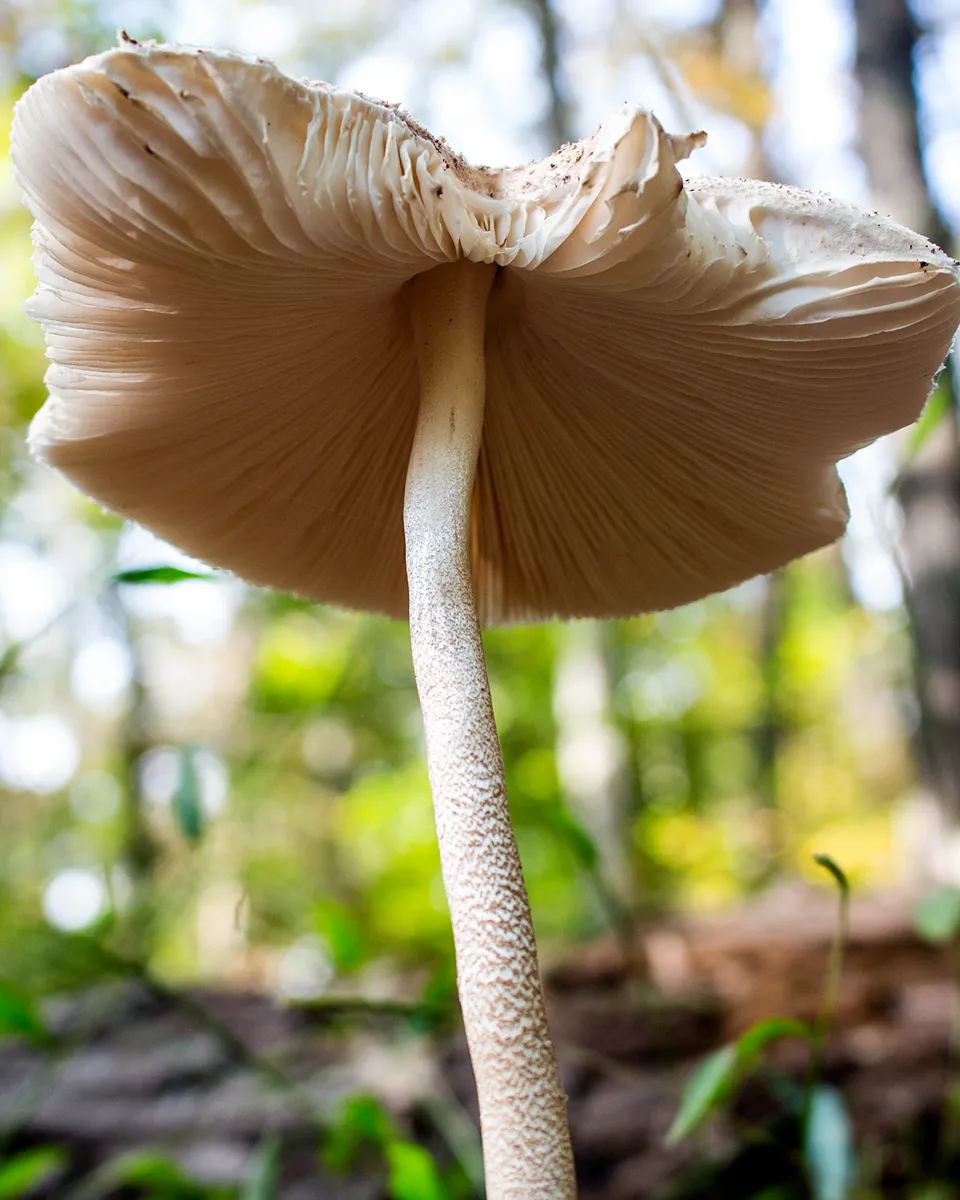
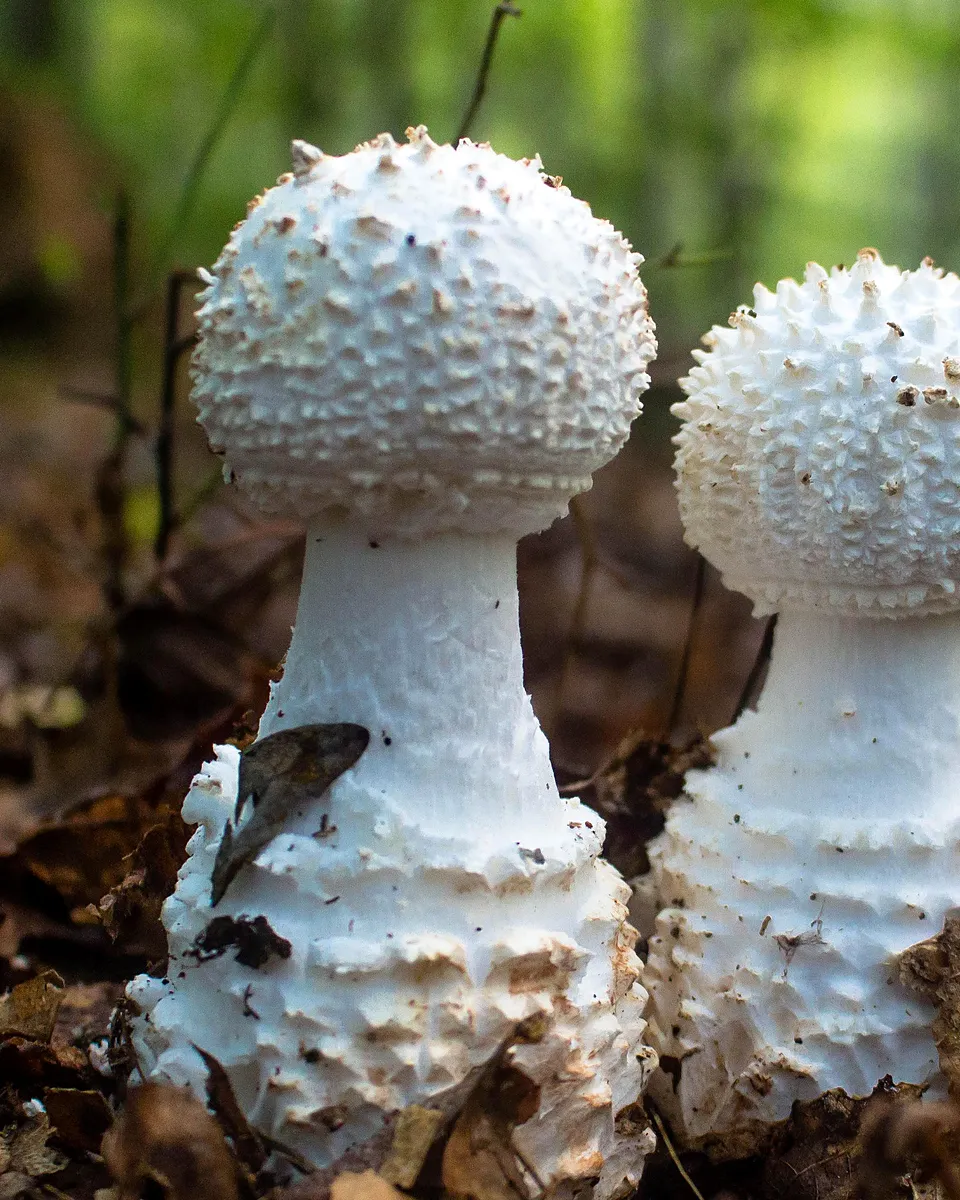
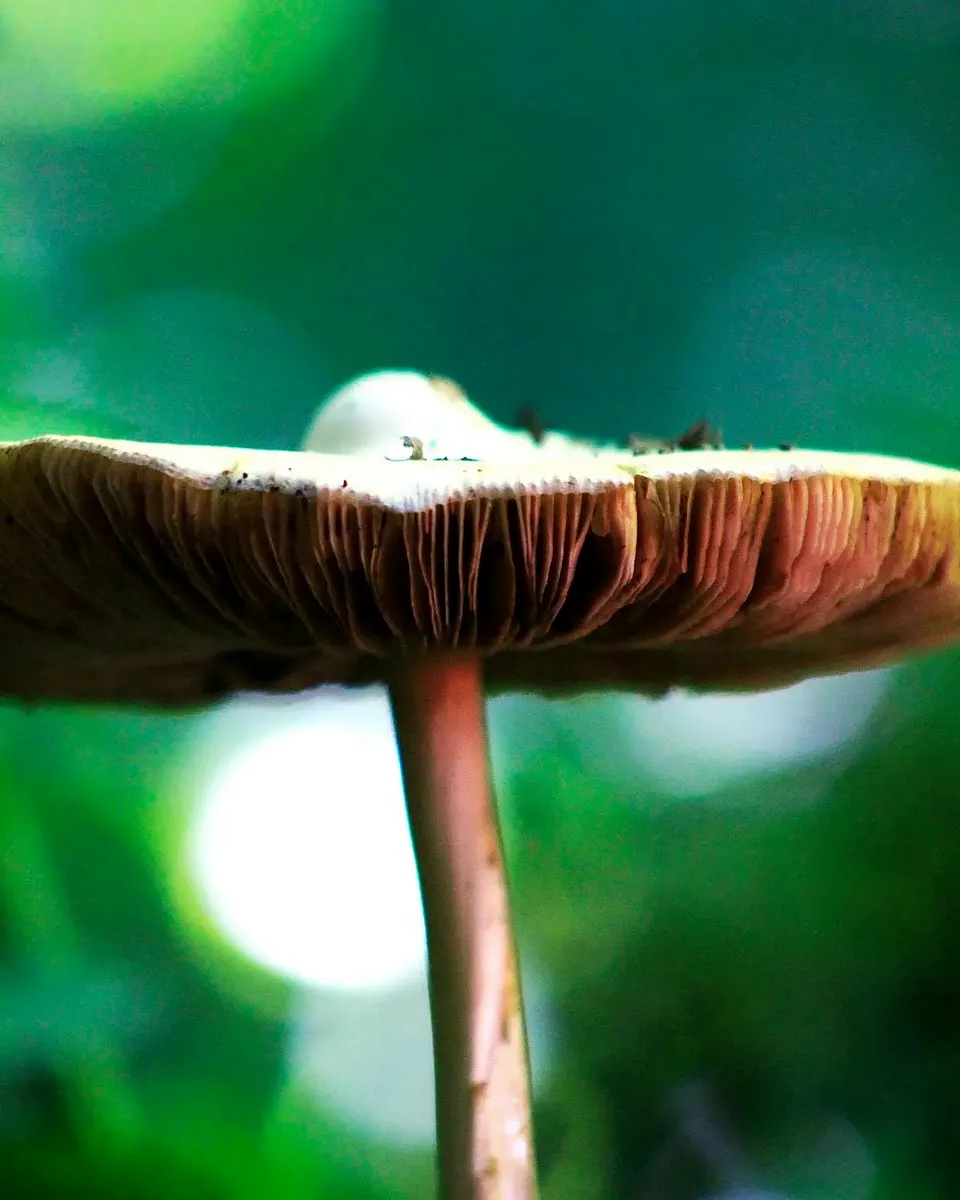
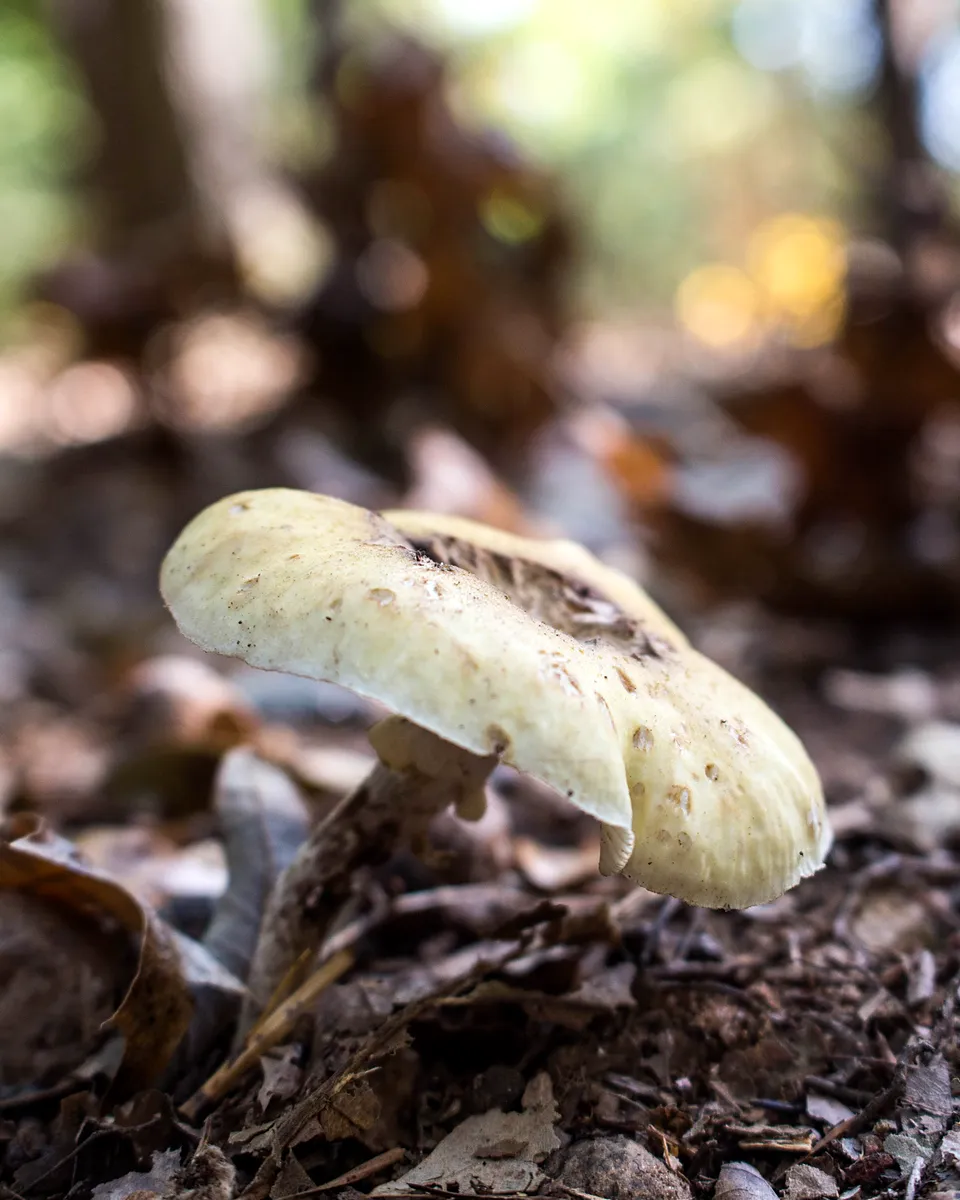
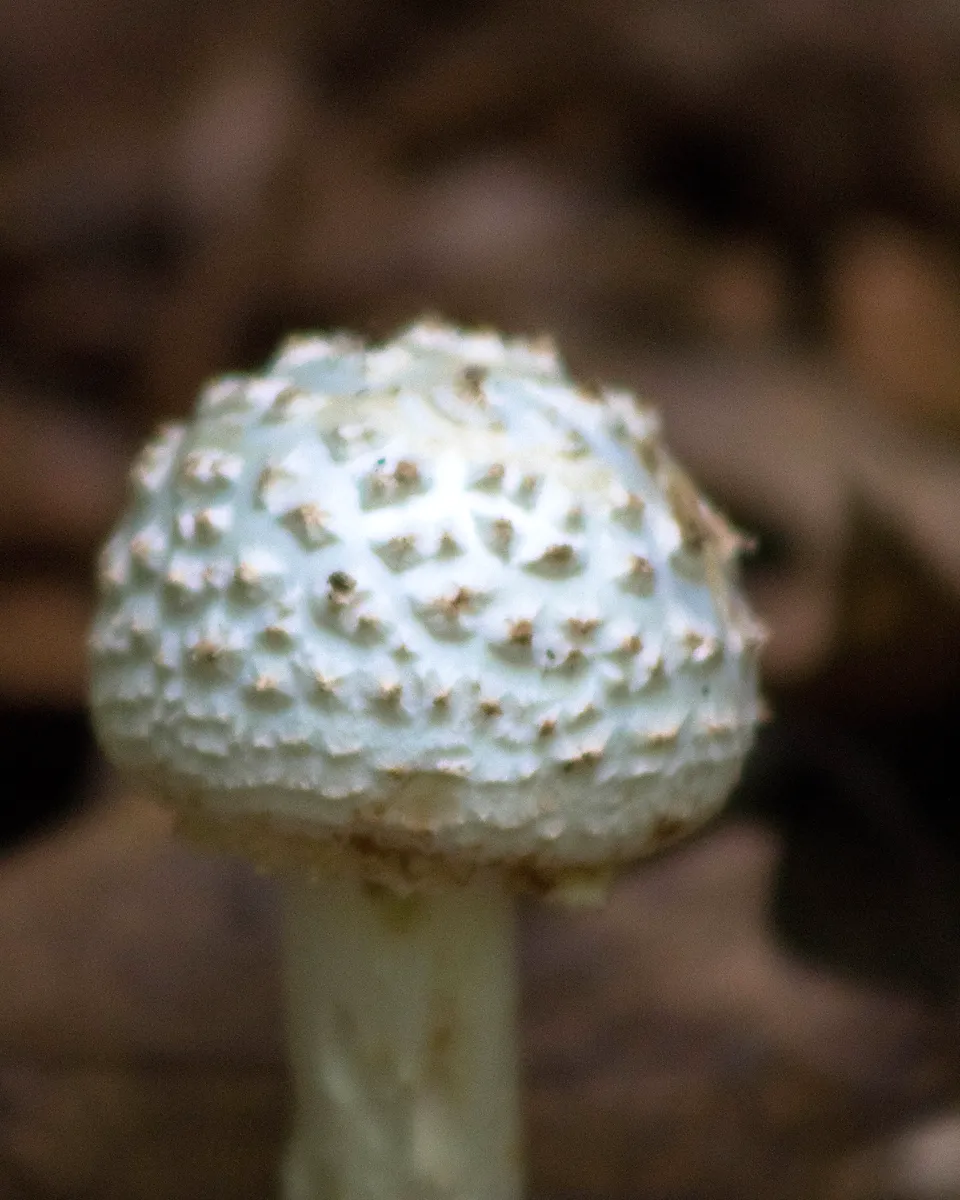
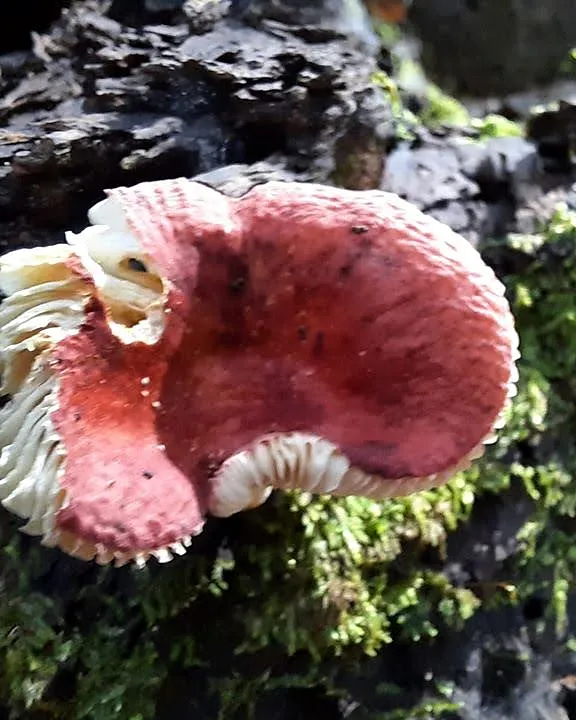
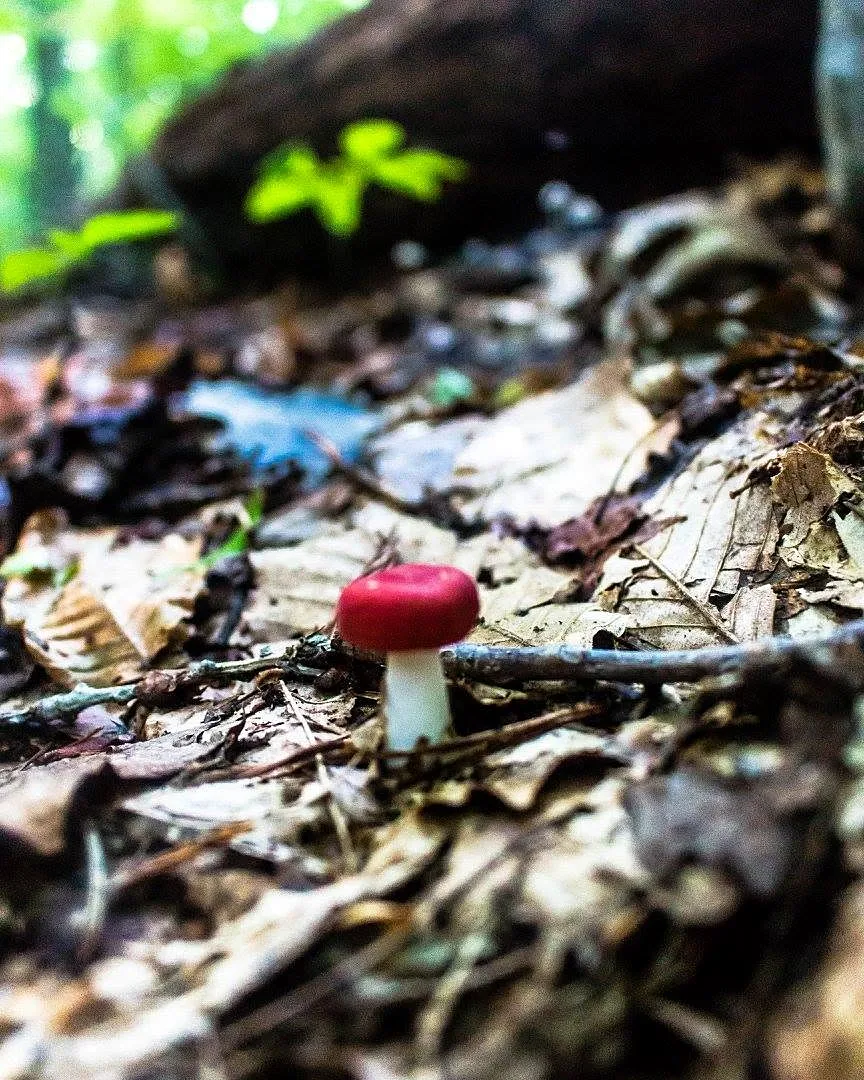
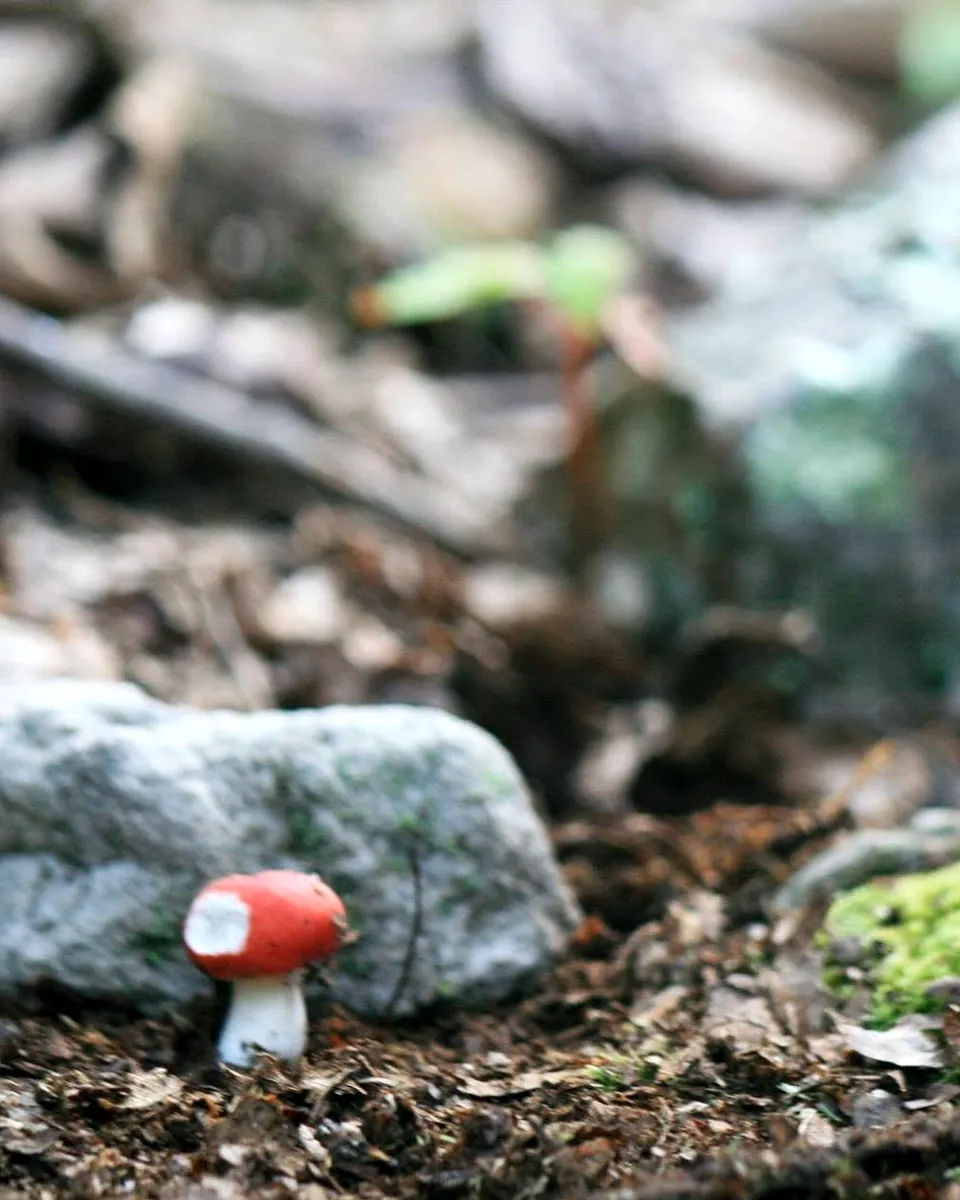
The classic mushroom shape. Getting low shows the underside, which is the side an expert would want to see. I don't know most of their names, and with white mushrooms that matters.
Clusters, fingers and color
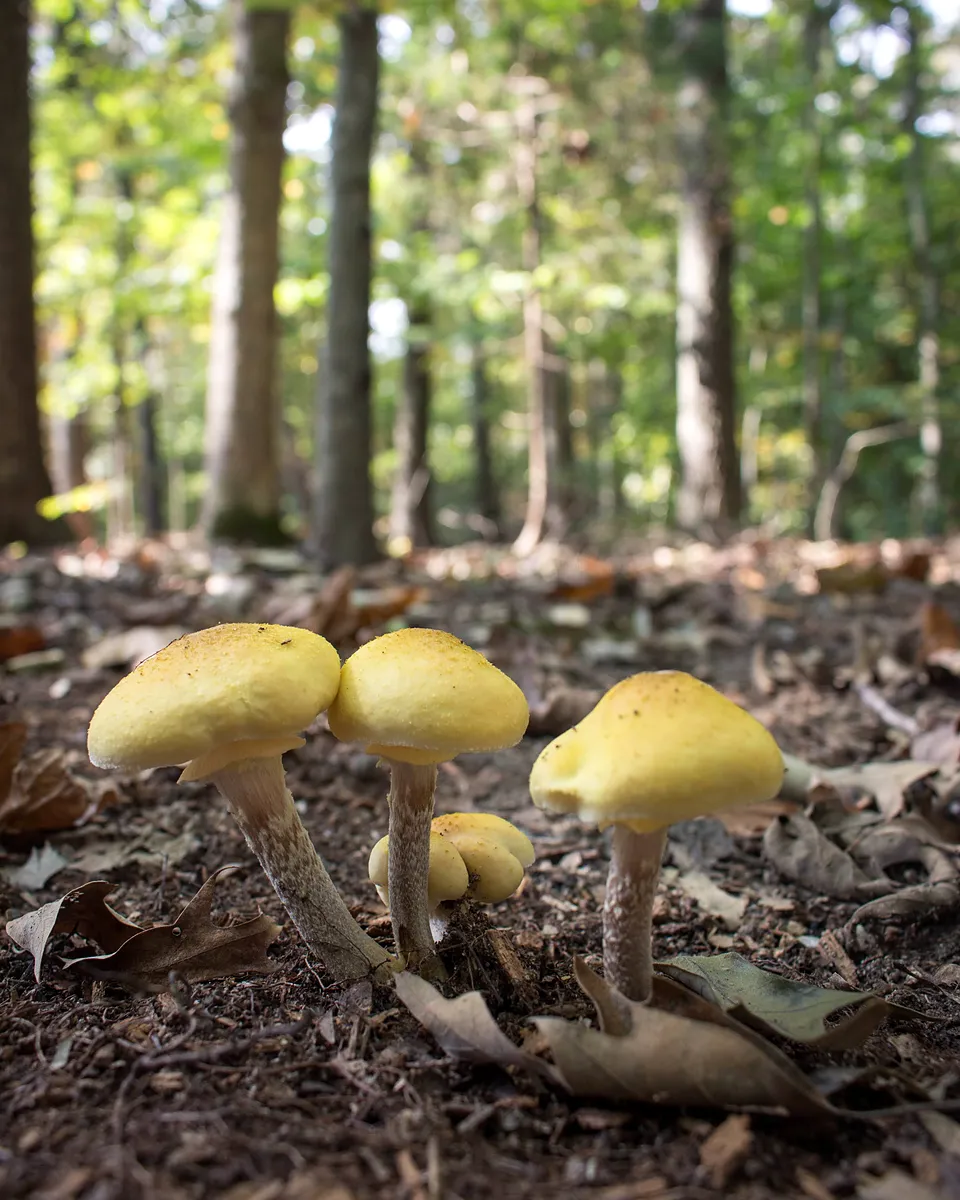
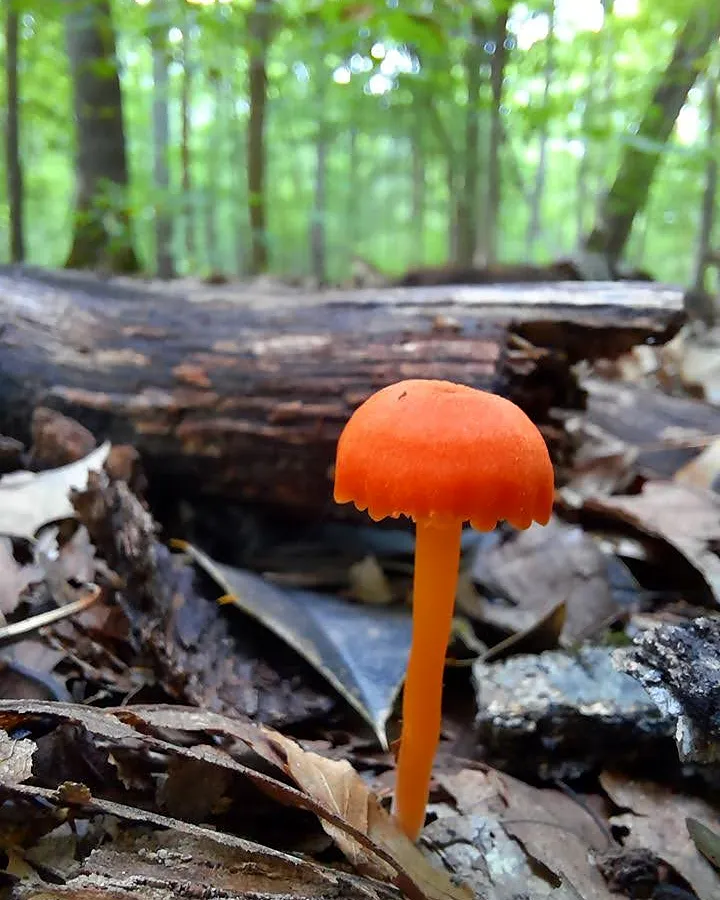
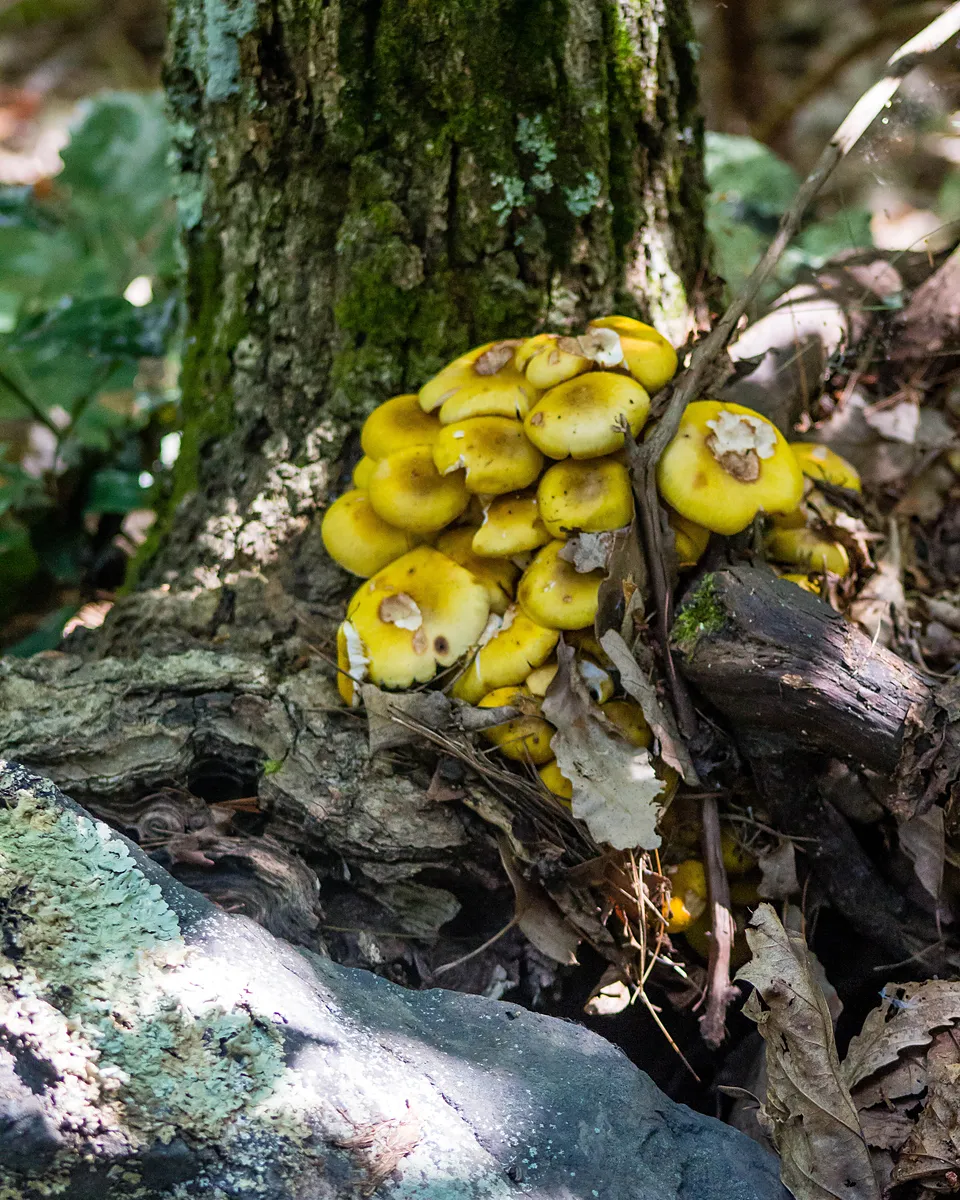
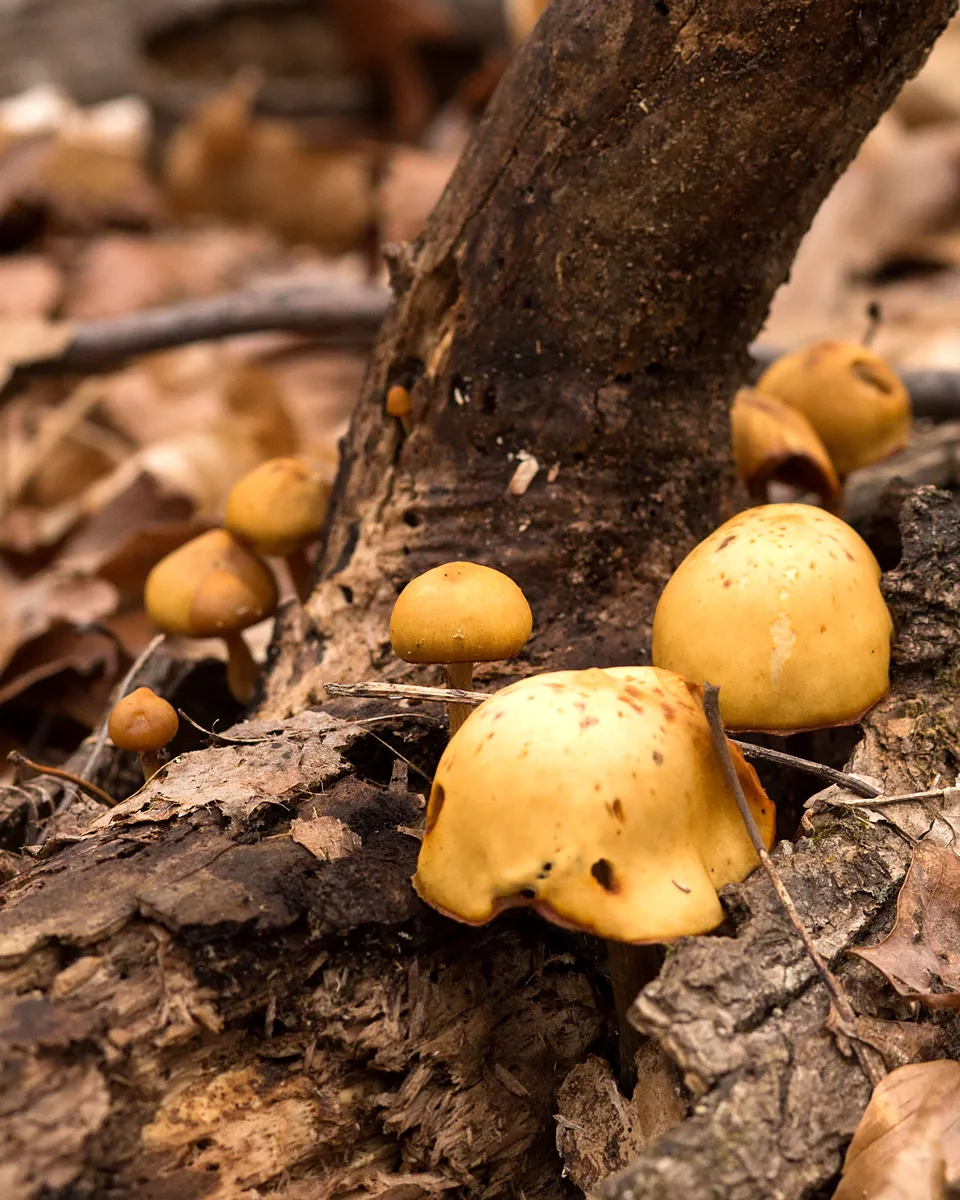
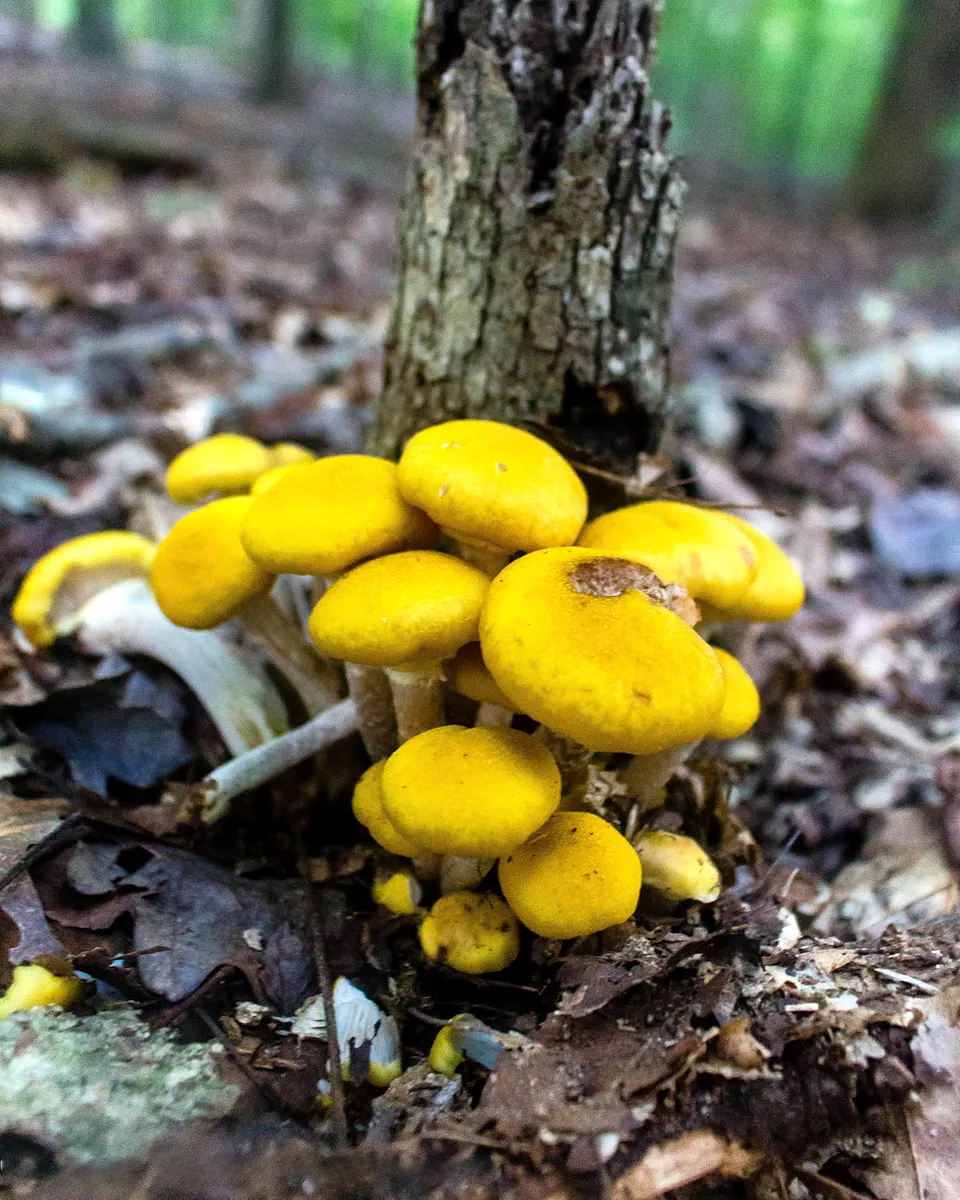
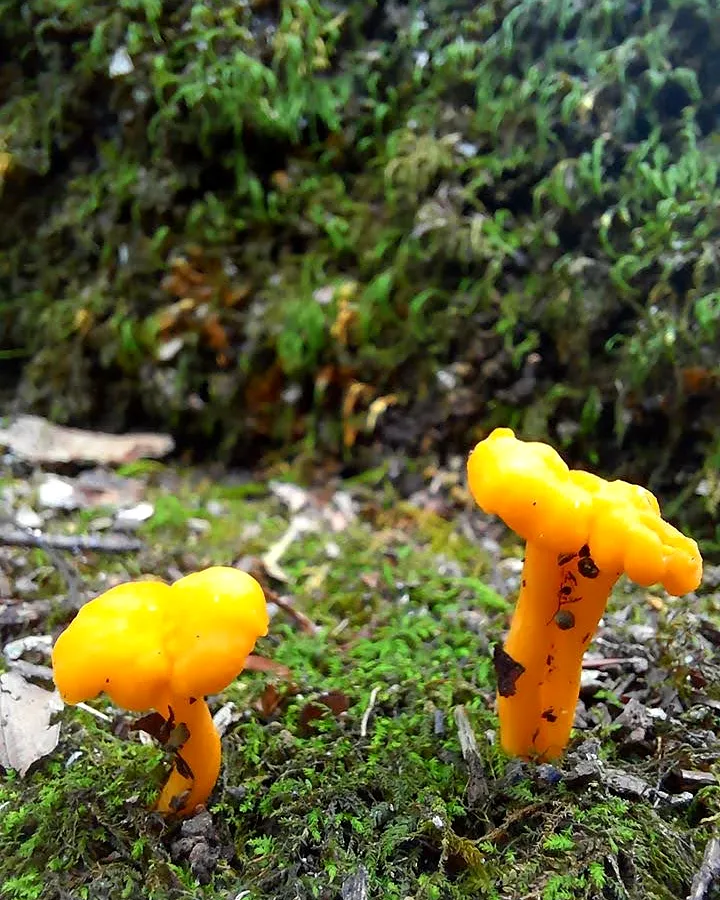
Some of my favorite finds grow in crowds where the roots meet the ground, or pop up as little yellow fingers and orange caps in the moss. Bright clusters like these are exactly the kind of thing to photograph and leave alone.
The whole scene
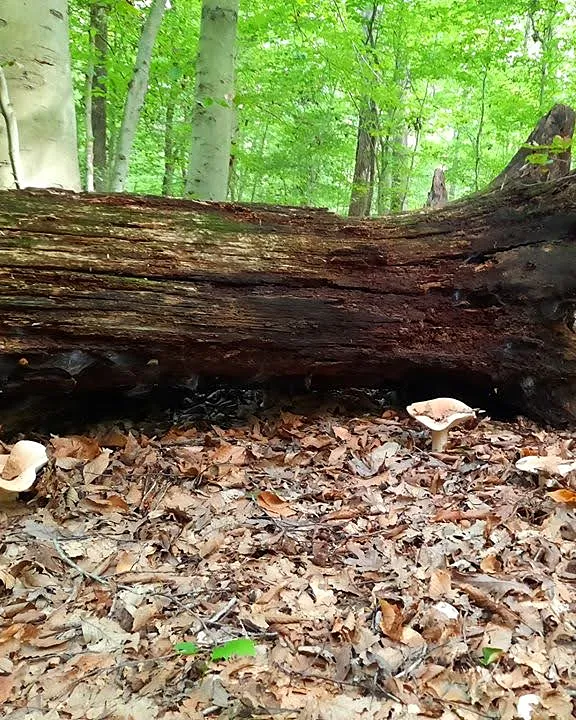
Step back once in a while. The log, the light and the leaf litter tell the story as much as the close-up does.
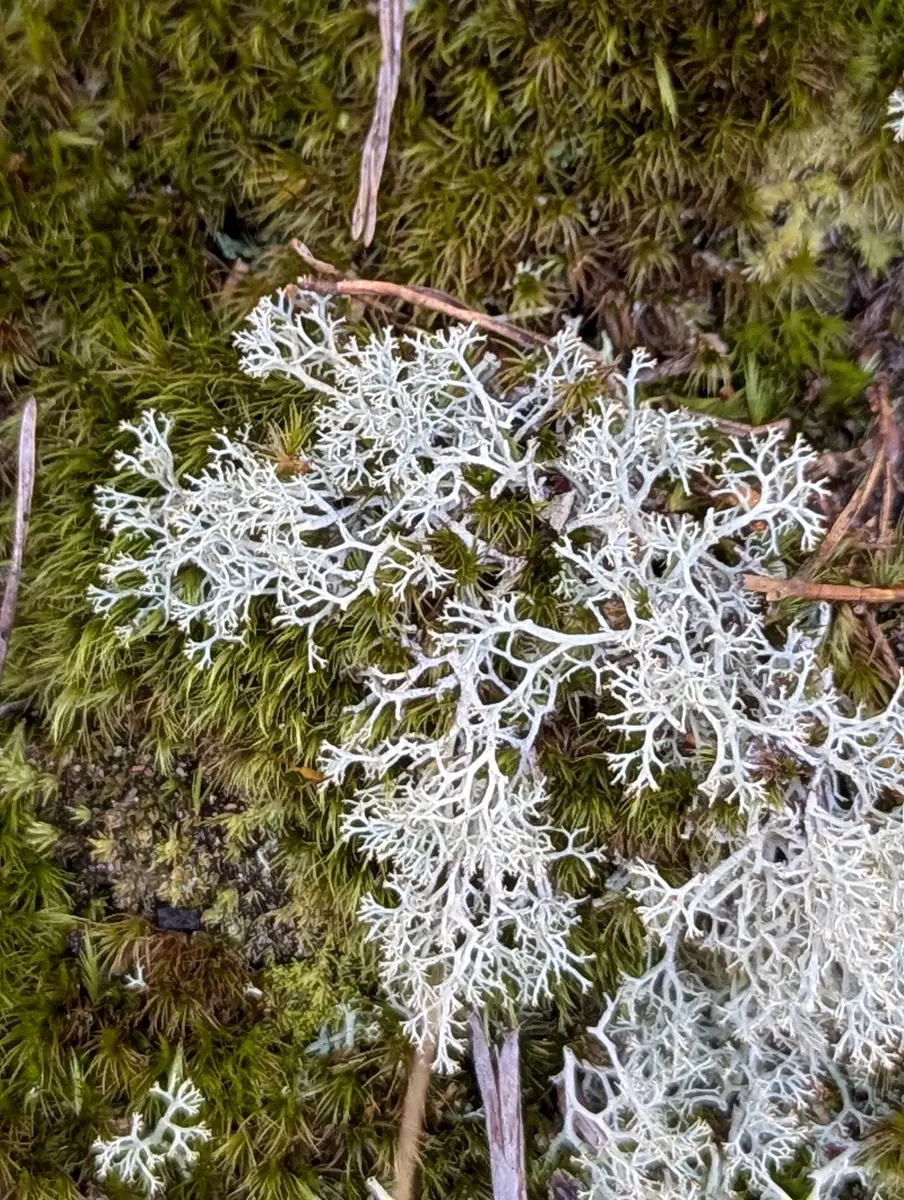
Lichens are fascinating, too. They're partnerships between fungi and algae or cyanobacteria, and they grow slowly, so I photograph them and leave them be.
How I photograph them
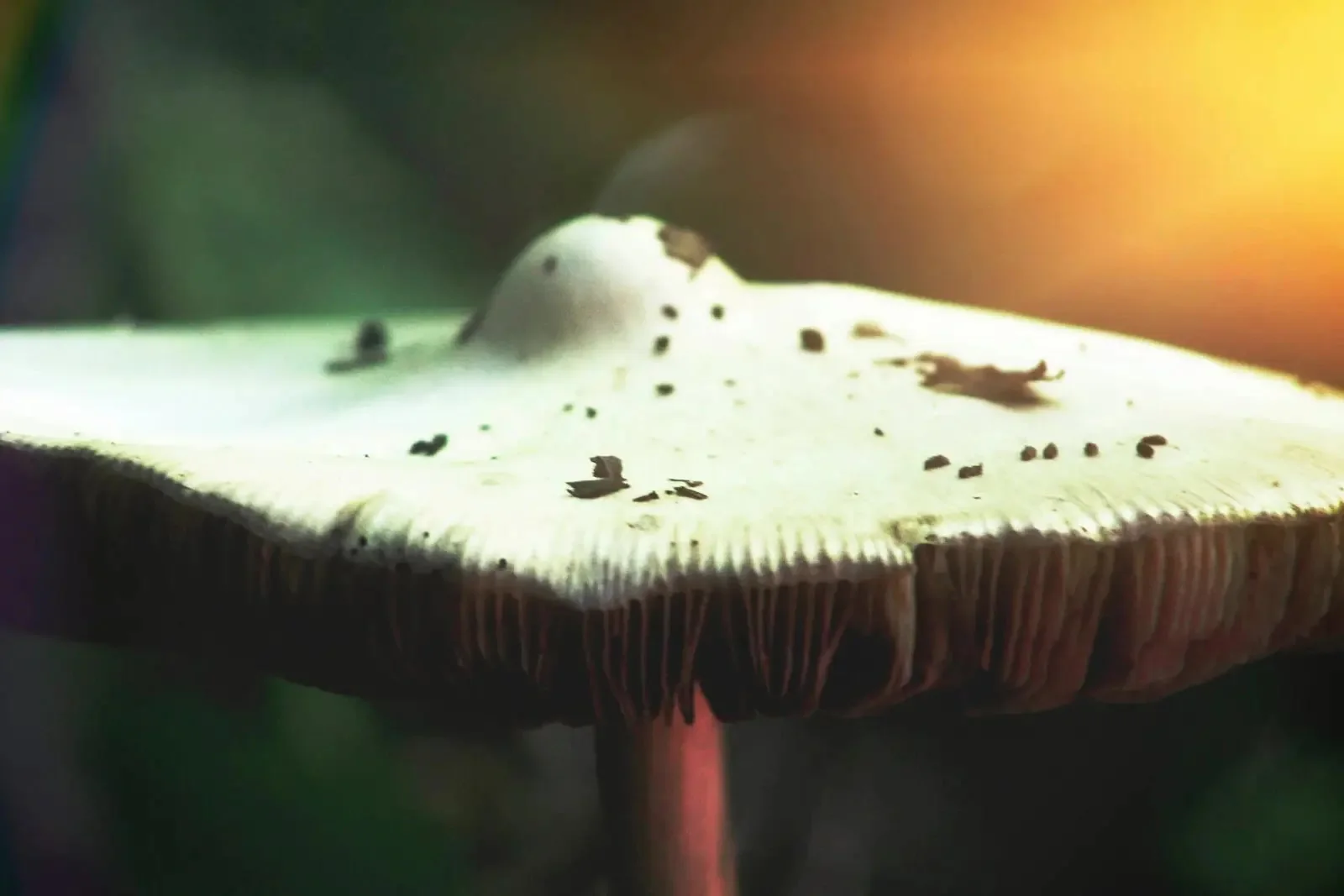
- Get low. Eye level with the fungus, not looking down on it.
- Overcast days are best. Soft light keeps the bands from blowing out.
- Shoot a little after rain, when the colors are richest.
- If you want an ID later, photograph the top, the side and the underside without picking it. Experts need all three.
- Touch nothing you don't have to, step around them, and wash your hands after a fungus walk.
Got a fallen log in your yard? Go take a look this week, camera only. Tell me what you find. 🌿
Look-alikes that matter
I'm sharing these as photography and identification notes, not food advice. They're the reason I never trust a photo, including my own.
- False turkey tail (Stereum species, such as S. lobatum). It grows the same way, in layered groups on logs, but it's smooth underneath with no pores. Turkey tail has pores. S. lobatum is well recorded in Virginia.
- Destroying angel (Amanita bisporigera). A pure white mushroom, and one of the deadliest in North America. The Claudius Project, Virginia's poisonous mushroom guide from the Blue Ridge Poison Center and Virginia Master Naturalists, lists it as deadly: symptoms can be delayed, and it damages the liver and kidneys. Other white amanitas look similar. It's a big reason I never name a plain white mushroom from a photo.
- Jack-o'-lantern (Omphalotus illudens). A bright orange to yellow-orange mushroom that grows in clusters from wood or buried roots, and common in Virginia. It's poisonous. Orange and yellow clusters at the foot of a tree are exactly the kind of thing to leave alone.
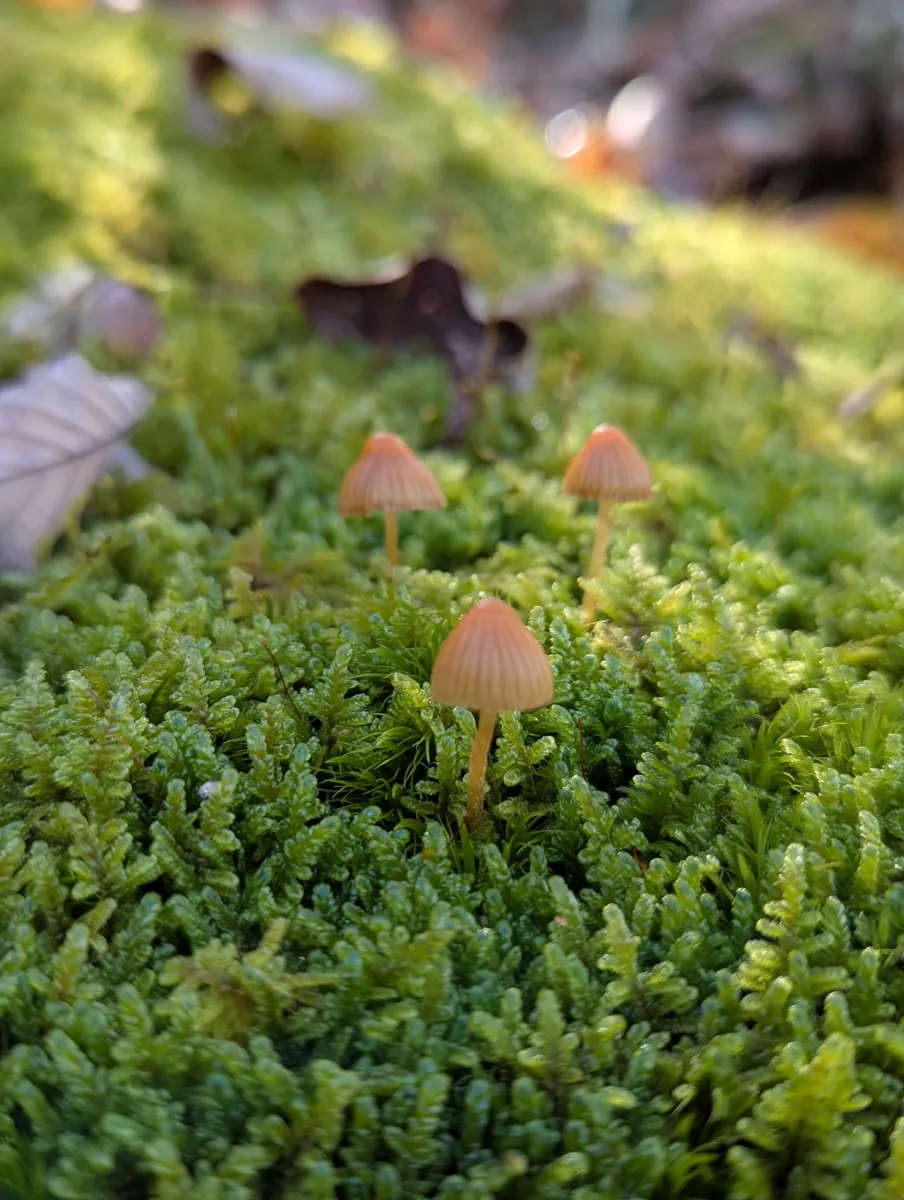
- Deadly galerina (Galerina marginata). A small brown mushroom on logs and in moss, and recorded in Virginia most often from fall into winter. The Claudius Project lists it as deadly. It can grow in the same places as other small brown mushrooms, like the tiny ones in my moss photo.
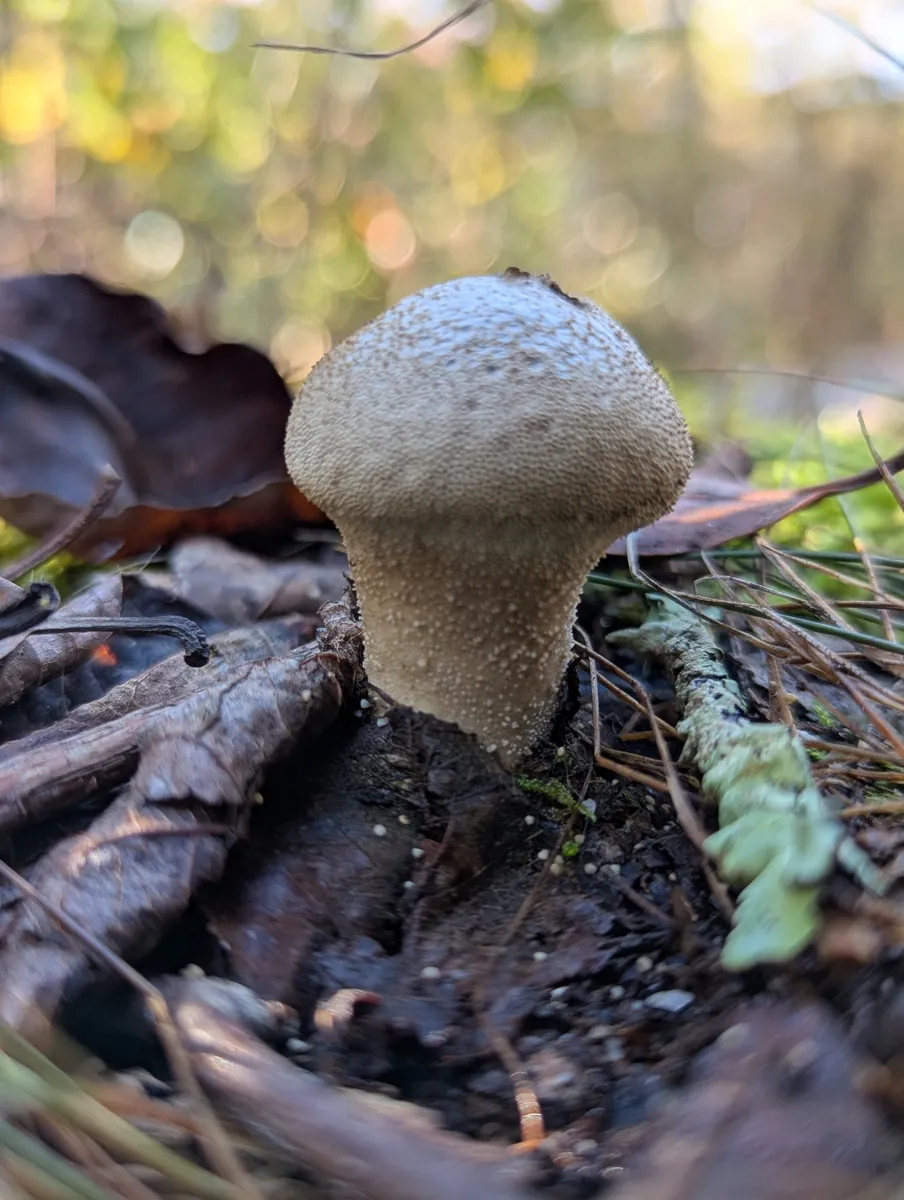
- Earthballs (Scleroderma, such as S. citrinum). They can look a lot like puffballs, but they're poisonous, firm, and dark inside. Earthballs are recorded in Virginia too, which is why my puffball-shaped find stays a photo and nothing more.
There's a whole little world happening on the forest floor. Sometimes the best thing to do is leave everything where it is and take a photograph.
You can explore more of my woodland photography and nature prints in the shop.
Shop Lisa's prints
See the full shop →Nature photographs for your walls — my shop.