
Some links here are affiliate or referral links. I may earn a commission if you buy through them, at no extra cost to you. As an Amazon Associate I earn from qualifying purchases. Details
The Moon is almost full this weekend. It reaches full just after midnight Eastern time on October 26. By October 27, it'll be passing close to the Pleiades, a little cluster of stars also known as the Seven Sisters.
It's something you could easily miss if you didn't know to look.
And that's a good reason to start a Moon journal.
You don't need a telescope or an expensive setup. A notebook, a pencil, and a few clear nights are enough to start noticing what's changing overhead.
If you've got a kid interested in space, or you've been wanting to learn more yourself, there's a new book worth checking out, too.
A new space book from Neil deGrasse Tyson
Lost in Space: 5,000 Facts for Navigating the Universe, by Neil deGrasse Tyson and Lindsey Nyx Walker, was released September 15, 2026.
It's a substantial book: 400 pages, more than 300 photographs, maps, and charts, and thousands of facts covering everything from our solar system to distant galaxies.
I like the idea of using a book like this as something you can explore a little at a time, rather than reading it straight through.
Find something interesting about the Moon, planets, or stars, then see what you can actually spot outside.
For younger children, that might mean looking through the photographs together and picking one thing to learn about. Older kids and adults can dig further into the facts and explanations.
You can browse Lost in Space through the publisher, or use the verified affiliate book listing (paid link).

Make a Moon journal tonight
This is probably the easiest astronomy project you can start at home.
Grab a notebook and head outside whenever the sky is clear.
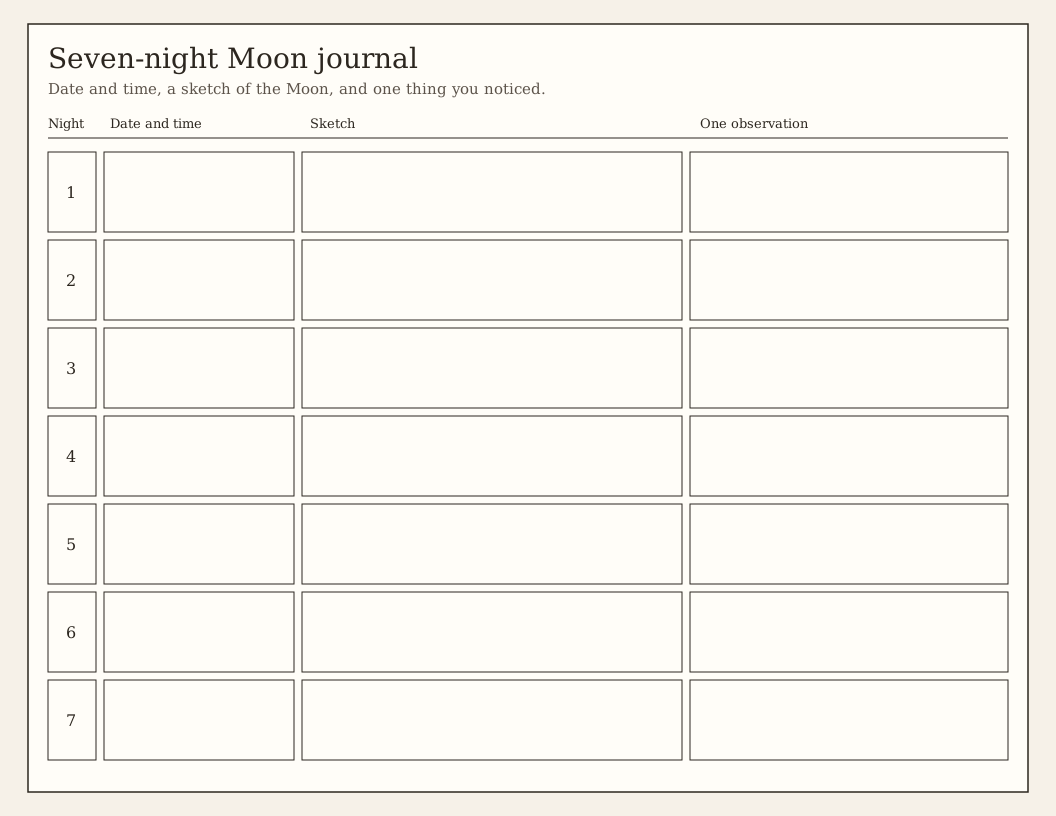
Each time, record:
- The date and time.
- What the Moon looks like. Draw the shape you can see.
- Where it is in the sky. Low near the trees? High above the house?
- One thing you noticed. Clouds, color, visible features, or something nearby.
That's enough.
You don't need perfect drawings. In fact, I think it's more interesting to look back at a few quick sketches and see how much the Moon changed while you were paying attention.
Try it over a week or two, then compare your pages.
Something to watch for October 27–28
NASA's October skywatching guide highlights the Moon passing near the Pleiades on the night of October 27 into October 28.
Look east during the evening as they rise higher.
The Pleiades look like a small, close-together group of stars. They're visible without equipment under suitable conditions, although the bright Moon can make the fainter stars harder to distinguish.
Binoculars will help you see more of the cluster.
Draw the Moon and the stars nearby, then compare that sketch with what you see a few evenings later.
It's a simple way to start recognizing what's happening in the night sky instead of just looking up and seeing a collection of random lights.
NASA's October 2026 skywatching guide has more information.
Do you need a telescope? Not yet.
If you're just getting interested in astronomy, I'd start with binoculars.
NASA's Night Sky Network recommends beginner-friendly sizes such as 7x35 through 10x50. They're useful for looking at the Moon, wide star clusters, and other bright objects.
You may already have a pair from birdwatching or other outdoor activities.
If you don't, the Celestron Cometron 7x50 binoculars (paid link) are one option worth comparing. Their wider view makes them suited to objects such as the Pleiades.
A telescope becomes more interesting when you want a closer look at the Moon's craters, Jupiter's moons, or Saturn's rings.
The Celestron Travel Scope 70 (paid link) is a portable beginner refractor with a manual mount, while the AstroMaster 70AZ is another option covered in my Big Meadows astronomy guide.
I'd try an organized star party first, though. It's an opportunity to look through telescopes and learn what you enjoy before buying one.
The binoculars and telescope recommendations in this article are optional paid affiliate links. Check the current product details before purchasing.
And if you're watching a meteor shower, put the binoculars down. Meteors are much easier to catch with your eyes because they can streak across a large section of the sky.
Take a picture of the Moon
You can also try photographing what you see.
A phone is enough to experiment with, but the Moon is brighter than most people expect when they point a camera at it.
Start by turning off the flash, focusing on the Moon, and lowering the exposure until you can see some surface detail instead of a featureless white circle. Leave night mode off. On a bright Moon it tends to blow the disk out.
Steady the phone against something or use a tripod and the camera's timer.
If you need one, a UBeesize phone tripod with a remote (paid link) is a possible accessory, but try what you already own first.
For photographing stars, the settings are different. You'll generally need a steadier setup and a longer exposure than you would for the bright Moon.
A few of my photographs from Big Meadows
I've photographed the Moon from Virginia, and I also have a collection of night-sky photographs taken at Big Meadows in Shenandoah National Park on September 12, 2025.
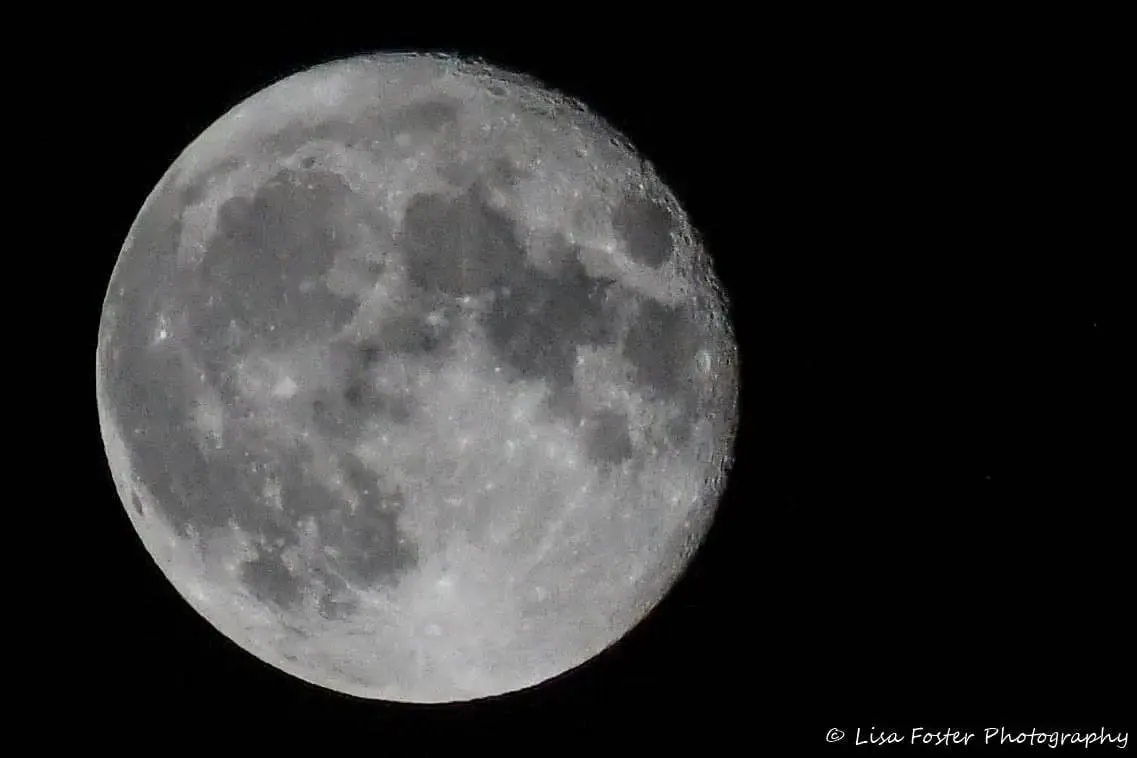
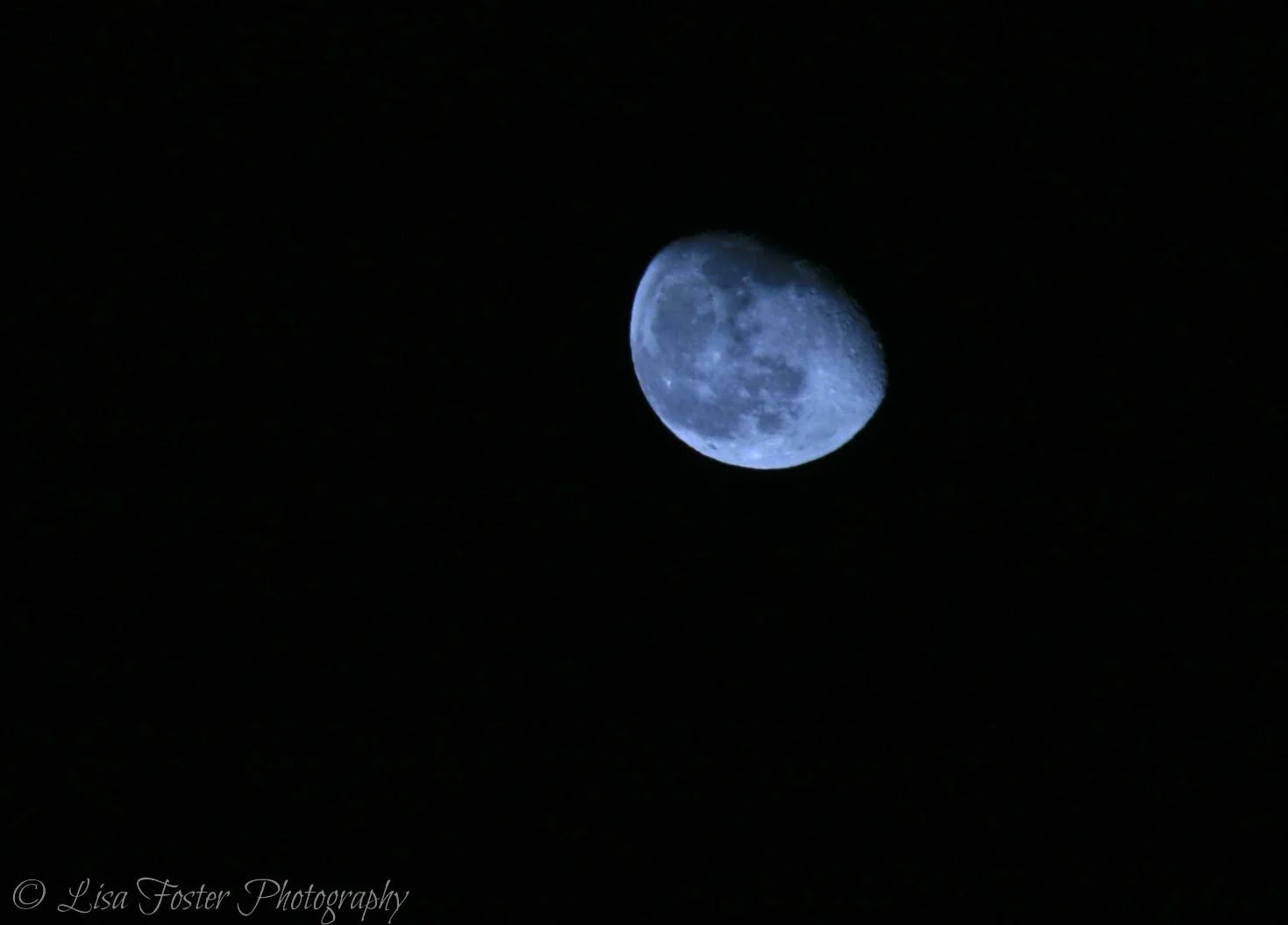
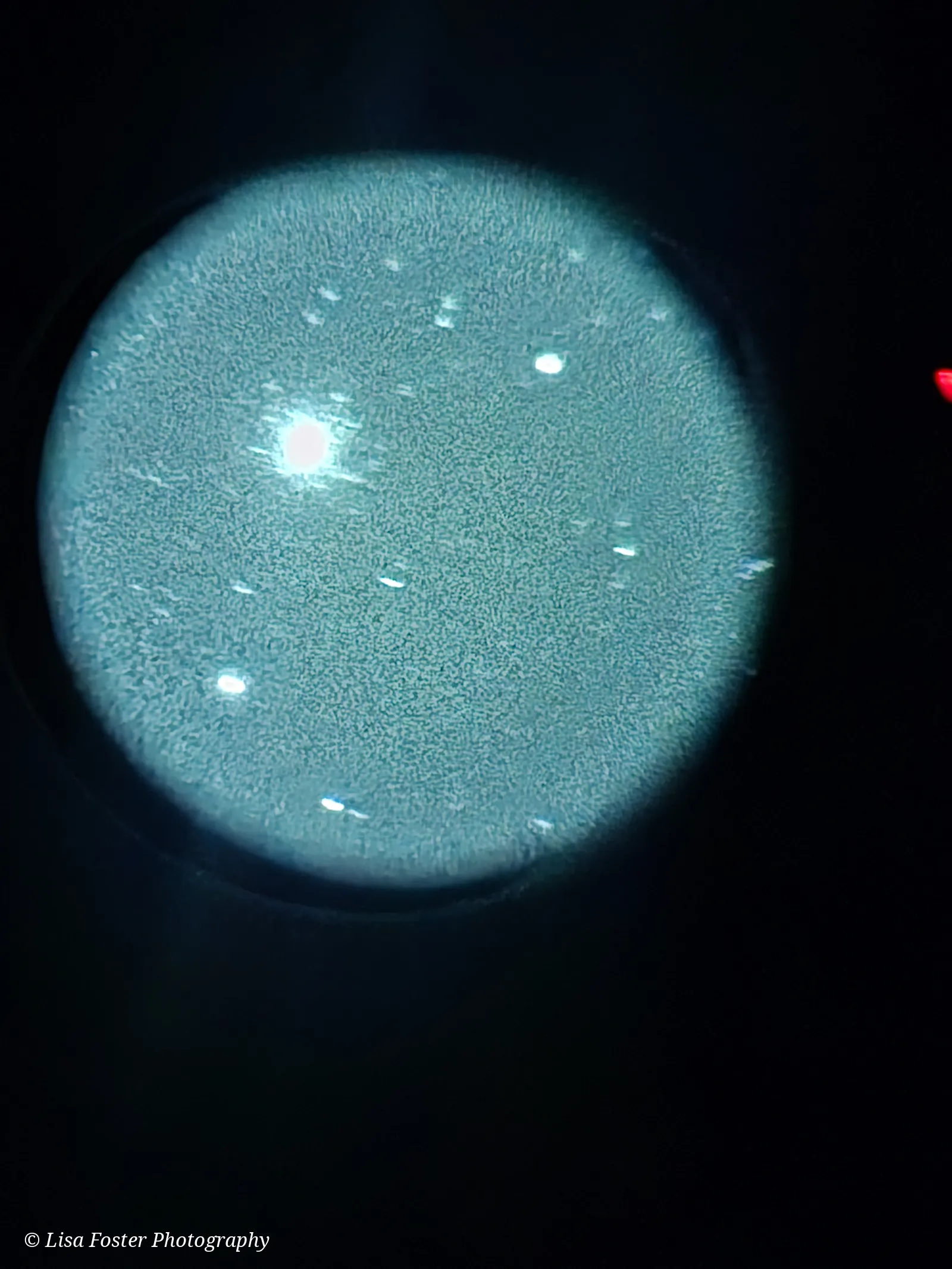
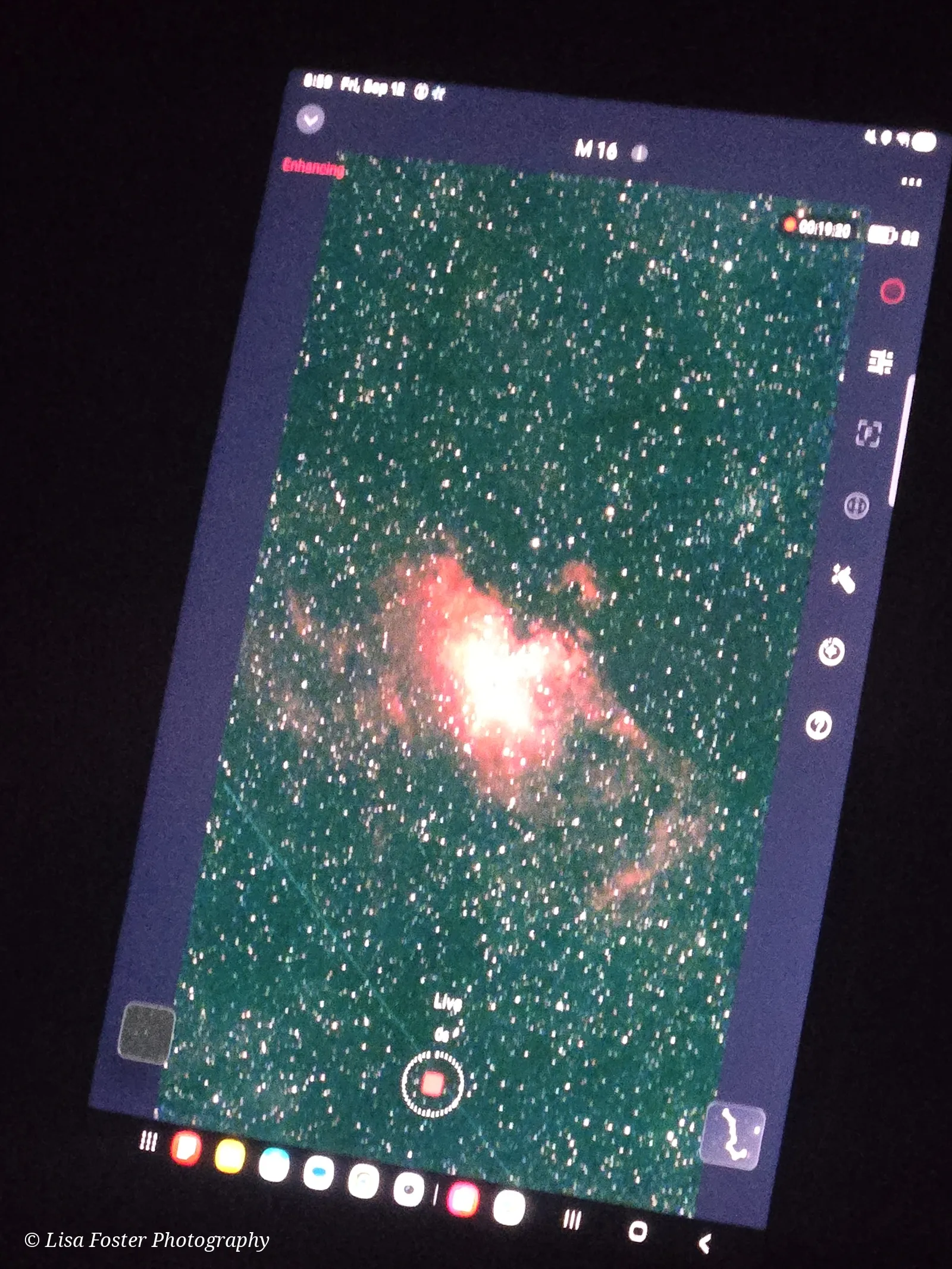
These photographs show a few different ways to approach the same subject, from the Moon's surface details to a much wider view of the stars.
If you enjoy space photography, my Full Moon Detail print is available through my Fine Art America shop.
Want to see the stars through a real telescope?
You don't have to travel far or own equipment to get started.
John C. Wells Planetarium — Harrisonburg
James Madison University offers free Saturday planetarium shows, followed by live talks about the night sky.
Family shows are scheduled at 11 a.m. and 1 p.m., with feature shows at 2:15 and 3:30 p.m.
The family programs are designed with younger children in mind, while the afternoon features can appeal to older students and adults.
The JMU Planetarium schedule lists the current presentations.
JMU Public Star Parties
JMU also hosts outdoor star parties at its Astronomy Park, where staff and students set up telescopes for visitors.
Upcoming fall dates include:
- October 29 at 7:30 p.m.
- November 5 at 6:30 p.m.
- November 19 at 6 p.m.
The events are free, but rain or clouds can cause cancellations.
Check JMU's public star-party schedule before going.
Big Meadows — Shenandoah National Park
Big Meadows is another place worth visiting if you want to see more of the night sky.
I've photographed astronomy programs and the Milky Way there, and it's one of my favorite subjects along Skyline Drive.
The park and its concessioner host seasonal astronomy programs with telescopes and knowledgeable astronomers.
Read my Big Meadows After Dark guide for photographs, visitor information, and more on the experience.
Park admission and seasonal program schedules apply, so check the current details before making the trip.
A simple plan for your next clear night
You don't need to turn this into a big project.
Start with a book or one interesting space fact. Take your notebook outside, spend a little time looking at the Moon, and make a sketch.
Bring binoculars if you have them. If the sky is cloudy, try again another night.
And if the Moon journal gets you interested in seeing more, visit a planetarium or star party before spending money on a telescope.
There's plenty to discover without buying a whole collection of equipment.
For more creative activities, books, and learning projects, explore Foster the Imagination.